Oklahoma women die of breast cancer at high rates, yet Gov. Kevin Stitt rebuffed access to screening
May 26, 2025 | 10:00 am ET
Description
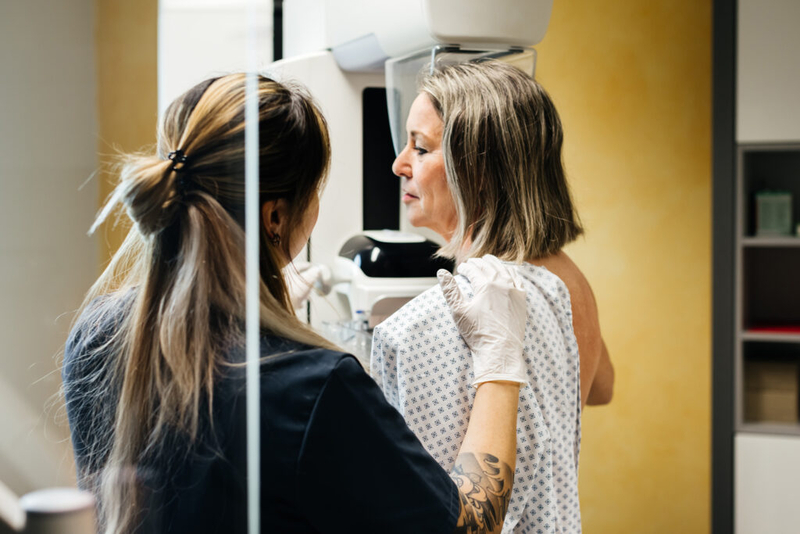
A nurse provides assistance to a patient undergoing a mammogram in a medical facility. (Photo by Tom Werner/Getty Images)
In February, my health care provider reached out with some bad news — my annual mammogram had an “area of concern,” that required me to return for additional screening.
An abnormal test result is always terrifying, but somehow Oklahoma’s health care system made the uncertainty infinitely worse. I found out it would be 54 days between receiving my results and the first available appointment at Mercy’s renown breast center in Oklahoma City. That location had the ultrasound technology necessary to provide the specialized followup needed to determine if the unexplained masses were cancerous or benign.
Thinking the scheduler had made a mistake, I called the clinic directly. The woman who answered was shocked — shocked that I had gotten in that quickly.
Usually, she told me, it takes longer.
So the agonizing wait for answers began.
To put this timeframe into perspective: It took so long that nearly half of Oklahoma’s four-month legislative session ticked by. Seven-figure pygmy gobies – tiny fish that live among coral in the Indian Ocean – had almost lived an entire life cycle. Red foxes had completed gestation and given birth. People had applied for and received their U.S. passports.
That delay is probably why I found myself so irked earlier this month by Gov. Kevin Stitt’s decision to veto bipartisan legislation that aimed to increase women’s access to diagnostic mammogram testing. The bill, had Stitt signed it, would have required insurance companies to foot the bill for two additional tests. In short, it would have eliminated copays and deductibles.
The proposal passed overwhelmingly through both legislative chambers and seemed like an easy win for Stitt and his fellow Republicans trying to signal that they actually care about women’s health outcomes.
After all, breast cancer is a disease that disproportionately affects women, and ours is a state where women die from the disease at higher rates than the national average. In Oklahoma, an estimated 22.4 per every 100,000 women die compared with 19.3 nationally, according to the National Cancer Institute. In rural McCurtain County, the death rate is a staggering 36.4 women per 100,000 – almost double the national rate.
The U.S. Preventative Services Task Force, which advocates for evidence-based medicine and prevention, notes that Black women are 40% more likely to die from the disease than their white counterparts, and that it is critical that patients “receive equitable and appropriate follow-up.” The task force recommends women have a biennial mammogram for over three decades — from age 40 until 74.
Breast cancer is a disease where the odds of surviving are significantly improved by early detection, so it boggles the mind that Stitt would reject legislation that removes a cost-barrier that might prevent Oklahomans from getting screened.
But with the stroke of a pen, our male governor demonstrated that he doesn’t understand — or even care about — the struggles we women face to access what should be a routine health care procedure. And, he showed that he’s fine with women being forced to disproportionately bear those testing costs. Because how many men do you know who pay for biennial mammograms?
And as icing on the already unsavory cake, Stitt vetoed this legislation authored by a lawmaker fighting breast cancer, experiencing first hand the struggles that Oklahomans face.
In 2022, legislators passed a law requiring coverage of diagnostic mammograms, but Melissa Provenzano, the bill’s author, said access to mammogram machines depends on where you live. She also said that women report their insurers are pushing back on the copay protections despite the law.
In his veto message, Stitt wrote that he was “deeply sympathetic” to women who have bravely fought the disease. He noted that he was aware that early detection and access to care are critical priorities. But, Stitt said, the legislation “imposes new and costly mandates on private health insurance plans” that will raise premiums for “working families and small businesses.”
Stitt is clearly more sympathetic to health insurers who often charge “working families and small businesses” large monthly insurance premiums and then continue to collect even more from them in copays and deductibles.
Like most businesses, insurance companies aim to make money. It often takes legislative action to force them to waive copays or deductibles, which chip away at their profits.
It remains to be seen whether lawmakers will let Stitt’s veto stand. If every lawmaker who supported it initially stayed the course, they’d have the two-thirds of votes needed to override it.
While they’re mulling it over, perhaps they should consider that ours is a state that has some of the worst health outcomes in the country. Maybe it’s time to worry less about hurting insurers’ feelings, put on their big girl pants and champion policies that will make lifesaving testing easier to access and more affordable — for Oklahomans of any gender.
Because while the masses in my breast were determined to be benign, nobody should have to wait months for those answers or be required to pay for a doctor-recommended screening that could save her life.
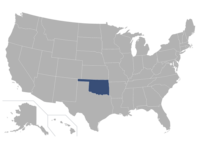
Oklahoma City, OK