Oklahoma Voice won an open records case we never should have had to fight. Here’s how it worked.
Sep 21, 2026 | 6:29 am ET
Description
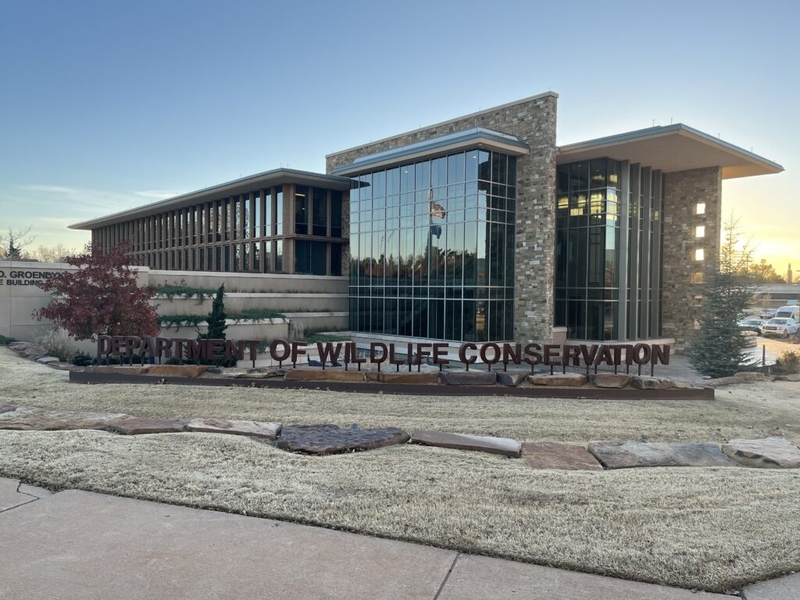
The headquarters of the Department of Wildlife Conservation pictured in December 2023. (Photo by Janelle Stecklein/Oklahoma Voice)
State agencies sometimes pick some weird hills to die on when it comes to public access, but the Oklahoma Department of Wildlife Conservation and its governing board take the cake.
For over two years, they drummed up tens of thousands of dollars in legal bills fighting the release of a severance agreement that specifies the terms of the $169,341 settlement that they agreed to pay in exchange for the resignation of the agency’s former executive director, J.D. Strong.
Based on how hard they fought to keep this record out of the public eye, you’d think it was full of details about agency in-fighting, a scandalous personnel investigation, or even wildlife trade secrets about where the best bass and bucks are hiding.
Oklahoma Voice requested the severance agreement in December 2023 as a matter of course after Strong abruptly resigned. We request such agreements because they help shed light on whether government officials — at all levels — are competently performing their jobs and spending public dollars wisely and to ensure that agency heads remember the state Open Records Act exists and applies to them.
Severance agreements are generally benign. They list what both parties should expect as part of the separation and typically prohibit both sides from trash talking the other. They also outline how much someone will be paid and when and what statute allows their departure.
Surprisingly, the wildlife board dug in their heels and said no, this is not a public record. They cited an exemption under the Open Records Act that gives the agency “the sole discretion” to keep personnel records confidential that pertain to “internal personnel investigations.”
Ultimately to get a copy of this public record, Oklahoma Voice was forced to hire a lawyer and take the department to court, where an Oklahoma County district judge ordered it to be released.
Our lawyers, with the nonprofit Reporters Committee for Freedom of the Press, have filed a motion to be reimbursed over $60,000 in legal costs related to this fight to ensure Oklahomans’ access to a basic public record. (State law allows record requesters who were improperly denied access to a public record to have their reasonable costs and attorneys fees paid. That is what the Reporters Committee – which works with media outlets to secure the release of public records – is seeking here.)
When we finally got a copy of the agreement earlier this month, there was no scandalous gossip that would justify this agency’s insistence that it should be private. In fact, there was no indication in the record that Strong had even faced any “internal personnel investigations.”
And there was no reason an agency should have the “sole discretion” to withhold a record like this.
What there was in the agreement was a very unusual caveat: a provision that this public record must be held confidential unless the release was “compelled by court order, subpoena or as otherwise required by law.”
Apparently people at the highest levels of government don’t believe in the public’s right to know, and are banking on the reality that the average Oklahoman doesn’t have $60,000 to front on a protracted legal fight. (We wouldn’t have either, which is why we were lucky the Reporters Committee agreed to represent us with the understanding that they would file to recoup their costs when we won.)
A provision requiring a court order shows that officials are manipulating the Open Records Act.
Now I find myself wondering if other Oklahoma governmental entities haven’t similarly tacked on secret provisions like this or added other nondisclosure or confidentiality agreements designed to obscure public access to public records.
These should be banned under state law, because this is not how the Open Records Act is supposed to work.
Our law operates on the foundation that Oklahomans are “vested with the inherent right to know and be fully informed about their government,” not that we need to have deep pockets and waste our court system’s valuable time obtaining judge’s orders.
According to the wildlife commission, it was the Oklahoma Attorney General’s Office that included that provision requiring a court order for the record’s release be included in the severance agreement.
If that’s true, it should set off alarm bells.
Is the Attorney General’s Office truly an ally of the public’s right to know or are they secretly obstructionists?
In recent years, lawmakers have entrusted Attorney General Gentner Drummond’s office with a lot of power to hash out open records disputes and determine what records should be public. Yet this same agency apparently helped a governing board insert provision requiring court action to comply with the Open Records Act?
As this fight was playing out, Drummond was professing to embrace transparency, yet allowed this to drag out for over two years.
Oklahoma taxpayers are always on the lookout for wasteful spending. I would argue that this falls in that category.
And in this case, there’s three entities to blame for not protecting public dollars:
— The Attorney General’s Office, which represented and advised the wildlife commission and state agency. This office apparently imprudently advised the board from the get go in such a way that allowed this farce to play out.
— The Department of Wildlife Conservation, its governing board, and Strong. They approved a contract with this provision and then dug in their heels and wracked up $60,000 in legal bills fighting the release of a basic record based on the erroneous assumption that they had the “sole discretion” to withhold it. The governing board at one point even strangely took a public vote, vowing to continue to block the release of the agreement. What were they thinking?
— And finally, we should point the finger at Oklahoma lawmakers. If governmental entities are going to such lengths to hide severance agreements, then our Legislature clearly needs to spell out in law that these types of agreements, whatever they may be called, are public. For some reason, lawmakers haven’t yet been willing to do that. Maybe now, they’ll do something useful that protects Oklahomans’ right to transparency, our public dollars, and our court’s valuable time.
The public has an inherent right to know whether their public officials are performing their jobs well and how public dollars are being spent.
Officials at all levels of government should remember that.
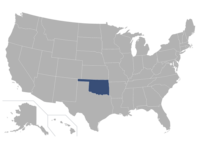
Oklahoma City, OK