Ohio cities brace for impact of Supreme Court allowing Trump to take legal status away from Haitians
Jun 25, 2026 | 11:49 am ET
Description
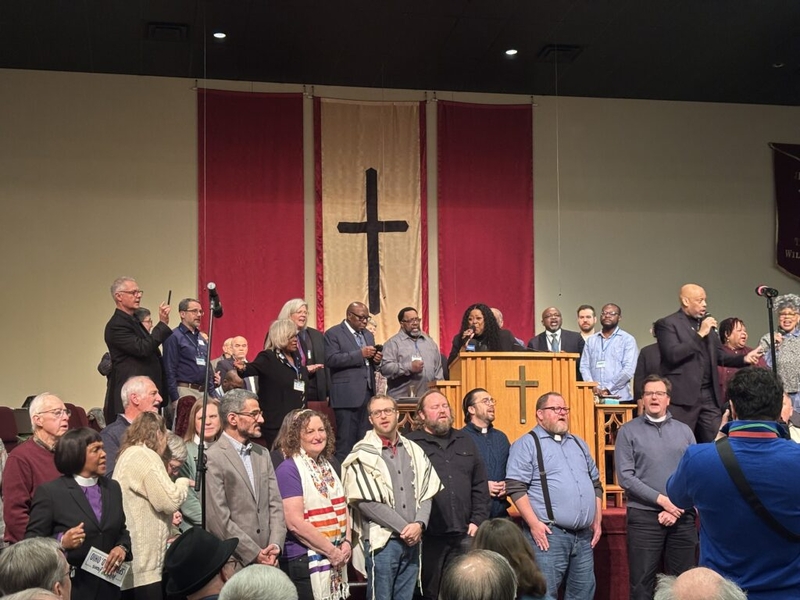
Hundreds of people gathered at St. John Missionary Baptist Church in Springfield to call for an extension of Temporary Protected Status for Haitians on Feb 2, 2026. (Photo by Megan Henry, Ohio Capital Journal).
The Ohio cities of Columbus and Springfield are bracing for impact after the U.S. Supreme Court ruled Thursday that President Donald Trump can end legal status for Haitians who’ve fled the violence in their home country.
About 330,000 Haitians and 6,000 Syrians are living in the United States with Temporary Protected Status (TPS), a program that allows people from specific countries in conflict or facing natural disasters the chance to live and work in the United States for a set period of time.
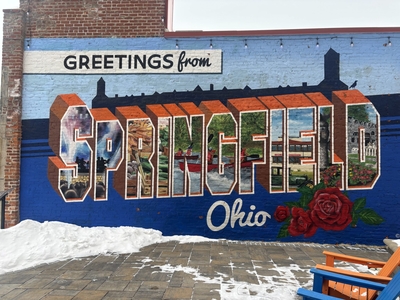
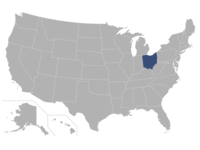
About 30,000 Haitians with temporary status live in central Ohio and an estimated 12,000 to 15,000 Haitians call Springfield home, with a mixture of temporary protected status, citizenship, and other legal status.
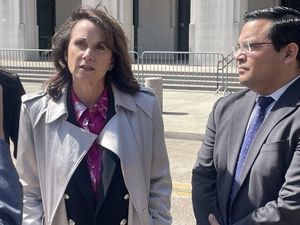
“The Supreme Court’s decision means that many, many people are going to die violent, needless deaths,” Geoff Pipoly, one of the attorneys representing Haitian plaintiffs, said during a press conference immediately following the Supreme Court ruling.
“Please express to all the Haitians in Springfield just how broken our hearts are by this, and that we wish there was more we could have done, but we did everything that the law allowed us to try to do.”
Viles Dorsainvil came to the United States from Haiti in 2020 and said Thursday was the saddest day he has had in the U.S.
“I understand that now being in America is a dealing with a system that just doesn’t want you,” said Dorsainvil, who is the executive director of the Haitian Support Center in Springfield.
Many Haitians and advocates expect United States Immigration and Customs Enforcement will do raids in Springfield and other cities with a big Haitian population.
“We maybe we can try to navigate this together, but that won’t prevent ICE to deport folks, that won’t prevent ICE to separate families, and we know a lot of things awaiting us now that we will have to make sure that we are ready for this,” Dorsainvil said.
Haiti is currently plagued by gang violence and instability, with many fleeing the small Caribbean nation to the United States for their lives. A top security official and chief of staff to the nation’s defense minister was recently kidnapped.
Many of the Haitian refugees in America have no homes to return to in Haiti.
The U.S. Department of State currently has a Level 4 “Do Not Travel” advisory for Haiti and Syria.
“Changing the immigration status of these individuals is not in the best interest of the United States nor Ohio,” Ohio Gov. Mike DeWine, who was born in Springfield, said in a statement.
The DeWines helped support the Becky DeWine School in Haiti, named after their late daughter, but the school had to close due to gang activity in 2024.
“Today’s decision is painful,” said Carl Ruby, pastor of Springfield’s Central Christian Church.
US Supreme Court rules Trump administration can end legal protections for 350,000 Haitians
“But our calling has not changed. Scripture teaches us to stand with the vulnerable, tell the truth about our neighbors, and refuse to let fear have the final word. Haitian families belong in our community, and we will continue to stand beside them with courage, compassion, and conviction.”
This is a tragedy for Springfield, Ruby said.
“We are a city that had been in decline for 50 years,” he said. “When Haitians arrived, that was the first time we grew in half a century. … (This is) going to hurt businesses in Springfield. It’s going to lead to economic decline. It’s going to hurt our county. It’s just awful. … It will create an economic and humanitarian disaster for Springfield.”
Springfield experienced a shrinking population for decades as manufacturing jobs disappeared, but Haitian immigrants have grown Clark County’s workforce by more than 10,000 workers.
“I grieve for our city, I grieve for our businesses, obviously, I grieve most of all for our Haitian friends,” Ruby said.
Deporting Haitians in Springfield would eliminate roughly $300 million in annual spending from Clark County, with an estimated economic loss projected to exceed $400 million.
“Many of the individuals affected by this decision are our neighbors, coworkers, business owners, taxpayers and parents,” Springfield Mayor Rob Rue said in a statement.
“They contribute to our local economy, support our schools, strengthen our neighborhoods and have become part of the fabric of Springfield. … We value every person in our community and remain committed to maintaining stability and support for those who call our city home.”
Springfield became a flashpoint in the 2024 Election when Trump and JD Vance spread racist lies about Haitian immigrants there.
Haitian TPS holders will now lose their work permit and driver’s licenses.
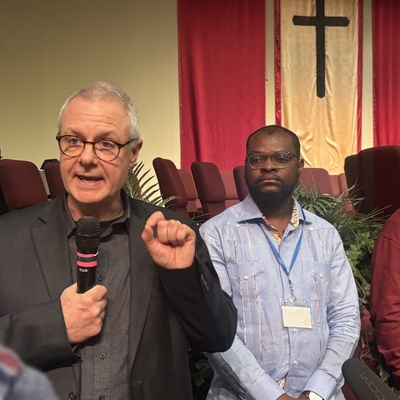
“If folks cannot commute, and if they cannot go to work, that would put us in a very bad situation,”Dorsainvil said.
Thousands of Haitians living in Springfield will need help with rent assistance, food, and attorney fees, Ruby said.
“Our hearts are broken by the opinion today, and don’t know exactly where to go,” he said. “The only thing I can say is, we will not abandon the Haitian people who are in Springfield, Ohio.”
Haitians were initially granted temporary protected status after Haiti’s earthquake in 2010 killed 222,570 people.
The Biden administration extended Temporary Protected Status to Haitians in 2021 after the assassination of Haiti President Jovenel Moïse.
Syria was first granted TPS in 2012 and the country continues to experience ongoing armed conflict, terrorist violence, kidnapping, hostage taking, and crime.
Ohio Immigrant Alliance’s Executive Director Lynn Tramonte is calling on DeWine, Ohio Republican U.S. Sen. Bernie Moreno and Ohio Republican U.S. Sen. Jon Husted to do something.
“You cannot let Haitian-Ohioans be deported to a country where they will be killed,” she said in a statement.
“They are our family members, co-workers, friends, and neighbors. They are our people now. You cannot sit back and let this happen. You have power.”
Immediately following the Supreme Court’s decision, Moreno posted on X “TEMPORARY protective status is temporary.”
Ohio Democratic U.S. Rep. Emilia Sykes said she is outraged by the ruling.
“The Court has put hundreds of thousands of people, including families living in Ohio, at risk of deportation back to dangerous and unstable conditions,” she said in a statement. “These are neighbors who have built lives here, and they deserve dignity and protection, not fear and uncertainty.”
At the federal level, the U.S. House voted in April to extend TPS for Haitians through 2029. The bill is now in the U.S. Senate, but the White House said President Donald Trump would veto the bill.
TPS for Haitians was set to expire Feb. 3, but U.S. District Court Judge Ana C. Reyes blocked the Trump administration’s attempt to end temporary protected status for Haitians living in the United States.
The Trump administration quickly appealed the decision and lower courts blocked its efforts to end Haiti’s TPS.
Haitians can apply for asylum, but the Trump administration put an indefinite freeze on processing all asylum applications at the end of 2025.
“People should absolutely still apply for asylum if they’re afraid to live in Haiti,” said Katie Kersh, an attorney with ABLE Advocates for Basic Legal Equality in Dayton.
Follow Ohio Capital Journal Reporter Megan Henry on X or on Bluesky.
Columbus, OH