NorthWestern, Black Hills merger raising concerns
Apr 15, 2026 | 4:30 pm ET
Description
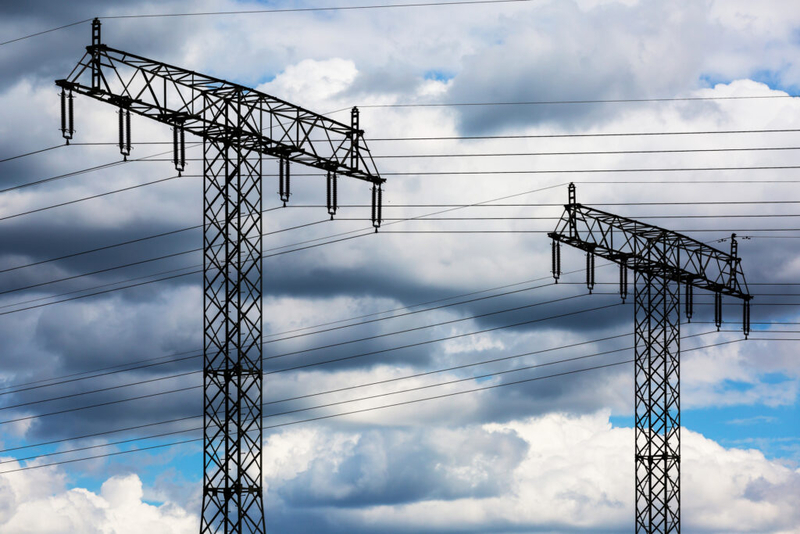
Electricity pylons (Photo by Getty Images).
The pending $15.4 billion merger between NorthWestern Energy and Black Hills Corp looks more like an acquisition that will short Montana customers, according to a conservation watchdog.
Tuesday, the Montana Public Service Commission took up a couple of matters related to NorthWestern Energy, the largest monopoly utility in the state, and it heard concerns about the proposed merger.
A filing in the case noted the utilities had estimated labor “savings” at $36 million with the merger, which has raised questions about impacts in Montana.
Tuesday, however, the Commission took up procedural questions on the merger, not substantive ones.
In public comment, Anne Hedges, head of the Montana Environmental Information Center, raised other factors she said were causing increasing concern.
For one, she said, Black Hills already operates in eight states, and NorthWestern only operates in two. NorthWestern’s website notes it serves Montana, South Dakota and Nebraska.
But the deal would put the CEO of the new company in South Dakota and would mean customers in Montana are no longer a focus.
“We will instead be an afterthought and quite possibly a cash cow for the utility,” Hedges said.
NorthWestern and Black Hills announced the proposed deal in August, and a public hearing will take place starting May 12, according to the Public Service Commission.
In an email, a spokesperson for NorthWestern said if the deal is approved, Montana will be the state with the most operations.
Hedges said data centers started out as one reason for the proposal, but the utilities have not provided information to the public about their specific plans.
But in 2025, she said, a watchdog on the East Coast calculated that 70% — or $9.3 billion — of increased electricity costs in the previous year was caused by data center demand.
She also said a recent analysis estimates demand from data centers could drive a 79% price hike in 2027 for much of Texas, citing data from the U.S. Energy Information Administration in a Utility Dive story.
NorthWestern has been in conversation with at least 11 data center developers including ones in Montana, but the documents it has provided about those deals has been mostly blacked out.
“This hiding of the ball should be of concern to every person in Montana, primarily because of the harm that data center growth has caused elsewhere for electricity reliability and for affordability,” Hedges said.
Hedges asked for the Public Service Commission to pause the proceeding, as did another party, 350 Montana.
However, on a split vote, the Commission rejected the motion in the merger proceeding to allow for more time to make sure all parties understood the consequences of the deal, especially on Montana jobs.
350 Montana, an organization with a focus on eliminating fossil fuels, had argued NorthWestern and Black Hills provided information too late in the game, specifically, the estimate the merger could mean $36 million in labor “savings.”
The organization argued Montana workers and communities needed time to respond to that revelation. 350 Montana also wanted the entire merger dismissed.
NorthWestern had argued the parties had plenty of time to evaluate the information and could test the evidence during the upcoming hearing.
Tuesday, a staff attorney said “significantly,” no other party had argued for more time, and in fact, the case was proceeding as expected. Commissioners did not discuss the estimated labor savings at the meeting.
PSC staff attorney Pam Snyder-Varns said 350 Montana made a motion to dismiss the case in February, arguing the utilities had presented inadequate information, but Snyder-Varns said discovery was still taking place then.
She said 350 Montana submitted four filings in the docket demanding rulings on the merits and “indefinite continuances” before the utilities even had a chance to present their evidence.
Snyder-Varns said the organization failed to articulate a sufficient basis for tossing the case, and staff recommended denying the motions to pause and dismiss the proceeding.
In the minority, Commissioner Brad Molnar argued for more time given the thousands of pages of documents to review, a “tremendous” amount of information.
He said NorthWestern and Black Hills want to take advantage of data centers, but it was important to ensure the deal didn’t mean money was flowing out of Montana to the detriment of customers here.
He tried to suspend the schedule for one month to get more answers from the utilities.
“I feel that the people of Montana deserve honest in-depth questions and honest in-depth answers,” Molnar said.
Commissioner Jennifer Fielder, however, said 350 Montana appeared to want to derail the process, especially since it was the only one requesting more time.
Fielder said 11 out of 12 parties in the case have not raised concerns about the way it is unfolding, and 11 out of 12 parties have not alleged the utilities aren’t providing adequate information.
“So I think this is a delay tactic,” Fielder said.
Only Commissioner Randy Pinocci joined Molnar in supporting a motion for more time, and it failed. On the same 3-2 count, the Commission rejected 350 Montana’s motion to allow for more time and reject the merger as filed.
On a separate issue, the Commission also rejected a couple of waivers NorthWestern Energy requested of certain requirements for its Integrated Resource Plan, a document evaluating electricity demand and resources to meet it in the next 20 years.
NorthWestern wanted to waive a rule that requires a description of daily and seasonal electric demand and energy requirements for each major rate service class be included in the plan, according to a staff report.
It also wanted to waive a rule that requires historical information regarding demand and energy savings.
Fielder said she believed NorthWestern could provide data that would be considered sufficient for the plan, and she and other commissioners were not inclined to grant the waivers.
The commission unanimously rejected the waiver requests.
Editor’s note: This story has been updated with comment from NorthWestern on the results of the merger and to note the utility operates in three states.
Helena, MT