North Dakota Legislature prepares for 2nd special session this year, with public testimony Tuesday
Aug 28, 2026 | 6:28 pm ET
Description
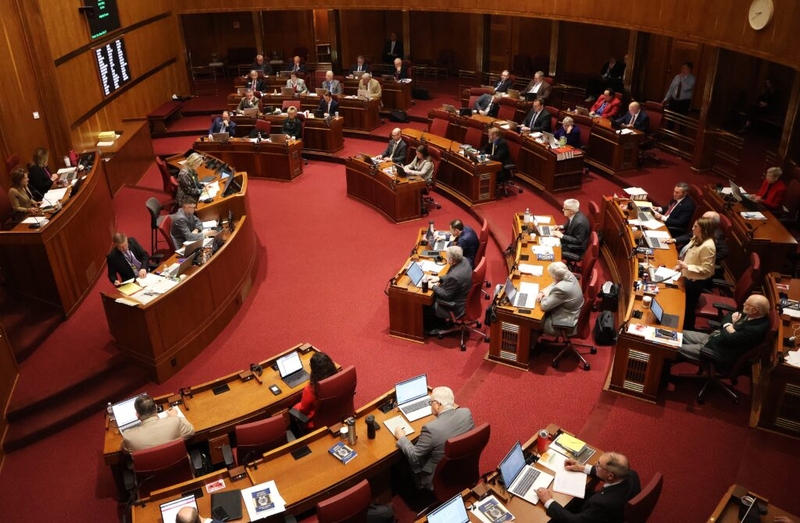
Members of the North Dakota Senate participate in a special session of the Legislature on Jan. 22, 2026. (Photo by Michael Achterling/North Dakota Monitor
North Dakota lawmakers are headed to Bismarck for the second time this year, this time to restrict kratom, fix a funding mess of a museum project and deliberate other topics.
Republican majority leaders hope to wrap up the special session in three days, an ambitious time frame up against the Labor Day weekend. Gov. Kelly Armstrong called the special session specifically for the Legislature to address kratom and synthetic products, which he has tied to overdoses and deaths.
“The governor has said that kratom – he’s not prepared to wait another six months until we put something through in the regular session because people are becoming addicted, people are dying, so we need to address it,” said Senate Majority Leader David Hogue, R-Minot.
Lawmakers have added other topics to the agenda, ones they say can’t wait until January, when the Legislature is next scheduled to regularly meet.
The special session begins Wednesday, but the public can give comments as early as Tuesday. Armstrong will give a State of the State speech to the Legislature at 10 a.m. Wednesday.
The Legislature previously held a three-day special session in January to approve federal money for improving rural health care. That special session cost taxpayers more than $211,000, according to Legislative Council, the research arm of the Legislature. This session is projected to cost $216,000 if it is limited to three days.
Kratom
Officially, the special session is for restricting kratom. The governor wants lawmakers to enact restrictions, regulations and criminal penalties for the substance and synthetic derivatives state officials say have been readily available at gas stations and smoke shops before the governor banned all those items by executive order earlier this month.
One bill proposes restricting natural kratom to people 21 and older and another calls for prohibiting synthetic products, including a compound called 7-OH. The bills include offenses, penalties and enforcement.
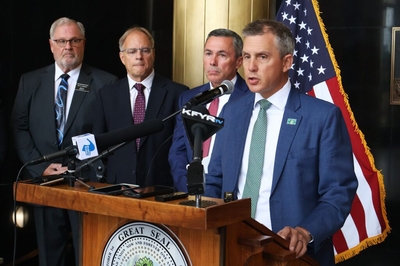
Republican Attorney General Drew Wrigley, whose office advised law enforcement agencies on kratom enforcement and disposal, said kratom is dangerous, addictive and deadly. He said he hopes lawmakers “keep their minds open and listen to the science.”
Since 2021, kratom or related substances have been part of the primary cause of 23 deaths in North Dakota, and a contributing cause in one additional death, according to the State Epidemiology Office.
Key lawmakers have expressed general agreement in banning 7-OH and other synthetic products, but not necessarily for natural kratom, which people in testimony have said helped them with pain relief and other health conditions.
Bills for kratom regulation, synthetic ban advance to North Dakota special session
Last year, the Legislature considered two bills to ban a component of kratom and to study kratom issues, but lawmakers defeated the ban and chose not to pursue the study.
Then in August, more than a year later, the governor abruptly announced the special session, his 30-day ban on all kratom products and an emergency pharmaceutical rule to ban 7-OH as a controlled substance. Armstrong said his moves aligned with action by the U.S. Drug Enforcement Administration to temporarily ban 7-OH and three other kratom components.
Military museum
Lawmakers are looking to fix a funding problem of the 70,000-square-foot, $78 million Military Gallery, an addition to the North Dakota Heritage Center and State Museum on the state Capitol grounds.
Construction paused in early July due to a fundraising shortfall, with collections of $800,000 in cash and $4.1 million in pledges, far from a nearly $39 million goal.
Top Republicans have proposed a $35 million line of credit from the state-owned Bank of North Dakota, as well as more oversight by lawmakers on multiple aspects of the project, from naming rights to construction updates to final decision-making authority on the museum.
That dollar figure derives from outstanding and unpaid invoices and what it would take to get the project through the state’s budget cycle, based on discussions Hogue said he had with construction manager Kraus-Anderson and the state Office of Management and Budget.
Line of credit, more oversight proposed for stalled North Dakota Military Gallery project
The project on the Capitol grounds is a joint effort among the State Historical Society, the North Dakota National Guard and their foundations. The gallery must clinch one-third of its fundraising goal in pledges – about $12.8 million – before it can use $15 million the 2025 Legislature approved for the project.
Additionally, the Legislature previously approved a $20 million line of credit – already spent – and $4.2 million for repaying another line of credit for planning and design, for a total of more than $39 million in state funding already approved. Lawmakers will still need to budget next year for $20 million, not including interest, to repay the line of credit, according to the legislation approved last year.
Taxpayers want to know what happened with the project and when, said Sen. Scott Meyer, R-Grand Forks, who helped write the State Historical Society budget and frequently advocates for military issues in the Legislature. The “substantially started” project will likely go forward one way or another, he said.
“I think it’s only right to help give them an opportunity, too, to still fundraise this to get ’er done, and I’m hopeful they can,” Meyer said. He said he supports the legislative oversight the bill would add to the project.
The line of credit is not assured for the project. Lawmakers ask a lot of questions about funding requests and frequently reduce them for various reasons.
Regardless, fundraising will continue for the project, State Historical Society Director Bill Peterson said. Project planners would work with the contractors to determine next steps if the line of credit is less than is proposed, he said.
“Fundraisers are still confident that this can be done. The lawmakers, I think, are confident that this can be done by how this is proposed, and I think this is a great solution to a problem that we didn’t anticipate having,” Peterson told the Monitor.
Peterson chairs the Joint Military Museum Advisory Committee, and said he had the final decision on breaking ground last year. The committee voted unanimously in May 2025 to proceed with the project as planned, tentatively scheduled the groundbreaking and scheduled advertising for construction bids, according to meeting minutes.
That vote came after representatives of fundraising consultant PACE Fundraising told the committee they had “a 90% level of confidence” in raising the required fundraising portion by July 1, 2025, to tap the $15 million in state funding, the minutes said.
The project’s groundbreaking was in July 2025.
To date, the project owes nearly $4.5 million for outstanding invoices in June and July that include construction fees, “demobilization” and equipment in transit that couldn’t be stopped when construction paused, Peterson said. The project has about $157,000 in ongoing monthly costs that include insurance, he said.
Other bills
The Legislature also will consider a roughly 10-month moratorium on nondisclosure agreements between industrial project developers and government officials, stemming from data center critics’ concerns.
A handful of states every year typically consider banning nondisclosure agreements between public officials and developers of various projects, not just data centers, a National Conference of State Legislatures analyst Nicholas Miller told an interim tax committee on Wednesday.
No pause on data centers but North Dakota special session to debate nondisclosure deals
“That is a discussion that was sort of on the back burner every year, and I will say, I think this year, really just in the last month or two, it’s moved up to the front burner, specifically for data center developers,” Miller said.
Critics say nondisclosure agreements keep the public in the dark about big projects planned in their communities. An interim legislative committee is studying various data center and artificial intelligence topics to prepare proposals for the 2027 Legislature.
A fifth bill would undo a change made in the January special session to the state’s primary residence property tax credit. The change resulted in unintended complications for property tax statements that must be printed before the end of the year.
How the public can participate
The public will be able to give testimony to a legislative ad hoc committee on Tuesday and a House-Senate joint policy committee on Wednesday.
Sen. Jerry Klein, co-chair of the policy committee, said remote testimony will be accommodated, but there will be time restrictions for public comment.
“This is an attempt to get as much information as we possibly can,” said Klein, R-Fessenden.
Signup information is on the Legislature’s website. Written testimony can be submitted online, with a deadline of 9 a.m. Tuesday.
The House and Senate budget writing committees will jointly handle the Military Gallery bill. The kratom and other bills will go to the Joint Policy Committee.
Committee meetings and floor sessions will be livestreamed at video.ndlegis.gov.
Reach North Dakota Monitor reporter Jack Dura at [email protected].
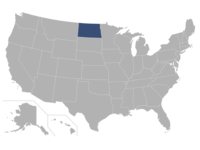
Bismarck, ND