No-party voters still have access to Louisiana’s closed primaries, for now
Jun 15, 2026 | 4:00 am ET
Description
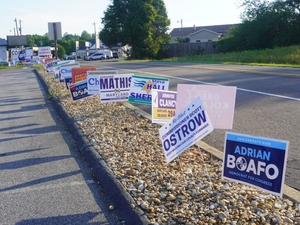
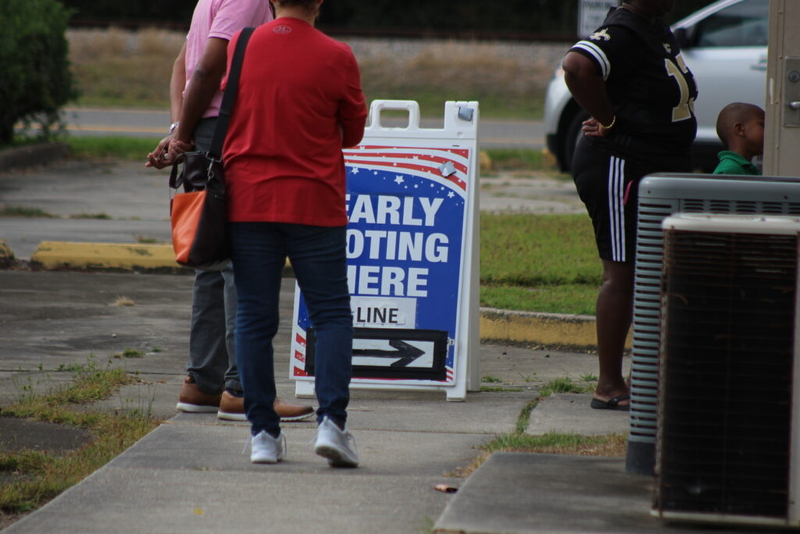
Legislation that would have allow state leaders of the Democratic and Republican parties decide if no-party voters cold participate in certain elections stalled in this year's lawmaking session. (Photo by Wes Muller/Louisiana Illuminator)
A bill that could have further closed Louisiana’s primary elections by excluding voters who aren’t registered Republicans or Democrats failed to pass through the state legislature. But the sponsor of the proposal says she plans to bring an alternative plan next year.
House Bill 906, from state Rep. Beth Billings, R-Destrehan, never came up for vote on the Louisiana Senate floor, despite passing the House of Representatives overwhelmingly.
Senate President Cameron Henry, R-Metairie, opposed the legislation.
The bill would have put state Democratic and Republican party leaders in charge of who could cast ballots in their respective primary elections for Congress, Louisiana Supreme Court, Public Service Commission and the Board of Elementary and Secondary Education.
The change would have made it likely that “no-party” voters — those who aren’t registered with any political party — would not have been able to participate in the Democratic and Republican party primaries for those elected offices.
No-party voters make up about a third of Louisiana’s electorate. Under current state law, they can choose whether to participate in the Democratic or Republican primary race for these offices.
Republican Secretary of State Nancy Landry had backed Billings’ legislation. She declined to comment for this report through a spokesman.
During legislative hearings this spring, Landry said Louisiana’s voting machines don’t have the technical capability to allow no-party voters to participate in some partisan primaries while excluding them from other elections for the parties’ presidential nominees, members of state party central committees and local party executive committees.
Louisiana’s Democrat and Republican party leaders don’t want no-party voters to be able to participate in their leadership elections or the presidential primaries in 2028, the secretary of state said. Without a law change, the state won’t be able to close off those elections, according to Landry.
Billings said she will bring new legislation in 2027 to address this challenge, albeit with a different tactic. She declined to say what other options she is considering.
“We decided to go at this a different way. There are other things that can be done to change it,” she said Friday.
Billings also said Republican Gov. Jeff Landry, who is not related to Nancy Landry, wants the primary elections further closed to no-party voters.
Within a month of taking office in 2024, Jeff Landry surprised several state lawmakers by pushing a bill to create closed Democratic and Republican party primaries in Louisiana. His proposal to do so was met with resistance in the Louisiana Senate, and the governor was forced into a compromise with Senate leadership.
Lawmakers agreed to set up Republican-only and Democratic-only primaries for four elected offices: Congress, Louisiana Supreme Court, Public Service Commission and Board of Elementary and Secondary Education. No-party voters were explicitly allowed to choose whether they wanted to vote in these Democratic or GOP primary elections.
The rest of the elections — for local, statewide and legislative positions — would remain under Louisiana’s traditional “jungle primary” format, where candidates of all party affiliations run against each other in an initial election.
If a candidate wins more than 50% of the vote during that first race, they win the office. If no candidate gets over 50% of the vote, the top two candidates — regardless of political affiliation — head into a runoff election against each other.
Though the law to create the new closed primary system was passed in 2024, it wasn’t used until last month.
Baton Rouge, LA