NM health officials report fox in McKinley County tests positive for rabies
Jun 26, 2026 | 3:01 pm ET
Description
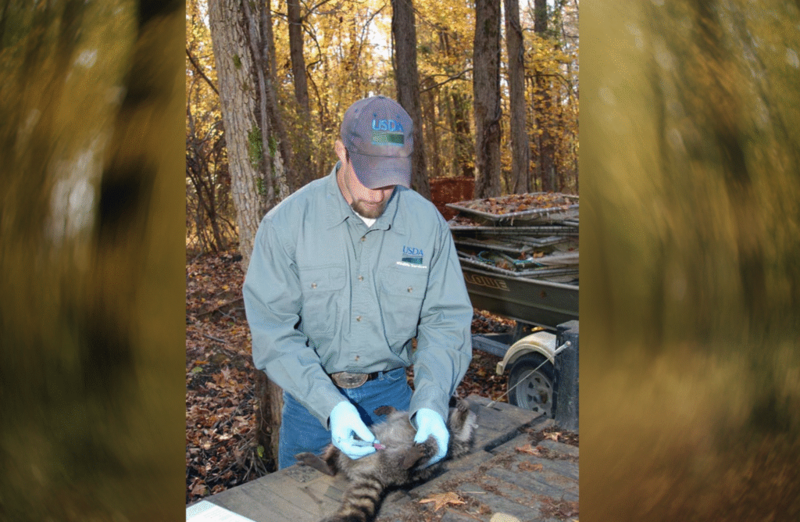
U.S. Wildlife Services biologist Robert Fey takes tissue sample from an anesthetized raccoon to test for rabies. The New Mexico Department of Health announced on June 25, 2026, that a fox tested positive for rabies in McKinley County. (Anson Eaglin/USDA-APHIS)
New Mexico health officials on Thursday reported a fox in McKinley County tested positive for rabies, the eighth case in New Mexico this year.
A New Mexico Department of Health news release announcing the case urged residents to ensure their pets are vaccinated against the virus.
Dr. Erin Phipps, NMDOH state public health veterinarian, said vaccinating pets not only protects them, but also helps stop the spread of rabies, which is still one of the deadliest known viruses with a fatality rate very close to 100%.
“Our dogs and our cats can have unwitnessed encounters with wildlife,” she said. “This is a good reminder that dogs and cats, by law, must be vaccinated against rabies, and it’s important for their protection as well as ours.”
Phipps said this is the first case of a rabid fox in McKinley County on record, with most rabid foxes being found further south. She also pointed out that most cases of rabies in New Mexico are found in bats.
The risk is so high that even if a person just wakes up in a room where a bat is present, she said, if the bat can’t be captured and tested, the person should have a post-exposure rabies vaccine.
“Bat teeth are so tiny you can be bit and not realize it,” she said, “and there have been confirmed cases of human rabies in the United States where somebody did not realize that they’d been bitten by a bat and later developed bat strain rabies.”
She said any sort of physical contact with a bat — even through clothes — is considered an exposure.
“Bat bites can be painless, and they can be very difficult, if not invisible, to find any marks,” she said. “So that’s one of the reasons we’re so cautious.”
There were 13 cases of rabies last year, and 12 two years ago. For more information visit the NMDOH rabies information page.
Support for this coverage comes from the W.K. Kellogg Foundation.
Santa Fe, NM