New state forester gets to work, says ‘zero tolerance’ for issues that led to predecessor’s ouster
Jun 08, 2026 | 6:20 pm ET
Description
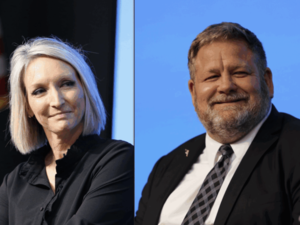
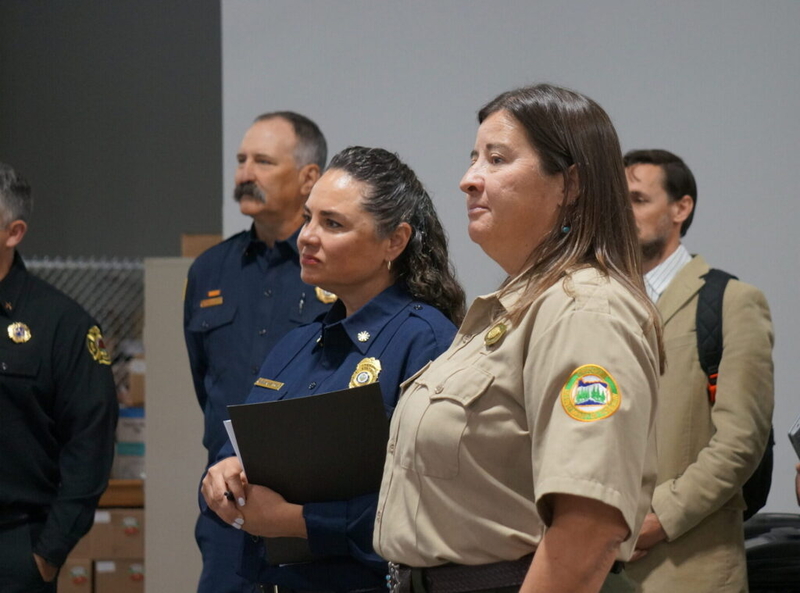
Oregon State Fire Marshal Mariana Ruiz-Temple (left) and Kacey KC, the new director of the Oregon Department of Forestry (center), at a briefing on the wildfire season at the Office of the State Fire Marshal in Salem on May 5, 2026. (Photo by Alex Baumhardt/Oregon Capital Chronicle)
Oregon’s new state forester Kacey KC’s first experience with wildfire was watching flames move down the mountainside toward her childhood home in Nevada.
On a summer break from college in 1996, “literally working at the car wash,” she explained, she saw from across town a huge plume of smoke growing around her neighborhood. She called her father, who frantically explained that he’d seen the fire start a street over, and that the wind was blowing the flames straight at their house.
After racing home to help him, it also became when she learned firsthand what not to do in the event of a wildfire.
“We didn’t know at the time, I mean my dad was on the roof with the hose, putting out hotspots. I was on the deck, I was just doing what my dad told me to do,” she explained, “but it was a wind shift, really, that saved our home.”
KC has become a lot more pragmatic about fighting fire since then, but does not underestimate the power of changing winds. She is hoping to harness that energy as the Oregon Department of Forestry’s new director, taking over after her predecessors were embroiled in accusations of financial mismanagement and workplace misconduct, including creating a hostile culture toward women.
She’ll be the first woman to permanently lead the agency in its history, and comes to the job after 24 years at Nevada’s forestry and natural resource agencies, including eight years as Nevada’s first female State Forester Firewarden.
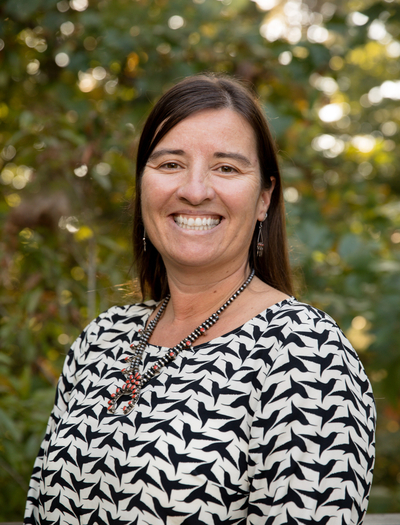
KC said she brings with her from Nevada a “zero tolerance policy for a lot of different issues, both financially and treating people poorly.” As she embarks on her third month on the job, she said she is still in learning mode and ensuring “everyone understands my expectations and that we are moving forward together in the right direction.”
KC sat down briefly with the Capital Chronicle to talk about her first couple months on the job, preparing for a long fire season likely to leave her overseeing some of the biggest blazes of her career, and negotiating desires and dollars between conservationists, the timber industry, ranchers, firefighters and local, state, federal and tribal governments.
Bigger responsibilities
In Oregon, KC is taking over an agency with almost five times as many staff as she managed in Nevada, and with a significantly larger budget. She’s well versed in working with federal natural resource agencies — more than 80% of Nevada’s land is federally owned and managed – but will be new to overseeing a larger state-run land and forest portfolio in Oregon, where the agency depends on logging to fund its operations.
There are about 8.5 million acres of forested land in Nevada and practically no timber industry, compared to Oregon’s more than 30 million forested acres. Although the state Forestry Department manages just 3% of that, it is the primary fire-fighting resource for 16 million acres of land across the state, including private forest and rangeland acres.
KC is one of few leaders in the Oregon Department of Forestry’s history with no background in timber, but she said she is used to managing the desires of industry and of conservation.
In her first few weeks she said she met with environmental organizations, timber operators, tribes, rural and rangeland fire protection associations, and said she meets at least twice a month with the directors of Oregon’s other natural resource agencies.
Her work in forestry started in conservation, and she spent years managing the state’s sagebrush ecosystem program meant to protect native species and return the landscape to a more fire-resistant state. She said she sees wildlife and habitat conservation as critical to the work of a department tasked with protecting forests from drought, disease and climate change, and fighting fire.
“Any project that I’m doing for fire mitigation should be considering habitat,” she said.
And though she’s never been a firefighter, she said she has “been supporting firefighters for all of my career.”
KC participated for years in the National Association of State Foresters, where she recently spent three years as president, and during that time got to know Oregon Gov. Tina Kotek’s Wildfire and Military Advisor Doug Grafe, and Oregon State Fire Marshal Mariana Ruiz-Temple, with whom she served on the forester association’s wildfire commission.
And though on average more acres burn annually in Nevada — about a million on average, compared to Oregon’s 10-year average of 680,000 — they tend to lead to less home loss because they burn in much less densely populated areas, she said.
Creating change
KC said she’s currently evaluating what kinds of changes might be needed at the forestry department following the departure more than a year ago of its leader Cal Makumoto amid misconduct claims among senior leaders, and an unexpected emergency infusion of funding from the Oregon Legislature when it became clear the agency could not pay all its bills after the 2024 wildfire season.
“I don’t believe in coming into an agency and making big changes before I really have an understanding of how we operate, and so I’m spending a lot of time learning,” KC said, and acknowledged that “the increasing costs of wildfires, and being able to get that funding to be able to pay your bills on time, has been a challenge across both states.”
When it comes to paying to fight wildfires, she said she understands well the complex system of payments and reimbursements that exist between the forestry department and state, local, federal, and tribal agencies and governments and private contractors. She said her job is to balance all of that so partners have a reasonable expectation for getting paid, and to make sure lawmakers and budget writers understand, if not the full complexity she has to manage, the cost and timing needs and demands she is trying to meet.
When she took over in Nevada, she started building the agency’s first ever strategic plan that included policies around this, and around workplace conduct. She said she is spending a lot of time with the Oregon Department of Forestry’s strategic plan and thinking of ways to build on it, including when it comes to accountability for leaders and staff.
When it comes to the cultural issues that came to a head at the forestry department in recent years, including complaints that leaders were hostile to women and to employees based on race and sexual-orientation, KC said they are not new issues for her and she takes them seriously. She described her strategy as being transparent about addressing complaints, discussing challenges with staff and enforcing accountability, especially among agency leadership, as well as training.
The biggest changes will likely occur first in her own life. She is, for the first time since college in Montana and a two-year stint as a Peace Corps volunteer in Nepal, living away from the “little town” of Gardnerville, Nevada, where she grew up and where she saw that first wildfire 30 years ago.
“My family’s all there. I wasn’t really seeking a new career,” she said of her move to Oregon, “but I definitely saw the opportunity.”
Salem, OR