New Oklahoma schools chief preparing for ‘behemoth’ challenge of education turnaround
Nov 05, 2026 | 4:24 pm ET

Description
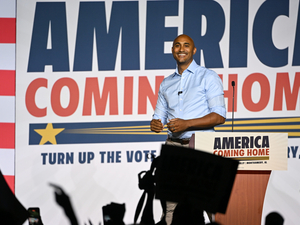
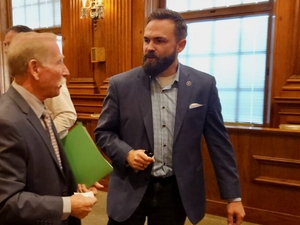
State superintendent candidate Robert Franklin speaks at a campaign event in Edmond on Aug. 3, 2026. (Photo by Nuria Martinez-Keel/Oklahoma Voice)
OKLAHOMA CITY — The work of Oklahoma’s top education official has already begun for state Superintendent-elect Robert Franklin.
By late Wednesday afternoon, not even 24 hours since being elected Tuesday, the longtime educator from Sand Springs had spoken with a local district superintendent about preparations for the state’s new literacy law and exchanged messages with Gov.-elect Mike Mazzei, all amidst a marathon of media interviews.
Once he’s sworn into office in January, Franklin, 67, will be responsible for what he described as a “behemoth” task of turning around Oklahoma’s bottom-ranking reading and math scores. He called the work ahead “encouraging” and “daunting.”
“It’s an all-hands-on-deck kind of moment,” Franklin said. “We’ve got a lot of work to do.”
Despite facing skepticism within the state GOP, Franklin received broad bipartisan support, particularly from fellow educators.
He defeated Democrat Jennettie Marshall 66% to 34% and was one of two candidates for statewide office to win all 77 counties of Oklahoma, general election results show. The other, Republican state Treasurer-elect Cindy Byrd, did not have a Democratic opponent.
Franklin promised a distinctly different vision and demeanor from former state Superintendent Ryan Walters, who was elected in 2022. Walters made headlines throughout his tenure for hyper-partisan rhetoric and numerous controversies before he resigned in September 2025.
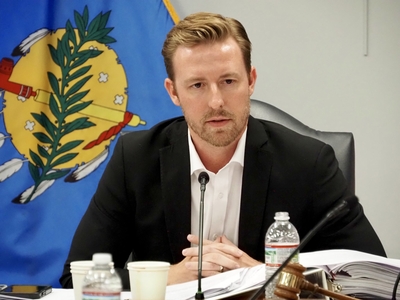
Gov. Kevin Stitt appointed Superintendent Lindel Fields and a “turnaround team” to lead the Oklahoma State Department of Education over the final 15 months of Walters’ term. Fields set out to quiet the turmoil by making the Education Department boring again.
Franklin similarly promised to focus on students and schools, not partisan politics. He said voters, even those who were “somewhat dismissive” of his candidacy, realized “we’re all after the very same thing” of supporting children and young people.
“I think there is a mindset out there that says we don’t have to be ugly and politically divisive to lean in and support the work of schools, and that’s what I’m sensing from most folks,” he said. “And when you walked away from some of those meetings, even when it was complicated, people would say, ‘Well, I may not agree with everything that you said, but I do agree with the work at hand.’”
Franklin will take over an Education Department that’s been in transition for the past year. He said it’s unclear how many of Fields’ “turnaround team” wish to remain with the agency long term, but he intends to meet with the administration to find out.
In a statement through his communications office, Fields, who did not run to stay in office, said he and his staff “intend to do all that’s possible to ensure a smooth, uneventful transition.”
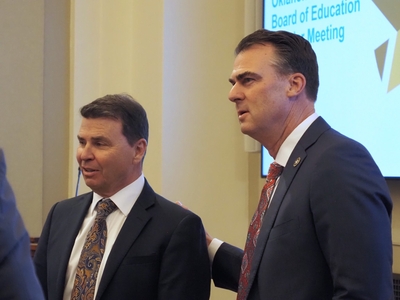
“Robert Franklin comes into this role as a highly-qualified educational leader,” Fields said. “He’s excited and as someone I’ve known for many years, I know his heart and I know he has great plans for education in Oklahoma. He’s ready to hit the ground running.”
Franklin also will step into office midway through the rollout of a major literacy law.
The new Strong Readers Act, signed into law this spring, will require more academic interventions, like small-group tutoring and summer programs, for children scoring behind their grade level in reading.
Starting in the 2027-28 school year, third graders who score below a basic reading level on state tests and fail a second assessment will have to repeat the grade, unless they meet limited criteria for an exemption.
Franklin said he plans to bring educators and experts to the table to develop a game plan before the high-stakes testing begins. The Education Department can help allocate resources, provide professional development and open regional centers to serve local schools while teachers and district leaders do the heavy lifting of educating children, he said.
He told Oklahoma Voice he’ll look at reversing a Walters-era rule that entwined a school’s academic results with its state accreditation, which Franklin said “conflates things” intended to be separate. The rule recently caused accreditation downgrades for dozens of school districts that had low math and reading scores.
Franklin said he also would push to change Oklahoma’s methods of student assessment from once-a-year exams to benchmark tests given incrementally through the school year — a plan that would require federal approval.
Tackling Oklahoma’s teacher shortage and adding behavioral health specialists in schools have been major campaign priorities, as well.
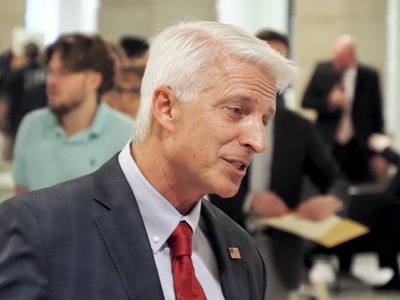
The next weeks and months for Franklin will center on establishing the right staffing and structure at the Education Department, he said, while building relationships across the state, particularly with Oklahoma legislators and the next governor.
Improving reading scores has been a major priority of Mazzei’s gubernatorial campaign. The governor-elect has given vocal support for the strict new reading law, and he pledged to hire a statewide literacy director to focus on its implementation.
“Let me just say that fixing our schools isn’t a Republican or Democrat issue,” Mazzei said during a news conference Wednesday. “It’s about giving every child in Oklahoma the opportunity to succeed.”
Franklin said he expects he and Mazzei have similar goals.
“He may see a particular tact that goes a little off course from what I’m thinking, but at the end of the day, I bet you a dollar to a donut, we’re going to be in complete accord with our outcomes that we want to achieve,” Franklin said. “And so, that’s going to be the discussion of how can we do that efficiently and effectively.”
Oklahoma City, OK