New Mexico federal pollution case will pave the way for other states, officials say
Jun 30, 2025 | 2:55 pm ET
Description
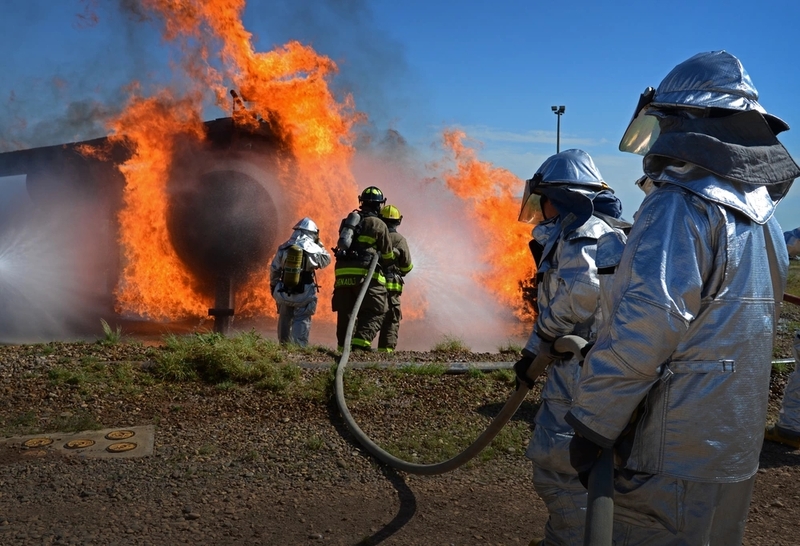
Air Commandos with the 27th Special Operations Civil Engineer Squadron and Clovis firefighters conduct a simulated aircraft fire exercise on Aug. 14, 2015, at Cannon Air Force Base. New Mexico's claims of environmental and public health harms stemming from PFAS used in firefighting foam on the base are moving forward in the South Carolina multidistrict lawsuit officials said. (Courtesy of U.S. Air Force/Staff Sgt. Alex Mercer)
New Mexico’s claims against Cannon Air Force Base for environmental and public health damage from so-called “forever chemicals” in groundwater will move to the forefront of a sprawling lawsuit.
New Mexico is part of multi-state litigation in South Carolina, which includes a combined 10,000-plus cases from across the country seeking damages from fire-fighting foam containing per-and-poly fluorinated alkyl substances — PFAS — at civilian and military sites.
A South Carolina-based federal judge gave the nod last week for New Mexico to proceed with its efforts to seek compensation from the federal government, which operates Cannon, under the Comprehensive Environmental Response, Compensation and Liability Act (CERCLA), often nicknamed the Superfund law, an environmental department news release stated Friday.
Out of more than 500 cases in the court, New Mexico’s will act as a test for how others will be decided, New Mexico Environment Department Secretary James Kenney told Source NM.
“New Mexico’s case was selected as a bellwether case to move forward within the multi-district litigation,” Kenney said. “So essentially, little trials are going to start happening in the South Carolina federal court; they’re going to be indicative of how large numbers of cases will proceed.”
If the judge determines Cannon had responsibility for contamination under Superfund law, the federal government will be required to compensate the state for ongoing cleanup, restoration or replacement of groundwater. The damages are being pursued through the New Mexico Office of Natural Resources Trustee, and would require clean up to “pre-pollution standards.”
“Everything is at stake for us in this multi-district litigation,” Kenney said.
The outcome of the case could impact settlement negotiations with the federal government and manufacturers of the chemicals, according to the news release.
“For too long, the federal government has ignored its responsibility to clean up the toxic legacy it left behind in communities like Clovis,” Attorney General Raúl Torrez said in a statement. “This case gives us the opportunity to establish once and for all that the United States can and will be held accountable for poisoning our water, harming our residents, and threatening our agricultural economy. We are proud to lead this fight — not just for New Mexico, but for every community impacted by PFAS contamination.”
New Mexico files new lawsuit against US Air Force over PFAS contamination
New Mexico’s reckoning with PFAS stretches back years.
Contamination from areas surrounding military bases infiltrated nearby dairy cows in Clovis, resulting in the euthanasia and disposal of more than 3,000 cows in October 2022. Recent studies found the plants and animals at Holloman Lake outside of Alamogordo contain the highest levels of measured PFAS in the world.
New Mexico joined multi-state litigation in South Carolina in 2019, but updated its lawsuit in 2024 requesting a judge to award monetary damages and compel cleanup across five military sites in New Mexico. So far, only the claims against Cannon are moving forward.
The State of New Mexico is embroiled in separate litigation in Denver federal appeals courts, after the Department of Defense sued the state, claiming it overstepped its authority it manding cleanup.
The development in the multi-state litigation comes as the state filed a new lawsuit last week against the U.S. Department of Defense in state district court. In contrast to the multi-state litigation, the damages available in state courts require cleanup to a lower standard, Kenney said.
“Regulatory standards don’t always get you the full remediation,” Kenney said. “Our state court claims and our multidistrict claims all around Cannon achieve different outcomes, but we want them all to proceed.”
Santa Fe, NM