Voter turnout for Virginia constitutional amendments transcended partisanship
Nov 06, 2026 | 5:28 am ET
Description
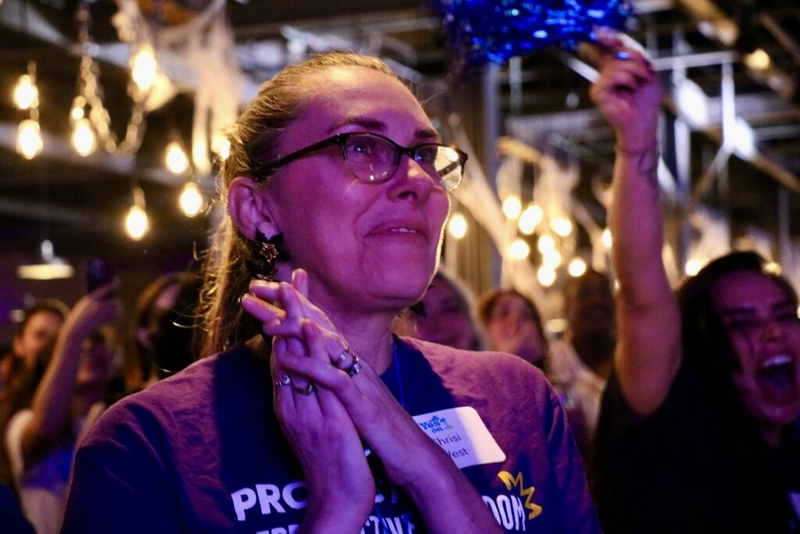
At a Virginians For Reproductive Freedom victory party in Richmond, Chrisi West smiles shortly after voters approved an amendment to enshrine reproductive rights into the state's Constitution. (Photo by Charlotte Rene Woods/Virginia Mercury)
As Democrats nationwide and in Virginia flipped partisan control of the U.S. House of Representatives and U.S. Senate, three civil rights-based state constitutional amendments prevailed across party lines.
The statewide ballot referendums asked voters if they wanted to enshrine reproductive rights, same-sex marriage protections and voting rights restoration for formerly incarcerated people into Virginia’s Constitution. The answer was a resounding “yes,” with roughly 60% of voters backing each amendment.
The reproductive rights amendment garnered over 62% of voters’ approval, outperforming the margin of Democratic U.S. Sen. Mark Warner’s statewide win by over 12,000 votes —- and signaling GOP and independent voters also backed the referendum.
A KFF Health News poll found between 30% and 42% of voters in four states with abortion rights ballot measures in 2026, including Virginia, said those amendments were a major motivating factor in participating in this year’s elections.
“We know that our amendments are not partisan,” said Virginians For Reproductive Freedom campaign manager Han Jones. “Everyone was deciding singularly. A lot of times that’s going to be informed by their life experience, their communities, their personal stories.”
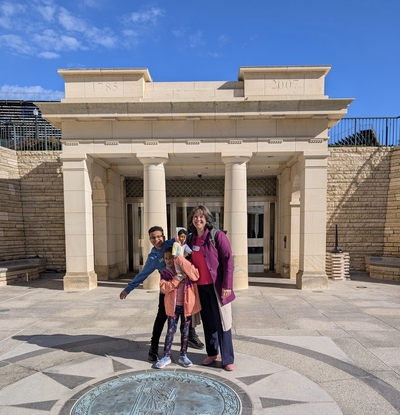
With the passage of Ballot Question 1, Virginians will have stronger protections for contraceptives or fertility treatments and abortion access.
The latter was the more controversial portion of the amendment and received robust debate in the state legislature during the two years it had to pass before it could make it to ballots statewide.
Opponents argued that reducing the number of physicians needed to approve rare late-term abortions made it too easy for people to get the procedure. Proponents said the measure was critical in emergency situations or for rural patients who already travel further for healthcare.
Having survived her own life-threatening pregnancy emergency with her first child, Alexandria resident Kacia Kriener Putman said she knows firsthand how complicated pregnancies can be. Virginia’s law allowing abortion was the reason she felt safe to have a second child.
Putman and her family felt excited on Election Night ahead of the amendment’s victory and have experienced relief in the days since, she said.
“One thing we kept reflecting on over and over is that women might be dying (from pregnancy complications), but they will not be dying in Virginia — at least not from something that can be preventable.”
For Chesterfield County residents Rachel Leyco and Jenn Jackson, Ballot Question 1 and Ballot Question 2 — on whether to lift Virginia’s ban on same-sex marriage — resonated most. Fifty-seven percent of voters approved the second measure.
Virginia previously didn’t recognize their marriage, the couple said. When they became parents, they had to travel out of state so Leyco could legally adopt her own biological children.
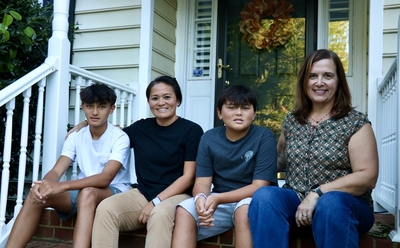
The couple had used Leyco’s eggs paired with a sperm donor for Jackson to carry the pregnancies, a type of assisted reproduction that Ballot Question 1 preserves access to statewide.
The couple’s sons, age and age, called witnessing the amendment’s approval by voters “cool.” Their mothers likened it to a “sigh of relief” for families like theirs.
“It was truly an honor to share our story alongside many others,” Jackson said. “We are both humbled and so very grateful that the citizens of the commonwealth showed up for us.”
The state’s 2006 ban has been dormant since the Supreme Court ruled to protect such unions nationally in 2015.
After the high court overturned federal abortion protections in 2022, Justice Clarence Thomas suggested overturning the gay marriage statute, too.
The move had a chilling effect on the community, Virginians For Marriage Equality manager Narissa Rahaman noted. Some queer couples rushed their marriage plans to ensure they wed before the right could be stripped from them, Rahaman said.
The amendment represents “a new era for LGBTQ Virginians,” Rahaman added. Virginians will be able to “look at their constitution and not see discriminatory language in it.”
Voting rights were on the ballot too.
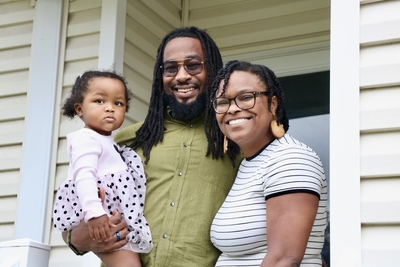
With 56% of the vote, Ballot Question Three will now allow for automatic restoration of voting rights to people with felony convictions who have completed their sentences.
People will still have to register to vote if they wish to do so, but moving forward, they have the option.
Virginia’s constitution has historically disenfranchised people with felony convictions unless a governor pardons them or individually restores their rights.
The subjective process has not always been clear and restorations have ebbed and flowed across gubernatorial administrations. Proponents argued that taking it out of governors’ hands and making it contingent upon completing a sentence would be more just.
“If a judge didn’t give you a life sentence, we shouldn’t give you a life sentence as a society,” Del. Mike Cherry, R-Colonial Heights, said in a recent call with The Mercury. “Once you’ve been adjudicated for your crime and you’ve served your time, then your right should be restored.”
The republican state lawmaker had previously carried the ballot measure in a past legislative session and has continued to support his Democratic colleagues in getting it to voters.
Beyond allowing returning citizens to take part in the democratic process, Virginians For the Right to Vote campaign manager Amber Brown emphasized that the amendment also cements voting rights for all Virginians.
“We made sure Virginians knew they should have the fundamental right to vote because it was not explicitly stated in our Constitution,” she said. “We wanted the people to understand that the bigger picture was about the fundamental right to vote and ensuring our state Constitution reflected that fundamental right.”
Henrico County resident Quadaire Patterson knew voting for the first time was important to him, but he didn’t anticipate the emotional magnitude of the experience on Election Day.
Following his release from prison two years ago, he has helped shape and advocate for several law changes, despite being unable to vote himself. He was among about 60,000 Virginians that Gov. Abigail Spanberger restored rights to over the summer, so voting for the voting rights amendment was extra special for him.
At a (location) watch party with other supporters of Ballot Question 3, Patterson said he cried as he “thought of the many ways this will change the atmosphere in prison and the communities (people) will return to.”
Legal challenges two Question 1 and 2 loom, but campaigns are confident
Opponents are seeking to strike down two of the three amendments.
A court hearing is set for Nov. 13 in a case by the Founding Freedoms Law Center argues the ballot language was “misleading” and that the proper procedure for amending the constitution was not followed.
A separate but similar lawsuit carried by Liberty Counsel was dismissed over the summer, but plaintiffs are seeking an appeal.
The Family Foundation also filed a case on behalf of a pastor in Prince William County that challenges the marriage amendment on the same grounds.
The language of the amendment affirms that “two adults may marry regardless of sex, gender, or race.”
Rahaman said Virginians For Marriage Equality will intervene in the challenge to Question 2.
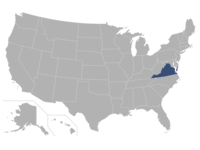
Richmond, VA