New Jersey pet shops would be banned from selling dogs and cats under new bill
Dec 05, 2023 | 6:58 am ET
Description
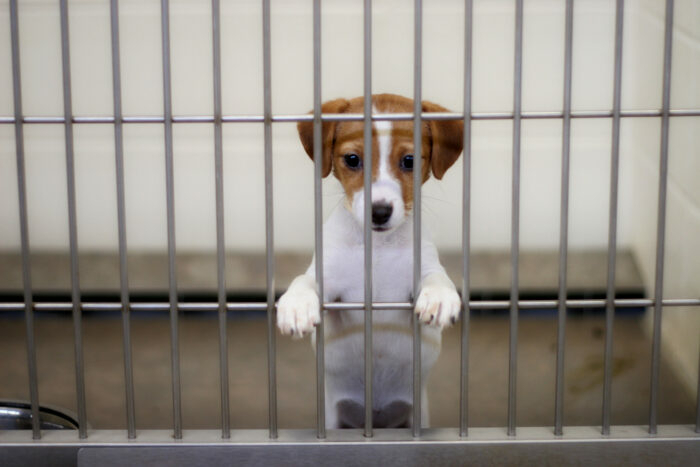
Business owners say the bill would lead to fewer protections for dog and cat owners and cause pet shops to shutter. (Dan Brandenburg/Getty Images).
Animal advocates are asking the state Legislature to advance a bill that would ban the sale of dogs, cats, and rabbits in New Jersey pet stores over opposition from business owners who say the legislation would hurt consumers and lead their shops to close.
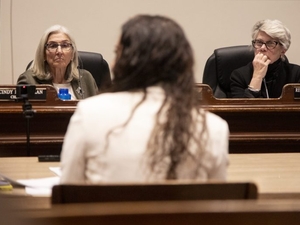
The state Senate Economic Growth committee heard Monday from animal activists on the proposed legislation, including former state Sen. Ray Lesniak. Lesniak appeared in Trenton to testify in support of the bill, recalling a bill he co-sponsored in 2017 to regulate puppy mills that was vetoed by then-Gov. Chris Christie.
“We were there. We were there at the finish line,” he said. “Now, this is certainly the time to take it up again.”
The new bill would repeal the state Pet Purchase Protection Act and replace it with new restrictions on pet stores and guidelines for adoption centers.
The current law requires stores to obtain animals through breeders who are in good standing and licensed by the U.S. Department of Agriculture. Breeders who don’t hold proper state and federal licenses or who violate certain animal welfare laws are barred from selling animals in New Jersey.
Brian Hackett with the Associated Humane Society said the new legislation would stop the “irresponsible and inhumane” sale of animals. Despite the current laws in place, there has been a lack of oversight that has allowed irresponsible breeders to sell dogs in New Jersey stores, he said. He said several other states, including New York, have passed similar bills to protect pets.
“If New Jersey doesn’t pass this law in 2024, some of those bad actors in New York are going to come across the river to our state,” he said.
Under the bill, pet stores could sell other animals, like snakes or lizards, and sell pet supplies, while animal rescue organizations and shelters would be prohibited from obtaining cats, dogs, or rabbits from breeders.
Pet shops found to be selling cats, dogs, or rabbits would face a $500 fine for each violation.
Pet store owners argue the proposed new rules are too onerous. Business owners who have been following the law will see their stores shutter, they said, while people seeking dogs, cats, and rabbits will not have the consumer protections they have under current law.
Charles Morton, an employee at Shake-a-Paw in Green Brook, said families should be able to choose whether to adopt a pet or buy one at a store. Some people want to take in a dog from a shelter, but others are looking for specific breeds or younger puppies.
If pet stores are prohibited from selling certain animals, people will be forced to choose between adopting a dog from a shelter or buying one online, potentially from substandard breeders, said Shake-A-Paw owner Jeff Morton.
“Do we want New Jersey residents to be left in the dark with no consumer protection, without help guaranteed, left on the dark web without knowing where the puppies came from?” the pet store owner said. “Or do we want customers to keep purchasing puppies from highly regulated sources like New Jersey pet stores?”
Sen. Nilsa Cruz-Perez (D-Camden), chairwoman of the committee, suggested the speakers reach out to the bill’s sponsor, Sen. Brian Stack (D-Hudson). The bill did not receive a vote from the committee Monday, and it’s unclear if a vote will be scheduled before the legislative session ends in early January. The measure does not have an Assembly companion bill.
Stack did not respond to a request for comment.
Another Stack bill, one that would mandate licensing for pet groomers, also caught the attention of pet store owners and animal groups Monday. Currently, no licensing or testing is required to groom pets in New Jersey.
Under the measure, prospective groomers would have to be 18 years old, of good moral character, and pass a test approved by the state Board of Veterinary Medical Examiners. The bill does not apply to students in schools registered by the board or people who are practicing grooming in anticipation of the examination.
The bill would also require grooming businesses to provide pets with adequate water supply and sufficient lighting, set up surveillance cameras inside and outside of the business, and refrain from using drying cages. Businesses would have to submit annual reports to the state board on any injuries or deaths at the facility, veterinary treatment plans, and any pet escapes.
Lynn Paolillo, founder of the New Jersey Professional Pet Groomers Alliance and a groomer for nearly 20 years, opposes the bill. She said it doesn’t consider groomers who already have the knowledge and training, and she called the surveillance footage requirements “invasive” and costly for business owners.
Chris Anthony, another member of the pet groomers alliance, said there’s a shortage of pet groomers amid a boom in pet ownership during the pandemic. The industry needs more groomers, and the state should not make it hard to become one, she said.
“It not only does not protect the animals it wants to look after, but it has the potential to harm animals by driving groomers out of the profession through these prohibitive costs and extensive testing,” she said.
The committee did not vote on the bill Monday.

Trenton, NJ