New Hampshire’s jail staffing challenge isn’t just about jails
Aug 25, 2026 | 4:55 am ET
Description
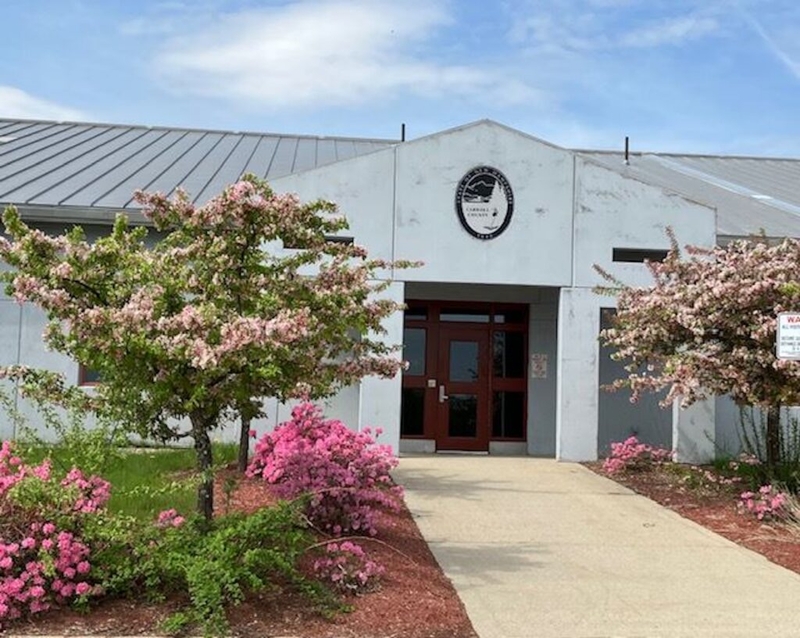
"People may take a job for a paycheck, and they stay because of how they're treated once they get there." Here, the Carroll County Department of Corrections in Ossipee. (Carroll County Department of Corrections photo)
One of the most important staffing decisions we’ve made at the Carroll County Department of Corrections had nothing to do with hiring. We have made it possible for our population to use secure tablets for calling and messaging 24 hours a day.
Before that, people in our custody had to share a limited number of wall phones to call a spouse, child, attorney, or other important contact. Staff spent a surprising amount of time managing disputes over phone access. Once secure tablet communications were available around the clock, I’d estimate close to 80% of that friction disappeared.
What mattered wasn’t just the calmer housing unit; it was seeing my officers get out of the phone line business and back into the corrections business. Instead of managing disputes over access to a shared phone, they could focus on supervising the facility and supporting the people in it.
That matters because, like correctional facilities across New Hampshire, we’re solving a challenge shared by essential services around the state: How do you recruit good people for important jobs, and how do you keep them?
Most people don’t spend much time thinking about correctional officers. I get that. If we’re doing our jobs well, our work happens largely out of sight. But most people do understand what happens when schools can’t find teachers, hospitals can’t find nurses, or police departments struggle to fill vacancies. Communities feel it. Budgets feel it. The people doing the work certainly feel it.
Corrections departments face those same challenges. When I became superintendent, we had 16 vacancies and a starting wage of about $16 an hour. We were competing for employees with the McDonald’s and Dunkin’ down the street. For a small facility housing about 56 people and staffed by 36 officers, that wasn’t sustainable.
Several contracts later, starting pay is around $28 an hour, and we’re down to two openings. Pay was a critical part of that turnaround, yet it wasn’t the whole answer. People may take a job for a paycheck, and they stay because of how they’re treated once they get there.
Leadership sets the tone
My son is 17 and has played hockey most of his life. Several years ago, one of his coaches lost his composure every time a call didn’t go his team’s way. He let his frustration show by yelling at referees and throwing his hat. Before long, players did the same. The team’s attitude mirrored the coach’s, so tempers were shorter, and penalties grew.
Watching from the stands, I couldn’t help but think about leadership. The team plays with the coach’s attitude, and the same thing happens inside a correctional facility. Officers watch how leaders respond to pressure, setbacks, and mistakes. If leadership reacts with anger and frustration, that spreads. If leadership stays steady and accountable, so does the staff.
Early in my time as superintendent, I stood in front of our staff and admitted something that wasn’t easy to say: I had been so close to the problems we were facing that I hadn’t realized I was contributing to some of them. You can’t expect employees to be honest about challenges or mistakes if leadership isn’t willing to go first.
Support starts with paying attention
The hardest moments in corrections are often the quiet ones that come after the emergency has passed.
Years ago, when I was a lieutenant, one of our newer officers responded to a serious incident involving a man going through alcohol withdrawal who was harming himself. It became an all-hands-on-deck effort to stabilize him while the rest of the facility continued operating around us. An hour later, that same officer was back on a food service assignment as if it were just another day.
I remember looking over and noticing she was standing by herself, so I went and asked how she was doing. She looked at me and said, “I’ve never seen anything like that before in my life.” That conversation has stayed with me because correctional officers are professionals. In difficult situations, they do what needs to be done and keep moving. But that doesn’t mean those experiences simply disappear when the shift ends.
Like first responders, healthcare workers, and others in demanding professions, officers carry stress that people don’t always see. That’s one reason Carroll County will host Boulder Crest Foundation’s first full five-day Struggle Well program in New Hampshire this year.
I took the introductory course myself and in an exercise, I found myself responding more emotionally than I expected. The experience reinforced something important for me as a leader: if leadership treats vulnerability as weakness, employees will hide what they’re carrying. When that happens, we miss opportunities to support people before small struggles become larger ones.
Technology can help good people stay
Technology often gets discussed as a public safety issue or an operational issue, while it should also be talked about as a workforce issue. The tablet communication example is one reason.
Giving people better ways to stay connected with family and legal support reduces behavioral incidents, which makes housing units safer for incarcerated individuals and staff alike. The same holds true beyond calling and messaging. When people can access approved media and educational content on those tablets, they have constructive ways to spend their time, and we see fewer behavioral incidents across the unit as a whole. That benefit extends to everyone in the building, not just the people using the tablets. When officers don’t have to spend their shifts managing avoidable conflicts, they can focus on the parts of the job they signed up to do.
We’ve seen similar benefits with monitoring tools that help staff identify communications that warrant attention instead of manually reviewing hours of content. We’ve seen benefits from officer tablets that put schedules, reporting, and rounds on a single screen rather than requiring staff to bounce between systems and paperwork.
The tools do not replace people. They help people spend more of their time on work that matters. In a profession where every minute counts, that’s not a small thing. The test I apply to any technology is simple: Does it fit our facility? Does it support our staff? Does it make the work better?
If the answer is yes, it’s worth considering.
Creating a place where people want to stay
New Hampshire’s county superintendents talk often. Just like teachers across classrooms or nurses across hospitals, we sit on the same boards, compare notes, and learn from one another. We all understand the reality that we’re recruiting from many of the same talent pools, and so is the state.
Recruitment matters, yet retention is where the biggest opportunity exists. People stay when they trust their leaders. They stay when someone checks on them after a difficult day. They stay when they’re given tools that help them do their jobs effectively. They stay when they feel valued.
So, when we find people who are willing to do hard work, the leaders’ responsibility is to create the kind of environment that makes them want to stay.
Concord, NH