New guidance limits voting disqualifications to murder, manslaughter convictions
Sep 15, 2026 | 4:07 pm ET
Description
Among Virginians who are no longer incarcerated, only those convicted of murder and voluntary or involuntary manslaughter remain disqualified from voting under new guidance from the Virginia Department of Elections.
The update comes days before early voting begins in the midterm elections, and months after a federal judge ordered the state to narrow how it determines voter eligibility under the Virginia Readmission Act.
Among Virginians who are no longer incarcerated, only those convicted of murder and voluntary or involuntary manslaughter remain disqualified from voting under new guidance from the Virginia Department of Elections.
The update comes days before early voting begins in the midterm elections, and months after a federal judge ordered the state to narrow how it determines voter eligibility under the Virginia Readmission Act.
The act is part of a series of Reconstruction-era laws barring former Confederate states from disenfranchising residents except those convicted of felonies recognized as common law in 1870.
The Department of Elections said it identified murder and the two types of manslaughter as disqualifying offenses “because they exactly match the elements of one of the offenses listed above.”
Other felonies recognized at common law included arson, burglary, escape and rescue from prison or jail, rape, robbery, larceny, sodomy and mayhem.
Virginia’s chapter of the American Civil Liberties Union estimates that of about 250,000 Virginians who otherwise would not have been able to vote, only about 10% will now be sidelined due to their type of criminal offense.
Although more people than believed may be eligible to vote in Virginia as early as by the end of the week, the path to that clarity was marked by confusion.
After the court ruled in favor of the Virginia chapter of the American Civil Liberties Union in January, friction emerged with Attorney General Jay Jones’ office over which modern-day crimes aligned with the common-law offenses.
By the time Virginia held its primary elections in August, there was confusion around applications and eligibility, prompting some would-be voters to sit out the election while others remained in registration limbo.
Civil rights group files motion to speed up Va.’s reform of voter registration process for ex-felons
Last month, the federal district judge reaffirmed the ruling in favor of the ACLU and said the state had lagged, ”egregiously so,” in implementing the January decision.
Jones’ office had initially sought additional time to comply with the January ruling so the state could develop guidance for registrars and determine which modern-day felonies might still prevent someone from registering to vote.
For instance, illegally using tear gas appeared on a list of potentially disqualifying crimes issued by Jones’ office earlier this year, “even though tear gas was not invented in 1870,” ACLU attorney Eden Heilman said in an interview this summer.
With the latest update, more people may be eligible to vote than previously anticipated.
Gov. Abigail Spanberger also restored voting rights to more than 60,000 Virginians with past felony convictions this summer.
The move contrasts with the approach taken by former Gov. Glenn Youngkin, who shifted the process to an individualized petition system with little clarity about the criteria might be used to grant or deny restoration.
Though the Readmission Acts lawsuit means some people with felony convictions should never have lost their voting rights, Virginia’s Constitution still disenfranchises others unless the governor restores their rights or grants them a pardon.
One of three pending constitutional amendments could allow voting rights to be restored automatically once a person has completed their prison sentence, if voters approve it statewide this fall.
The ACLU of Virginia, WilmerHale and Protect Democracy issued a joint statement Tuesday celebrating the outcome of their case and the updated guidance.
“This victory is an enormous step towards ending felony disenfranchisement in Virginia, one that Virginians can advance even further at the ballot box this fall,” the joint statement reads.
With early voting beginning and Election Day set for Nov. 3, some people with past felony convictions will now be able to weigh in on the proposed amendments and participate in congressional midterm and local elections.
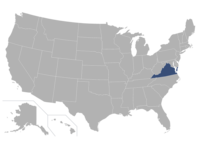
Richmond, VA