New Delaware traffic law could affect downstate housing development
Sep 28, 2026 | 6:00 am ET
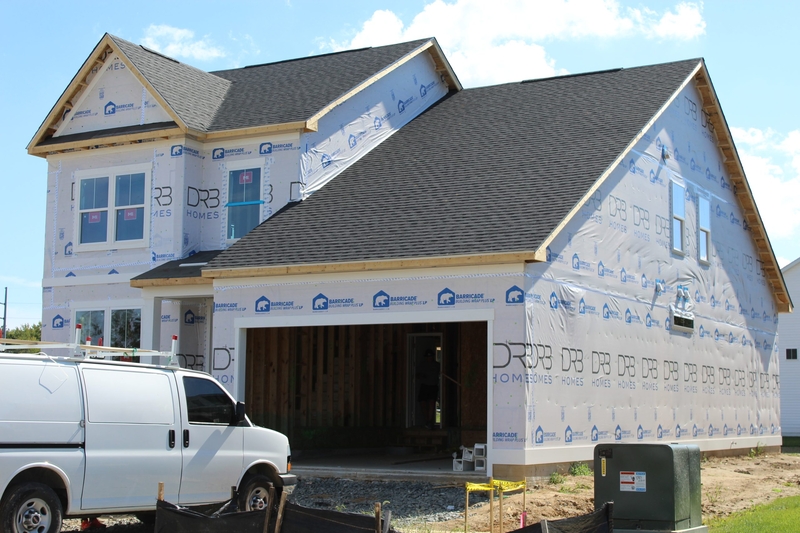
Description
Photo courtesy of Spotlight Delaware
Why Should Delaware Care?
Housing costs are rising in Delaware, leading to strained budgets, longer commutes and an increase in the homeless population. Part of a new law increases minimum housing density to address this issue, but some in Sussex County question how it will affect traffic congestion.
A new state law that aims to create more cohesive communities is already changing the course of development discussions in Sussex County.
Last week, Sussex County Council was considering whether to rezone the 60 acres of land where developers want to build Lantern Cove, a 179-unit housing development being proposed in the southeastern part of the county.
The county’s Planning & Zoning Commission recommended denying the project, which proposes more dense housing than current zoning rules allow, due to traffic congestion concerns.
But, as Councilman Matt Lloyd pointed out, a recently signed state law, House Bill 450, will soon demand that municipalities allow denser developments like Lantern Cove to be built as part of an effort to provide more affordable housing for Delawareans.
“So, congratulations. The state just approved your project,” Lloyd said during the discussion.
The council ultimately deferred its decision on the proposed rezoning for Lantern Cove. But if the council decides to reject the project, the developer could submit another proposal that would likely have to be approved once HB 450 takes effect next summer.
HB 450 mostly reforms traffic study requirements. But it also requires towns, cities and counties to allow developers to build denser homes — townhouses, mixed-use buildings and apartments — in areas slated for growth.
“We are in a housing crisis right now,” the bill’s prime sponsor Rep. Bill Bush (D-Dover) said about the provision at a real estate conference earlier this month. He did not immediately respond to requests for additional comment.
The goal of the legislation is not only to build smaller, more affordable homes, but also to support developments that produce more walkable and bikeable communities and pave the way to expanded public transit options.
But some Sussex County officials have questioned how it will affect mounting concerns over traffic congestion in some of the areas targeted for future growth.
Sussex County Administrator Todd Lawson said allowing more dense housing in areas with sufficient transportation infrastructure makes sense. But he is not sure that’s the case for all the places currently labeled as growth areas in the county.
“If you’re putting density where there isn’t the transportation system to support it, [it’s] going to create problems,” Lawson said.
Lawson said the county will soon reconsider which areas should be labeled for growth as part of its comprehensive planning process. But that process will finish in 2028, after HB 450 takes effect.
Legislating land use
This past legislative session, the land-use law that garnered the most attention may have been Senate Bill 23, which aims to promote more affordable housing in the state and controversially prohibits public hearings for certain “by right” developments.
But HB 450 could arguably be just as consequential for how new housing is developed in Delaware once the law takes effect next summer.
HB 450 primarily focuses on speeding up the building permit process by limiting when developers would have to conduct traffic studies.
Another provision, though, requires municipalities to establish a minimum density of four units per acre in areas slated for growth.
That’s twice the amount of homes currently allowed in Sussex County’s agricultural-residential zoning district, which covers some of the county’s growth areas.
John Kane, Gov. Matt Meyer’s policy director, on Friday held a training session for government officials on how to implement SB 23 and HB 450. He said that building denser housing, as opposed to the spread-out homes in areas of suburban sprawl, generally helps lower transportation infrastructure costs.
“Density is necessary,” he said. “We have to continue to contain the sprawl and to focus our resources into infill areas and cities.”
Which areas will have dense housing?
The state’s recently published guidelines for how to follow SB 23 and HB 450 say any area that is designated as Level 1 or Level 2 by Delaware planning officials are considered “growth areas.”
The state strategies map shows where the state plans to invest in infrastructure improvements. State officials create it based on municipalities’ comprehensive plans, which are roadmaps for future growth that are supposed to be updated every 10 years.
The state recognizes four different levels of anticipated investment, with Level 1 expecting the most and Level 4 as the least. The Lantern Cove housing development south of Millville is in a Level 2 area.
Certain areas labeled for growth have roads that some residents say can’t handle any more traffic.
For example, the Route 24 corridor between Route 1 and Love Creek Bridge is almost all labeled on the map as Level 1, meaning it’s a prime location for more development.
Yet, nearby residents strongly opposed a proposed housing development in that area known as Belle Mead that would add over 300 apartments and 125,000-square-feet of commercial space to the already crowded corridor. A group of residents took Sussex County Council to court for approving the plan. That lawsuit has not yet been resolved.
The state guidelines say municipalities may be able to permit only lower-density developments in some growth areas “as reviewed on a case by case basis with justification.”
Kane said the unique character of historic districts or areas facing threats of coastal flooding are examples of possible exemptions to the pending higher density requirements of new state law.
The state’s housing agency is working on statewide guidance for how to implement the new residential density thresholds, Kane said, which will be published “in short order.”
Dover