Vermont farmers feel impacts of staffing cuts at USDA
Sep 28, 2026 | 7:45 am ET
Description
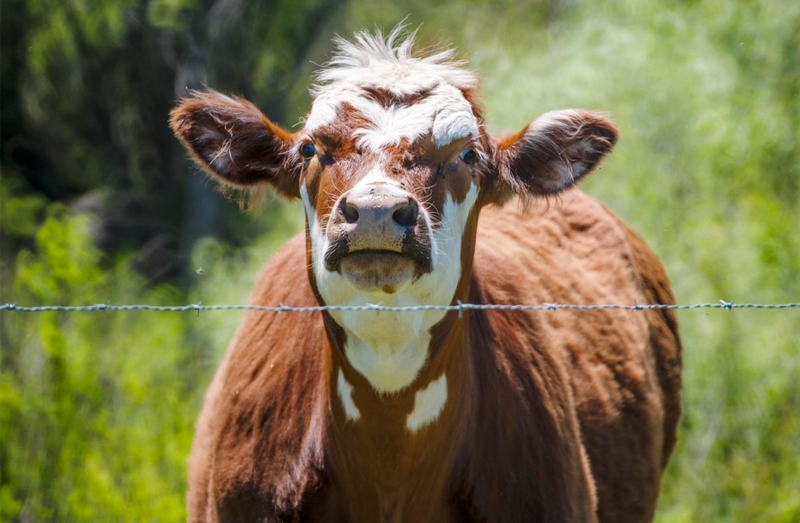
A cow in a field in Lowell in June 7, 2019. Photo by Glenn Russell/VTDigger
Several years ago, Ben Haigh, a small-scale dairy farmer in Shoreham, received $50,000 in federal funding from an arm of the U.S. Department of Agriculture to put up fencing around his farm, infrastructure he felt was essential for his operation.
But lately it’s been a different story for Haigh: In more recent years, he applied again for the same kind of financial assistance and got turned down twice, without much explanation from the Natural Resources Conservation Service, the USDA agency that runs the program designed to encourage conservation practices among farmers.
The fencing helps keep cows out of the river abutting Haigh’s farm, he said, which helps protect water quality nearby.
Haigh’s experience and that of other small farmers comes amid a backdrop of local staff cuts at the USDA that have made the Environmental Quality Incentives Program — and some other federal programs designed to help farmers — hard to decipher and access, Haigh said.
“It’s not transparent at all. The staff can’t really explain” how the program works, Haigh said, at a discussion with U.S. Rep. Becca Balint, D-Vt., in Middlebury earlier this month. “They don’t really have the staff to handle” applications from small farmers, he said.
The challenges for small farmers have mounted since last year when the USDA lost from cuts and resignations 27% of its staff based in Vermont, amounting to 92 staff members, according to an analysis by the National Sustainable Agriculture Coalition, a farming policy advocacy organization.
Of the overall staff cut to the USDA in Vermont, the Natural Resources Conservation Service lost 31 staff members across the state. Addison, Franklin, Lamoille, Rutland and Orleans counties saw over 30% reduction in staff in local offices.
The USDA has a history of offering substantial support to Vermont farmers, who trusted the agency, U.S. Sen. Peter Welch, D-Vt., said in an interview with VTDigger. He said the dramatic cuts to the staff of the Natural Resources Conservation Service hit the state’s dairy industry hard because workers at that agency have direct communication with farmers.
At the discussion, Balint told farmers that experts at parts of the USDA have either been cut or chosen not to work under the Trump administration. Employees that remain have heavy workloads and limited resources, creating a backlog, Balint said.
“The administration can’t just tell us to trust that everything will work out,” Balint wrote in an emailed statement to VTDigger. “We need transparency about what these changes mean for the people who depend on USDA every day, and we need accountability if those services are put at risk.”
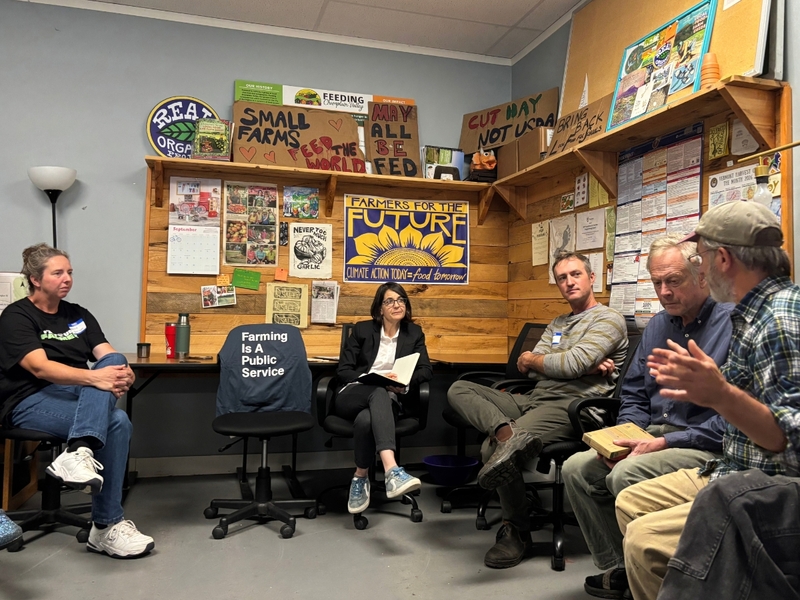
Todd Hardie, Champlain Valley Grain Center; Ross Conrad, Dancing Bee Gardens, at the ACORN Food Hub in Middlebury on Sept 8, 2026. Photo by Greta Solsaa
A USDA spokesperson said in an email to VTDigger the agency is “committed to ensuring Vermont producers have access to the conservation resources they need and putting conservation dollars to work for farmers.”
The spokesperson wrote that the Working Families Tax Cuts Act, known as the ‘One Big Beautiful Bill’ enacted in July 2025, delivers over $34 billion to farming conservation programs in the next five years.
Despite this investment, limited staff at the Natural Resources Conservation Service — with its mandate of supporting conservation projects — has meant that programs geared toward improving water quality, soil health and farmers’ businesses have been compromised, said Maddie Kempner, policy and organizing director for the Northeast Organic Farming Association of Vermont.
The Farm Service Agency, a part of the federal government charged with helping farmers with risk management practices and financial help through credit and lending, also has had staffing cuts. This has made it difficult for farmers to access loans for business ventures or during climate disasters, Kempner said.
The number of farmers who have received funding through the conservation program that Haigh benefited from previously has dropped to 14% in 2025 from 44% in 2024, according to an analysis by the Institute for Agriculture and Trade Policy.
Part of the issue — especially for smaller farmers — is that the staff who remain to run USDA conservation programs are incentivized to award money to a fewer number of larger projects because the budget for some programs have remained steady, according to Becky Schewe, a policy analyst with the National Sustainable Agriculture Coalition.
Haigh pointed out that the largest dollar amount allocated in Vermont in 2025 and so far in 2026 went toward large-scale projects such as nutrient management — a practice of measuring how the amount of fertilizer and manure used on crops enhances crop growth while mitigating environmental harm — and cover cropping — planting certain vegetation to prevent erosion and provide nutrition to soil.
Haigh said he believes more funding should go to proactive conservation solutions rather than preventative measures on farms.
Becky Madden, a farmer with Singing Cedars Farmstead in Orwell who also worked for the UVM Extension Vegetable and Berry program, said that the high tunnel funding was a “game changer” for her and other vegetable farmers in Vermont. High tunnels are structures to grow crops in winter which allow farmers to protect crops from extreme weather and extend their growing season. Madden said her most recent application did not qualify for funding, and she is unsure why.
The process of decoding these federal program applications is exhausting for farmers and adds to their workloads when they are already facing tight margins due to rising costs and stagnating produce prices, Madden said.
Schewe said that reduced staffing means there are fewer people on the ground helping farmers submit applications, explain the reason behind funding priorities and ensure that the federal government works for farmers.
The farming community in Vermont is worried that a reorganization plan the USDA announced this summer could result in even greater hollowing out of USDA staff that will further slow down response times and service for farmers, Kempner said.
The plan requires federal employees based in Washington D.C. to relocate across the country and consolidate regional hubs for divisions of the USDA.
The plan prompted a coalition of federal workers unions at the USDA to raise alarm bells, arguing in a July court filing that the plan was a reduction in force in disguise. On Sept.14, a federal judge in San Francisco temporarily halted the reorganization plan for several areas of the USDA including the Farm Production and Conservation mission area, so Vermonters have yet to see what the impact of the plan will be.
The USDA asserted in an email from a spokesperson to VTDigger that it will ensure all services and support continue without interruption through the implementation of the reorganization plan.
But Vermont farmers are wary of additional changes to the agency they rely on.
“The erosion of trust and the erosion of the existence of experienced government workers in these offices and programs that farmers can access really has long-term negative impacts,” said Kempner.
Read the story on VTDigger here: Vermont farmers feel impacts of staffing cuts at USDA.
Montpelier, VT