New Delaware Surgeon General will cost taxpayers $269K
Aug 04, 2026 | 6:00 am ET
Description
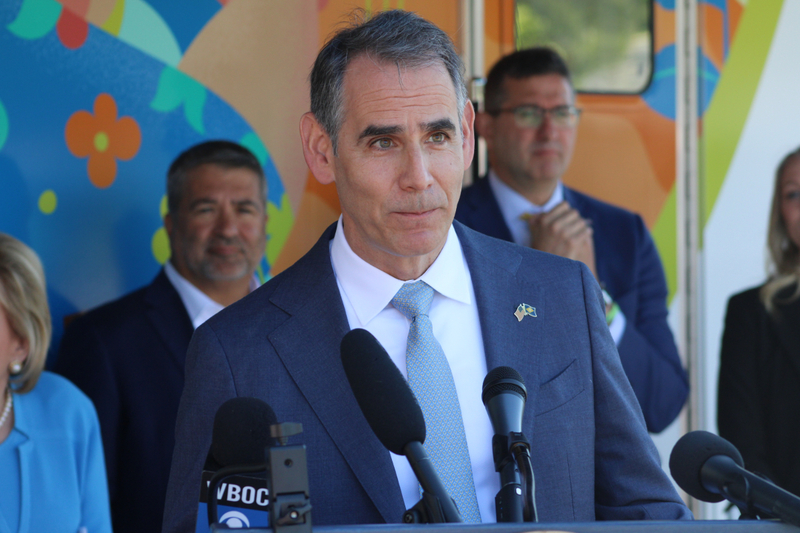
Photo courtesy of Spotlight Delaware
Why Should Delaware Care?
Delaware announced it would fund a new surgeon general’s office within its health department last month without saying how much the new venture would cost taxpayers. Now that the office is officially up and running, that amount remains unclear.
Weeks after Gov. Matt Meyer announced the state would create its own Office of the Surgeon General, Delaware’s top state senator said lawmakers were blindsided by a nearly $270,000 request to fund the position.
While the position will not cost taxpayers additional money this year, it is unclear how it will be funded in the future.
Senate President Pro Tempore David Sokola (D-Newark) said in a statement Monday he supports the position, but he wants to know more about the role and how it would interact with the Delaware Department of Health and Social Services (DHSS).
“Unfortunately, the administration announced Dr. Hockstein’s new role before it had any discussions with the Legislature and before requesting the job reclassification necessary to create the Surgeon General position,” Sokola said in the statement.
According to a statement from the Delaware Senate Democrats, DHSS requested what is called a “reclassification” to change the title and pay grade of an already existing position.
That reclassified position would cost $268,795, if approved as is, said a spokesperson for the Delaware Senate Democrats. DHSS requested a base salary of $200,803 for the surgeon general, but other benefits, such as health insurance and state retirement plans increased the proposed cost.
But the position DHSS seeks to reclassify only cost $119,668, meaning the agency must shuffle $149,127 from within its budget to fund the position the way it desires.
A spokesperson from DHSS confirmed the position would be paid for with already approved funding. It is unclear from where the agency plans to reallocate the more than $149,000.
DHSS submitted its funding request on July 1, after this year’s legislative session had come to a close, Senate Democrats said. The state budget office approved the request on July 23, sending it to the Office of Controller General, the legislature’s budget analysts, where it awaits final approval.
“Discussions amongst legislative leaders are continuing as they carefully and responsibly review the reclassification request for the surgeon general position,” the Democrats’ statement said.
Representatives from Meyer’s office directed Spotlight Delaware to DHSS when asked about the new surgeon general’s cost to Delaware taxpayers.
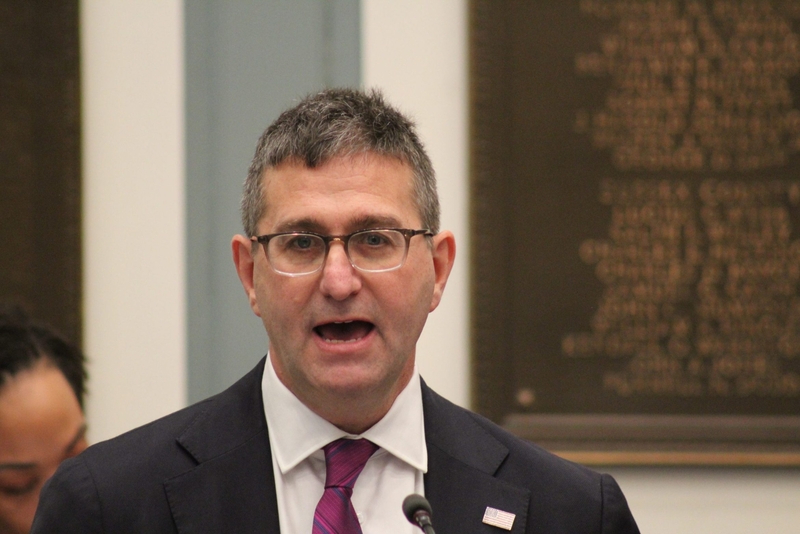
Meyer signed an executive order in July creating an Office of the Surgeon General in Delaware, which will be responsible for public health messaging and improving health outcomes.
Delaware joined a handful of other states like California, Florida and Michigan that also have state-run surgeon general offices. It also comes as some states, including Delaware, have rebuked the federal government’s public health policy recommendations coming from Robert F. Kennedy Jr., the Trump-appointed secretary of the U.S. Department of Health and Human Services.
Meyer selected Dr. Neil Hockstein, chair of the Delaware Health Care Commission and an otolaryngologist – better-known as an ear, nose and throat doctor – to serve as the inaugural surgeon general.
He started in the position on Monday.
Hockstein has served as a close advisor to Meyer since the start of his term in 2025, working to allocate and manage how Delaware will spend hundreds of millions of federal dollars meant to bolster rural healthcare.
He has also worked as a physician in Delaware for decades, with ties to both local and regional health systems. As surgeon general, Hockstein will act as Meyer’s “chief physician advisor” and work as a deputy cabinet secretary in DHSS.
Who is Neil Hockstein?
Hockstein has worked in a variety of roles within Delaware, as well as in nearby Philadelphia. He is a Delaware native who grew up in north Wilmington, and has worked in Delaware as a doctor for 20 years.
Hockstein received his undergraduate degree from Johns Hopkins University, graduated from Thomas Jefferson University’s Sidney Kimmel Medical College and completed his residency at the University of Pennsylvania.
He is the chief medical officer of Parallel ENT and Allergy, which offers management support for ear, nose and throat practices and helps them to “weather healthcare sector changes.”
He is also an assistant clinical professor at Jefferson, where he teaches otolaryngology.
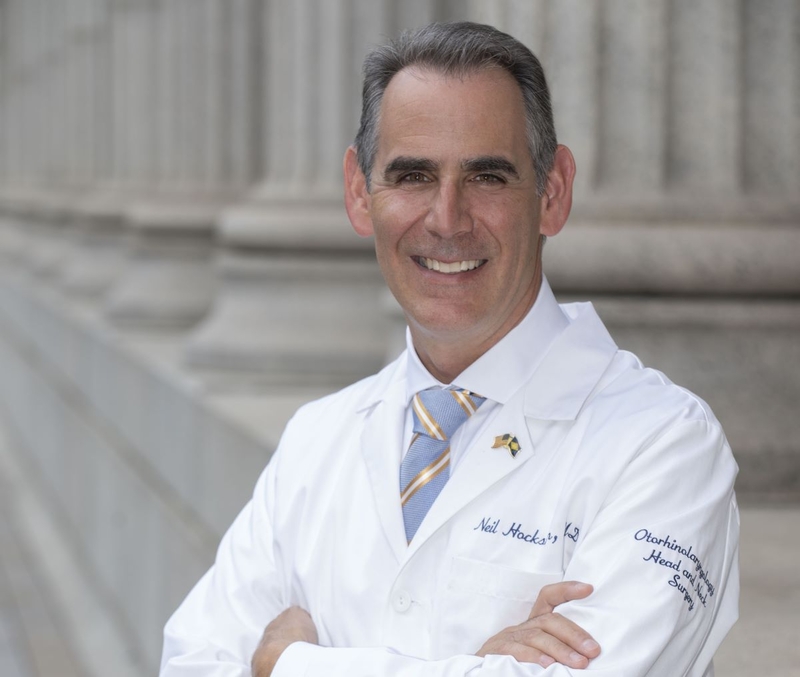
Hockstein currently serves as the chair of the Delaware Healthcare Commission, which is a board of health professionals responsible for recommending how to improve services in the state.
In recent months, he also has served as a close advisor to Meyer, who is a lifelong friend. During the early months of the COVID pandemic, Hockstein advised Meyer, who was then serving as New Castle County executive, on the county’s virus testing program.
Now, as the state awards hundreds of millions of dollars in contracts through the federal Rural Health Transformation program, Meyer has once again turned to Hockstein.
In June, the state announced it would award a $78 million contract to Thomas Jefferson University, Hockstein’s alma mater. Bid reviews obtained by Spotlight Delaware show Hockstein sat on the scoring committee responsible for reviewing Jefferson’s bid to run Delaware’s first medical school.
Asked about his teaching role and its connection to the bid, he said because he worked as a volunteer, he did not need to recuse himself. Additionally, he said he “specifically looked into it” because of the appearance of a conflict.
“I don’t get paid for teaching them, but I teach them,” he said. “And so they give that as a sort of an honorary thing.”
As Hockstein steps into his new role, he said he plans to take a step back from a large portion of his clinical work, as well as some of his outside leadership roles. Starting at the end of July, he said he would no longer be on call for surgical emergencies. His last day in the operating room was July 28.
Why open a new government office?
Meyer announced the new office on July 13 with the goal of improving how the public receives public health messaging, as well as working on initiatives that improve health outcomes.
The state is also opening the office nearly a year after it had sparred with the U.S. Department of Health and Human Services, led by Secretary Robert F. Kennedy Jr., over its public health recommendations and vaccine rollbacks.
Meyer’s office said in its announcement that the office was important because “federal public health agencies face growing political interference and eroding public trust.”
In September 2025, as the federal government began revising vaccine recommendations, Delaware and other states publicly countered the revised guidelines. When Delaware refuted the federal government, Meyer issued a “standing order” to pharmacists to “ensure ease of access” for people seeking the vaccines in the state.
It mirrored efforts in other states like Massachusetts, whose governor ordered her state’s insurance carriers to continue to cover vaccines, even if they were not recommended by the federal government.
Delaware joined with Massachusetts, New York, Pennsylvania, Connecticut, and Rhode Island to collectively focus on “developing evidence-based recommendations on vaccinations, disease surveillance, emergency preparedness and supporting state public health labs.”
Meyer also emphasized that the coalition would base its recommendations on “science” – an apparent reference to recent federal policy decisions that critics say were to appease politics and not backed up by scientific data.
Separately, the nation has had to contend with several viral outbreaks this year, including a measles outbreak, which has impacted at least 42 states.
Delaware public health officials declared a measles outbreak after confirming four cases in Kent County at the end of July. The announcement came just days after the state announced it had confirmed its first case of the virus in more than a decade.
“Science must continue to determine how we keep our state healthy, and that science says vaccines save lives and protect our communities,” Meyer said in September.
Dover