New court filings reveal more details of undercover agents’ surveillance of anti-ICE protesters
Aug 25, 2026 | 2:12 pm ET
Description
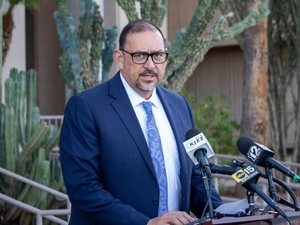
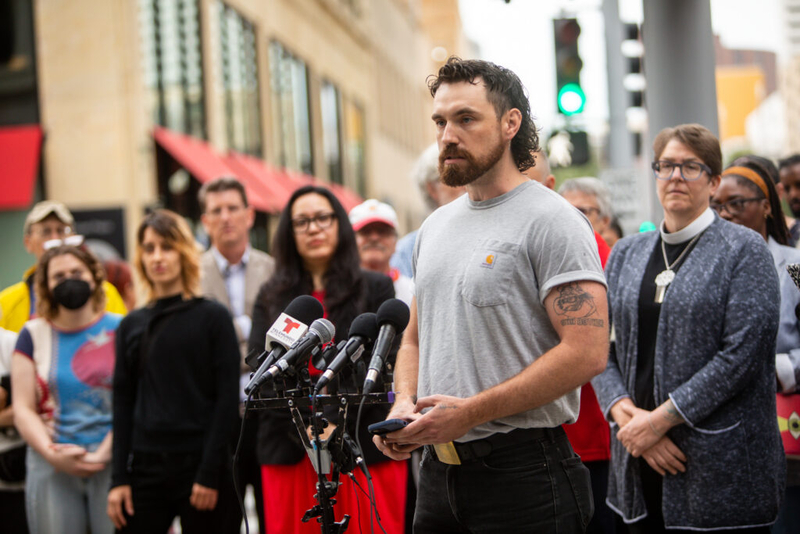
Alec Stewart, one of the 15 people federally indicted for conspiracy to impede or injure federal officers, speaks during a press conference condemning federal surveillance Tuesday, Aug. 18, 2026. (Photo by Nicole Neri/Minnesota Reformer)
A court filing Tuesday morning in the federal case against 15 anti-ICE protesters contained more than 200 pages of undercover agents’ notes and photos from the Department of Homeland Security’s widespread surveillance operation during Operation Metro Surge.
The documents reveal new information about groups and events targeted by the agents — and contain dozens of photos of cars of people who trailed immigration agents in their cars.
The exhibits were submitted to the court by attorney Kevin Riach, who is defending Isaac Sant, one of the 15 Minnesotans charged with conspiracy to assault or impede federal agents. All 15 pleaded not guilty to the charges.
The documents further underscore the feds’ use of intelligence tactics — including the use of undercover agents and electronic surveillance — as a frustrated Trump administration sought to tamp down the widespread resistance to the immigration crackdown, which wound up ensnaring many legal residents and led to the killings of two Americans.
Riach previously submitted another batch of undercover agents’ reports and other surveillance-related documents — including administrative subpoenas for unions’ financial records — in a motion requesting that the judge order DHS to release even more information on the surveillance campaign.
A hearing on that motion is scheduled for Thursday. (The federal government asked U.S. District Judge David Schultz to postpone the hearing until next week, citing staffing shortages. Schultz denied that request on Monday.)
The new documents describe the efforts agents undertook to identify the individuals behind the websites defend612.com and melttheicemn.com, the website for an event in February that convened hundreds of activists from around the country to learn from members about the Minnesota anti-ICE movement. Agents subpoenaed the websites’ registrars and payment processors to confirm the identities of the website creators.
Agents also used a “chat capturing software” to record the contents of Signal group chats, according to an undercover agents’ report, though the software isn’t named.
The new documents also contain dozens of photos of cars with redacted license plate numbers, presumably of cars that followed ICE — known as “patrollers” — and attendees at meetings of anti-ICE organizations. Previously-released internal DHS documents described undercover agents noting the license plate numbers of cars in the parking lots of such meetings, including at churches.
Some of the photos capture daily life in the Twin Cities during the federal operation: anti-ICE graffiti on stop signs and buildings; posters of Renee Good and Alex Pretti with the message “MURDERED BY ICE”; a person in a “FCK ICE” button writing “chinga la migra” in chalk on a sidewalk; a table with pizza and coffee outside of the Whipple Federal Building.
There are several photos of mourners gathered at Alex Pretti’s memorial site.
Prosecutors have said they have 20 terabytes of data in their possession, though not all of it is directly related to the defendants in the conspiracy case.
“I’m inferring that not every bit of evidence was necessarily gathered pursuant to a warrant,” Schultz said in an earlier hearing in the case.

Saint Paul, MN