Nevada sues feds over Colorado River cuts
Aug 24, 2026 | 3:16 pm ET
Description
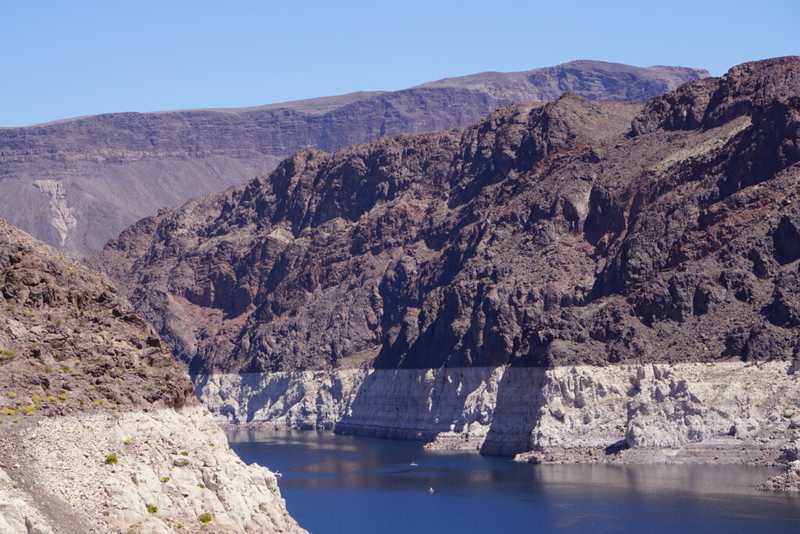
Nevada already has the smallest allocation of Colorado River water among the three Lower Basin states. (Lake Mead photo by Jeniffer Solis/Nevada Current)
Nevada officials have filed the first lawsuit challenging the Trump administration’s Colorado River plan, a plan that would require Nevada to cut water use by about 17% over the next two years and authorizes even larger cuts during dry years.
The lawsuit filed Monday, comes three days after the Trump administration released its 10-year plan for managing the Colorado River, and the nation’s two largest reservoirs, Lake Powell and Lake Mead, amid ongoing drought and record low water storage.
Under the plan, Nevada will have to give up 50,000 acre-feet of its Colorado River allocation over the next two years. An acre-foot is equal to 325,851 gallons — the amount of water needed to cover an acre of land a foot deep or enough water to supply two to three households for a year.
Additionally, Arizona will be required to reduce its water use by 760,000 acre-feet, while California will have to cut about 440,000 acre-feet under the plan.
But if conditions worsen, Nevada could have its 300,000 acre-foot Colorado River entitlement cut by more than 213,000 acre-feet or about 71% of its allocation. Nevada already has the smallest allocation of Colorado River water among the three Lower Basin states.
Upper Basin states – Colorado, New Mexico, Wyoming and Utah – are not subject to mandatory water cutbacks under the plan.
Nevada Gov. Joe Lombardo said challenging the federal plan was “a matter of survival” for Southern Nevada, which “represents about two-thirds of our state’s citizens and the lion’s share of its economy.”
“Nevada could lose more than 70 percent of its already meager Colorado River allocation while the Upper Basin states of Colorado, Utah, New Mexico, and Wyoming are not required to contribute a drop,” Lombardo said in a statement Monday.
“The Department of the Interior can’t roll Nevada and solve the entire Colorado River shortage on the backs of the Lower Basin states,” Lombardo continued.
Neither the Interior Department nor the Bureau of Reclamation responded to requests for comment early Monday.
John Entsminger – the Southern Nevada Water Authority General Manager and Nevada’s lead negotiator on the Colorado River – called the additional reduction proposed by the Interior Department “entirely unrealistic.”
Southern Nevada used about 212,500 acre-feet of water in 2024, however, the steepest cuts under the longer-term federal plan would leave the region with less than 86,500 acre-feet of Colorado River water per year.
“This shortfall will cause devastating environmental, socioeconomic, and health and human safety impacts to southern Nevada and its citizens,” the lawsuit reads.
Entsminger emphasized the state’s success in water conservation over the last two decades, cutting water use by about 40% as the region added more than 800,000 residents.
“However, conservation has its limits, and there is just no way to meet even the basic needs of this community with the volume of water Interior has proposed,” Entsminger said in a statement Monday.
Lower Basin states have sought mandatory cuts to Upper Basin states, asking that cuts be shared among all states. Upper Basin states have argued they are already limited in their water use due to obligations to release water to Lower Basin states.
The lawsuit – filed by the State of Nevada, in conjunction with the Colorado River Commission of Nevada and Southern Nevada Water Authority, and through the Nevada attorney general’s office – requests an injunction to stop the federal plan from being implemented.
It alleges the federal government’s plan violates the Administrative Procedure Act, the National Environmental Policy Act, and the Law of the River.
In the complaint, Nevada officials say the federal government failed to consider a reasonable range of alternative plans, failed to adequately consider environmental and socioeconomic effects of the plan, and failed to respond to comments from Nevada.
Specifically, the lawsuit says the federal government did not properly analyze the potential economic cost of water cuts on Southern Nevada’s $180 billion economy in the Interior’s final environmental analysis.
According to the lawsuit, the federal government’s environmental analysis largely focused on the potential economic losses in agriculture and river-based recreation due to cuts rather than urban and industrial impacts.
Analysis of socioeconomic impacts to Nevada were limited to Clark County, the state’s largest metropolitan area, which drives the state’s tourism economy.
“There is no acknowledgment that contraction of Clark County’s economy has implications for the economy of the state as a whole, including the functioning of state government services on a broad scale,” the lawsuit says.
The lawsuit said the federal government’s analysis did not consider how a 71% cut in the state’s Colorado River allocations would affect the state’s bond ratings, borrowing costs, reductions in tree canopy that could increase urban temperatures, and the increased rate pressure on water users.
Lower Basin states have repeatedly stated they would prefer to avoid a drawn-out legal battle over the Colorado River. However, for the last three years, Upper Basin states and the Lower Basin states have blown through deadline after deadline in attempts to come to a seven-state consensus plan.
Earlier this month, Entsminger said Nevada preferred negotiation over litigation during an annual water summit and still had hoped states could reach an agreement, but said Nevada “fight to protect our community’s water supply.”
On Friday, Tom Buschatzke, the director of the Arizona Department of Water Resources and the state’s top water negotiator, said he welcomed the two-year operating agreement released by the federal government which would allow Lower Basin states to focus on a “longer-term, equitable, basin-wide outcome that includes shared sacrifices along with our Upper Basin partners in an effort to avoid protracted litigation.”
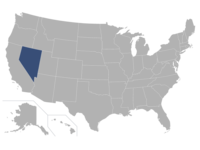
Las Vegas, NV