School meals focus shifts to North Dakota Legislature after Measure 2 defeat
Nov 05, 2026 | 6:00 am ET
Description
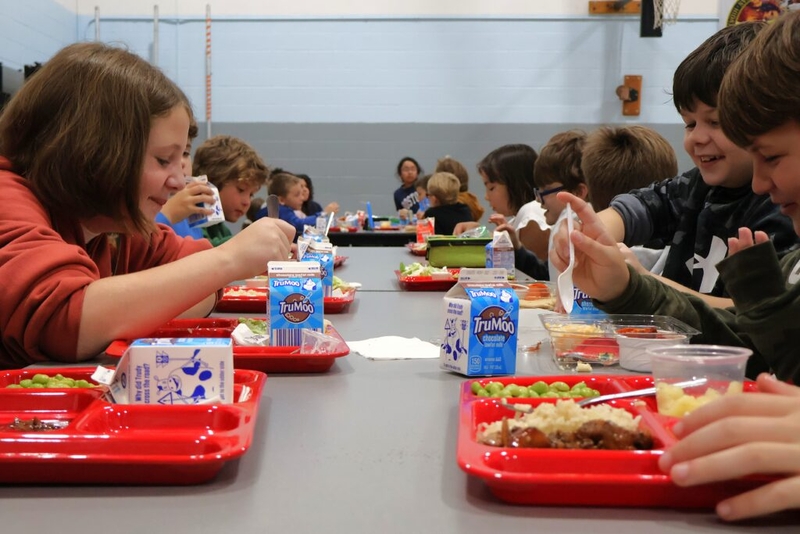
Students eat lunch at Roosevelt Elementary School in Bismarck on Nov. 2, 2026. (Photo by Michael Achterling/North Dakota Monitor)
An attempt to guarantee free school meals to K-12 students narrowly failed at the ballot box Tuesday, but the issue isn’t going away in North Dakota.
Supporters and opponents of Measure 2, the defeated constitutional amendment, are looking ahead to next steps. Nearly 51% of voters rejected the measure, while about 49% supported it, according to complete but unofficial results.
Sen. Paul Thomas, R-Velva, said Wednesday he thinks there is unanimous support in the state for the core principle of ensuring no child goes hungry.
“Nobody in North Dakota feels or has any belief that a child should ever not be fed,” said Thomas, who opposed the initiated measure but supports legislative action. “This really isn’t a partisan Republican-Democrat divided issue.”
Voters defeat free school meal ballot measure in North Dakota
An advocate for free school meals in the Legislature said she plans to introduce legislation in 2027 to accomplish what Measure 2 failed to do.
Rep. LaurieBeth Hager, D-Fargo, the sponsor of a free school meals bill that failed to advance in 2025, said she plans to introduce similar legislation again to require all K-12 schools to offer breakfast and lunch to students at no cost.
“It’s equalizing the kids. We don’t charge them differently for books. We don’t charge them differently for using the buses,” Hager said. “It’s part of the school day and part of the learning experience.”
Hager said she believes the fact that Measure 2 was a constitutional amendment likely scared off voters who are otherwise supportive of providing free school meals to K-12 students.
“If the powers that be think this needs to be in statute instead of in the constitution, then we will get it done that way,” Hager said. “The fight continues.”
Opponents of the measure, including Gov. Kelly Armstrong, criticized putting school meals in the constitution. The program was estimated to cost $124.3 million to $134.3 million every two years starting in 2027-29. Critics said mandating that spending in the constitution would tie lawmakers’ hands during lean budget years.
Armstrong said Wednesday he doesn’t anticipate a large push by Republican lawmakers to revisit a universal school meals program.
“I just think it’s a little harder politically today than it would have been even six months ago,” he said.
Rep. Mike Nathe, R-Bismarck, said voters rejected Measure 2, and he questioned why state lawmakers would consider going against the voters’ wishes.
“The people of North Dakota spoke. They rejected Measure 2, and we have to respect that,” Nathe said. “But that does not mean we can’t work around the edges a little bit and kind of make some things better.”
Nathe sponsored a school meal bill in the January special session that aimed to head off a constitutional ballot measure. House lawmakers approved the bill, but it lost in the Senate by two votes.
Thomas said he does not support a statutory free school meals bill like Hager’s proposal, but the senator said the election result shows voters expect lawmakers will continue working on the issue.
“They want us to continue working on some of the shortcomings of current policy,” Thomas said.
Thomas is working on policy ideas he plans to introduce in the legislative session that begins in January. His bill is being drafted and he plans to gauge his colleagues’ interest when the Legislative Management committee meets next week.
Other lawmakers, including Rep. Chuck Walen, R-New Town, have said they plan to propose alternative solutions on school meals. Sen. Michelle Axtman, R-Bismarck, said the issue has not been “put to bed,” and expects to make progress during the session.
“I think we’ll find a way to maximize federal dollars and be very strategic and problem-solving to come up with a solution that makes more sense than the measure did,” Axtman said in an interview Tuesday night.
North Dakota families can face debt collections if they can’t afford school lunch
While North Dakota lawmakers have voted against free school meal bills, they have adopted other proposals including an anti-lunch shaming bill in 2023. However, more than two dozen school districts reported in a survey that they refer families to collection agencies for unpaid lunch debt.
Legislators also have slightly expanded how many students qualify for free and reduced lunch through the federal program. In 2025, lawmakers earmarked $6 million to raise the income level used to determine families’ eligibility.
About $2.5 million of that funding was spent in the first half of the 2025-27 budget cycle, said Lynelle Johnson, director of the Office of Child Nutrition and Food Distribution for the North Dakota Department of Public Instruction. The funding has helped about 3,000 students who would not have otherwise qualified under the federal free and reduced lunch income eligibility requirements.
“That additional expanded eligibility is very appreciated,” Johnson said.
Robin Nelson, chair of Together for School Meals, said many North Dakotans gave their “time, energy and heart” to the Measure 2 campaign because they saw a need in their schools and communities.
“We wish we could have given North Dakota families better news. They are why we took on this effort, and they remain our concern as we consider what comes next,” Nelson said.
Amy Jacobson, the group’s spokesperson, said members of the coalition are going to take time to digest the results and consult with stakeholders before they make any decisions on what they will focus on moving forward.
“Families are still stretching their budgets, and children still need meals to get through the school day ready to learn,” Jacobson said.
North Dakota Monitor reporter Jacob Orledge can be reached at [email protected]. Monitor reporter Michael Achterling can be reached at [email protected].
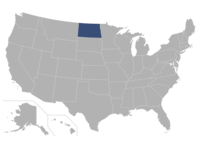
Bismarck, ND