Arkansas economic development proposal sponsors regroup after close loss at the ballot box
Nov 05, 2026 | 6:00 am ET
Description
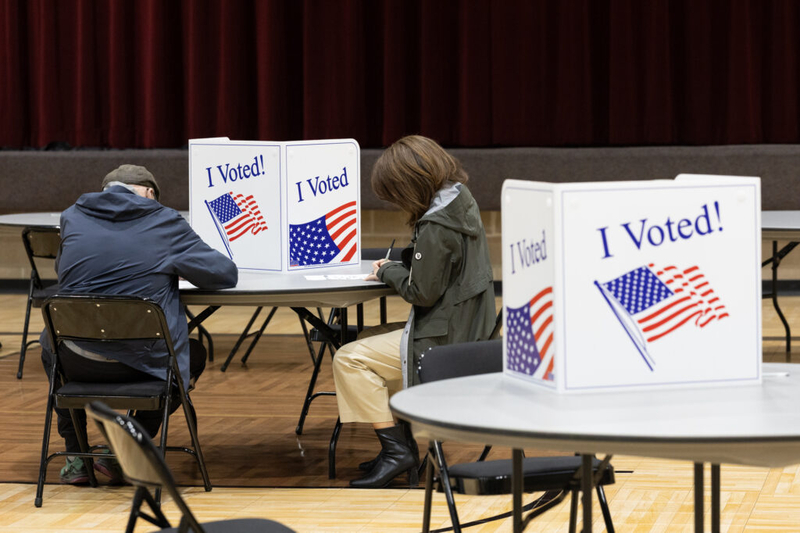
Voters cast their ballots at the Pulaski Heights United Methodist Church in Little Rock, Arkansas, on Tuesday, Nov. 3, 2026. (Photo by Katie Adkins/Arkansas Advocate)
Following the narrow defeat of a ballot measure that would have allowed the creation of local economic development districts Tuesday, Issue 3 supporters said they’re going to take time to analyze election results and consider ways to move forward.
“We’re not giving up. We’re just going to regroup and figure out another game plan,” said Randy Zook, president and CEO of the Arkansas State Chamber of Commerce and the Associated Industries of Arkansas.
Zook also chairs Arkansans For Strong Communities, a ballot question committee that backed Issue 3. The proposed measure would have amended the Arkansas constitution to permit lawmakers to create programs, loans and grants using public money for the purpose of economic development.
The Legislature would have been given the authority to pass laws allowing local governments to create economic development districts where incentives like tax rebates could be negotiated to attract new business to a designated area.
Supporters said Issue 3 was needed to make Arkansas more competitive with other states by allowing cities and counties to offer economic incentives to spark economic growth in smaller communities.
Opponents argued the measure would grow government and could harm Arkansans who were being asked to approve a program whose rules have yet to be outlined.
Zook said he respects the decision of voters, who rejected Issue 3 with 50.7% of votes, according to results from the secretary of state’s office. However, Zook noted that 41 of Arkansas’ 75 counties voted in favor of the measure, which means “there’s significant support for doing what we wanted to do,” he said.
While Arkansas has “very robust economic incentives” at the state level to attract industry, Zook said Issue 3 was a tool for local communities aimed at quality of life issues like attracting retail facilities and supporting development of rundown properties.
This type of tool is needed in the Delta where communities are losing population due to a lack of amenities, he said.
Zook said supporters will do some “real in-depth research” about what might be done, which could include less comprehensive and highly targeted proposals.
“The goal remains the same — help people be in a position to attract what it takes to keep a healthy community,” he said.
Monette Mayor Bob Blankenship supported Issue 3 and following its defeat said his “sleepy little town” in northeast Arkansas will continue focusing on things like water infrastructure to be prepared for when economic development opportunities do arrive.
Located between Jonesboro and Blytheville in Craighead County, Blankenship said Monette is growing thanks to its proximity to the burgeoning steel industry in Mississippi County. Blankenship said he’d like to offer residents more amenities to keep them in town, such as a sitdown restaurant, which Monette currently doesn’t have.
“Our hands are tied as far as doing the tax breaks that the (Issue) 3 was going to help on, but we can offer it in our own little way and hopefully that’ll work,” he said.
Senate President Bart Hester, a Cave Springs Republican who also backed Issue 3, said there have been no discussions about lawmakers referring a similar measure to voters in the future. Hester and Democratic Sen. Clarke Tucker appeared in a video touting the measure as something conservatives and progressives could support.
The proposed constitutional amendment, one of four measures on the November ballot, was referred to voters by the Legislature through a resolution sponsored by Republicans Sen. Jonathan Dismang and Rep. Howard Beaty.
Northwest Arkansas, a rapidly-growing region that Hester represents, doesn’t need Issue 3 to help spur economic development, but other parts of the state do, he said. Hester said the measure would have made a big difference in border towns like Texarkana, and he hates to lose the opportunity to compete with neighboring states that do offer these types of incentives.
“We knew it was the right thing for Arkansas, the voters felt differently and the voters rule,” he said.
Arkansas Explained: What are the incentives for West Memphis’ possible superproject?
Hester said conservative friends opposed to Issue 3 argued the state just needs to create a great tax and regulatory environment that encourages businesses to pick Arkansas over incentives they would receive elsewhere. Arkansas will continue to work on that, he said.
“Issue 3 was just another tool in the toolchest,” Hester said. “So we’ll just continue to double down on cutting corporate income tax, cutting personal income taxes.”
Republican Gov. Sarah Huckabee Sanders, who won reelection Tuesday, has said she wants to continue cutting taxes in her next term. Hester said Wednesday that he plans to file a tax cut bill during next year’s legislative session.
“Over the past four years, Governor Sanders has cut taxes four times, lowering the income tax by 25%, slashed red tape, attracted billions of investment to Arkansas, and helped create 75,000 new jobs,” Sanders’ spokesperson Sam Dubke said in an email. “The Governor will use the same playbook to continue to grow our economy and keep costs low for working Arkansas families.”
Hester also touted the governor’s executive order to speed up permitting for economic development projects.
Little Rock