Nessel discusses threats of federal monitors, law enforcement at polling places during voter forum
Sep 23, 2026 | 1:57 pm ET
Description
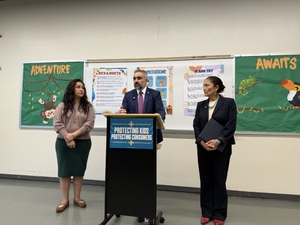
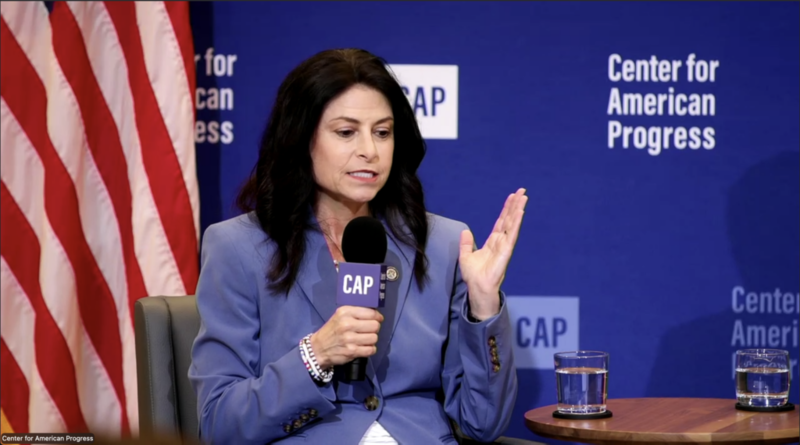
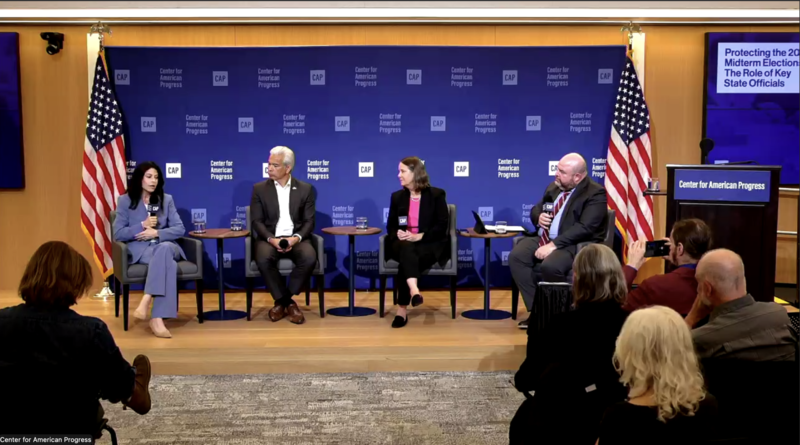
Michigan Attorney General Dana Nessel speaks during a Center for American Progress forum on the 2026 Midterm Elections on Sept. 23, 2026. (Screenshot)
Federal threats to election processes in states where President Donald Trump lost in previous elections are top of mind for law enforcement officials and the clerks who run elections in Michigan’s 83 counties, Attorney General Dana Nessel said Wednesday during a voter forum held in Washington, D.C.
Nessel was one of the featured panelists during the Center for American Progress’ 2026 midterm elections presentation, which also included fellow Democrats Maine Secretary of State Shenna Bellows and California Attorney General Rob Bonta.
The forum centered on the preparations that officials in California, Maine and Michigan have made for the worst case scenarios of the upcoming November general election, and what assurances the states could offer voters that elections will run smoothly.
The Trump administration, aside from demanding state voter rolls and efforts to curtail vote by mail rules, have not ruled out the placement of federal monitors, law enforcement and even U.S. Immigration and Customs Enforcement agents at polling places to investigate alleged voting irregularities or immigration violations involving people who appear at polling places.
Nessel and Bonta have been allied in pushing back against the administration through various joint lawsuits, including President Donald Trump’s posturing on voting matters and election integrity, while Bellows has also dealt with threats and election denialism.
Nessel said Michigan is ready for threats against election officials
On the threats of federal agents showing up to Michigan polling places, Nessel said that her state was a sort of “ground zero” for Trump’s efforts to overturn the 2020 election. She recalled emergency phone calls she had with her partners at the federal level and with Democratic attorneys general across the nation, discussing the “bizarre” circumstances that were occurring in real time.
Recording allegedly captures Trump pressuring Wayne Co. canvassers to reject 2020 election results
Among the 2020 actions Nessel mentioned were Trump pressuring Republican members of the Wayne County Board of Canvassers to reject election results; the state’s Senate majority leader and the House speaker being flown to the Oval Office for meetings with the president; Rudy Giuliani showing up in Michigan to host an election integrity hearing, later lampooned by Saturday Night Live, and the case of the alleged false electors for Trump, who were prosecuted but saw their charges dropped in connection with the president’s attempts to overturn the results.
“The list really goes on and on,” Nessel said. “I will say there’s nothing that I don’t think this president will try to do in his effort to keep majorities in the House of Representatives and in the Senate. I think Michigan will be at the heart of this again, but we’re kind of old hats at this now.”
Nessel emphasized that Michigan has decentralized election processes, run by each of the state’s 83 county clerks and thousands of local clerks across its cities, townships and villages. Still, Nessel said conspiracy theories about election officials persist.
“Whenever I hear that there’s some sort of conspiracy, I just don’t know how that would ever work,” Nessel said. “But I will say that I feel really bad for our local clerks who … feel under threat.”
Clerks, Nessel said, also face harassment, including “swatting” and “doxing,” in which false emergency reports or the release of personal information can put officials at risk. Former U.S. Department of Transportation Pete Buttigieg, who lives in Michigan with his husband and children, was a victim of one of the most recent high-profile swatting events.
Nessel said her team set up a hate crimes and terrorism unit when she took office in 2019, and that unit has been at the forefront of investigations of threats to public officials and their families.
Other preparations have included advice to local law enforcement, stationing attorney general office agents in case there is a criminal incident or voting threat at polling locations, and making sure its assistant attorneys are prepared to do the same.
“We have briefs that we’ve prepared for virtually every set of circumstance we could think of, except the zombie apocalypse,” Nessel said. “I don’t have that down yet.”
The breakdown of federal agencies tasked with voter protections is troubling, Nessel said
On Trump’s politicization of the U.S. Department of Justice, and his threats to use the agency to undermine confidence in voting, Nessel said it has been hard to watch her key federal allies be broken down in such a way.
“We’ve had federal monitors who have shown up at our elections every other year for as long as I can remember. But they’re usually there for the purpose of ensuring that no one is losing their right to vote, that voters are not being suppressed,” Nessel said. “Even though, for the purposes of the primary, we had monitors there, but they didn’t do anything wrong, they didn’t do anything illegal, they didn’t do anything differently than what they usually do. Now, in my mind, is this pre-litigation? Are they going to use that to manufacture something and to say, ‘ah, I saw this in the city of Detroit; I saw this in Lansing.’?”
Nessel said there is a very real scenario where federal actors could be poised to violate federal law, or at least have a willingness to do so, by tampering with state elections through brute force.
“Which, of course, is deeply concerning,” Nessel said. “But my hope is that at the end of the day, you have these people, they’ve sworn to take an oath, and that they will follow the law. … If you are going to do something illegal at the behest of a president who is 80 years old, and can only be expected to be in office another couple years, there’s a lengthy statute of limitations for any crimes that a federal agent might commit in the event that they violate a court order.”
Ballot cast by noncitizen in Michigan triggers an investigation, felony charges
Threats to voter confidence in Michigan’s elections was as big a threat, Nessel said, as federal agents potentially roughing up voter lines or smashing through the door. That’s why Nessel’s team in Michigan have also been focused on battling misinformation when they find it.
That was especially true regarding stories about noncitizen voting, which she said Republicans have weaponized in attempts to make residents feel like the system was rigged against them in favor of those who have no legal right to vote in the first place.
Nessel said the legal deterrents in place have helped curtail incidents of noncitizen voting, even as her office had attempted to prosecute a Chinese national who voted in 2024 but skipped the country and ultimately avoided state prosecution.
“We’re seeing people candidly who are trying to test the system, and the encouragement is, ‘If you are a noncitizen, why don’t you see if you can vote?’” Nessel said. “Well, we are catching people if they try to do that, and those people are getting prosecuted. And for any of the noncitizen voters, they’re getting deported.”
Echo chambers are driving the biggest wedge on confidence in elections
That said, the stories of noncitizens voting in Michigan elections — whether real or fabricated for social media outrage — have been difficult to combat, Nessel said.
The attorney general said that’s why her team, as well as attorneys general in other states, have been reviewing election irregularities, which have shown that noncitizen voting is a rare occurrence.
“Again, in the handful of cases where you had noncitizen voters who were able to cast a ballot, those people got prosecuted,” she said. “There are real consequences for those people.”
Nessel said there are also conspiratorial messages coming from federal agencies sowing mistrust in elections, and that her team has to push back against those claims to debunk them on behalf of the state’s voters. The best thing she can do, however, is to just show people “what the truth is and what has actually happened, versus what they’re hearing.”
“The problem is we’re in different echo chambers, and the media that I pay attention to might not be the media that people are watching, where they’re receiving this just flagrantly false information,” Nessel said. “So all we can do is try our best to combat that, and for people to understand again, who’s administering the election? It’s your local clerk that you elected. … She’s not trying to undermine the election.”
Lansing, MI