Nebraska minimum wage will increase next year by 29 cents less than voters called for
Sep 23, 2026 | 2:00 pm ET
Description
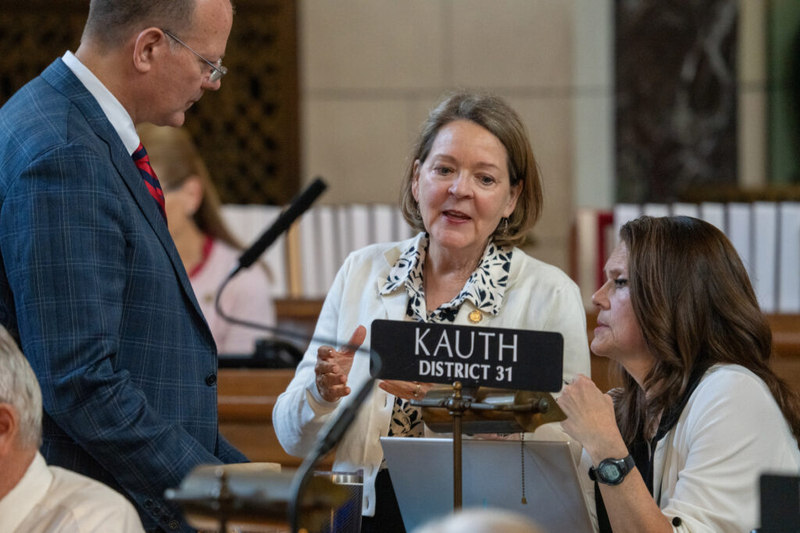
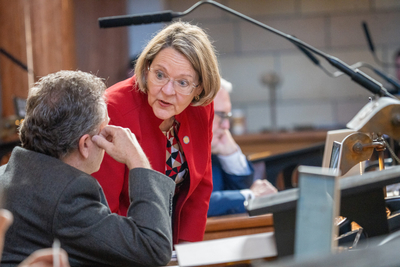
State Sen. Jane Raybould of Lincoln, center, talks with state Sens. Paul Strommen of Sidney and Kathleen Kauth of Omaha on May 28, 2025. Raybould sponsored a measure to slow down voter-approved minimum wage increases while Strommen sponsored a measure to modify voter-guaranteed paid sick leave for most Nebraska employees. Kauth chairs the Legislature's Business and Labor Committee, which considered both bills. (Zach Wendling/Nebraska Examiner)
LINCOLN — Legislative changes this year to annual bumps in Nebraska’s minimum wage mean workers’ increase next year will be 29 cents less than what voters approved in 2022.
New data from the U.S. Bureau of Labor Statistics released this month indicates a 3.6% annual rise in the Consumer Price Index for goods and services between August 2025 and August 2026 for the Midwest region. That’s the indicator voters approved to calculate minimum wage bumps beginning in 2027, after Nebraska’s minimum wage hit $15 this year.
Lawmakers this spring instead locked the annual increase at 1.75%.
Over the past 25 years, inflation for the Midwest averaged 2.4% and was at or below 1.75% 11 times, as low as -1.8% between 2008 and 2009 and as high as 8.1% between 2021 and 2022, according to data from the U.S. Bureau of Labor Statistics for the Midwest. Average inflation for the past five years was 4.1%, while over the past 10 years, it was 3.2%.
State Sen. Jane Raybould of Lincoln, who led the changes in Legislative Bill 258, and Sen. Stan Clouse of Kearney, who pushed for a consistent increase, said predictability was key. The bill passed 33-16, with Raybould, a Democrat, joining 32 of 33 Republicans in support of her bill.
Raybould’s law also created a “youth minimum wage,” allowing employers to pay teens ages 14 or 15 a lower wage, $13.50 hourly, beginning July 19.
Predictability was key consideration
Clouse said he always felt CPI was the wrong indicator because it fluctuates. In 2025, he said, the debate should have been what the annual increase should be, not other issues.
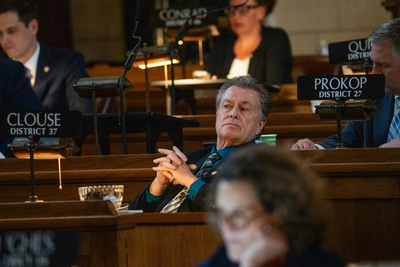
“I’ve talked with numerous small businesses about the negative impact minimum wage is having and I think we see a negative impact on youth employment as well,” Clouse said in a text Tuesday. “It is just one topic of the myriad of issues facing us all right now, and it does present challenges from many views and opinions.”
Raybould said businesses have told her that no matter the economic circumstances, businesses want to budget and plan for the future. She said minimum-wage increases often have the largest negative impact on those who often have the hardest time finding employment, including those out of the job market for a while, young people and people with disabilities.
“I think that is clearly something that is unintended,” Raybould said.
‘Short-sighted decision’
But others, such as state Sen. Terrell McKinney of Omaha, a sponsor of the 2022 ballot measure that raised the state minimum wage from $9 to $15 this year, and which put in place the cost-of-living increases after, said the latest data proved why the Legislature was wrong.
“It was a short-sighted decision not for the people but for corporations and larger entities,” McKinney said Monday. “It wasn’t thoughtful about what’s actually going on in society, especially with an affordability crisis going on.”
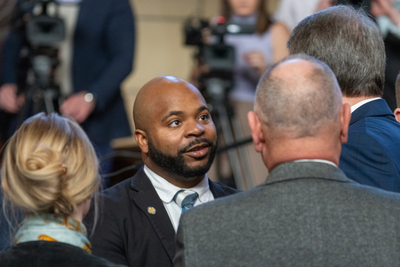
State Sen. Danielle Conrad of Lincoln, who led opposition to Raybould’s measure, said the nation faces a “clear affordability crisis” that seems to worsen almost every month. She said when voters decided in 2022 whether to increase the minimum wage, they “smartly” tied increases to non-arbitrary, Midwest-specific factors.
“To have a cynical Legislature come in and undercut the will of the people so that working Nebraskans can’t keep their head above water against basic inflationary factors that are beyond their control, it just exacerbates this affordability crisis,” Conrad said.
She said lawmakers had heard “countless examples” of economic challenges facing Nebraskans but that the latest inflation figure is “much more negative and much more dramatic.”
“That’s real money for hundreds of thousands of minimum-wage workers,” Conrad said.
Legal battles continue
Under the legislative changes, Nebraska’s minimum wage will increase to $15.26 on Jan. 1, which is annual pay, before taxes, of $31,746, assuming 2,080 work hours in a year at 40 hours each week and no overtime.
The voter-approved 2022 law would have increased the wage statewide to $15.55, with increases rounded up to the nearest 5 cents. Annually, that equates to $32,344, a difference of $598 between the two wages.
While Raybould achieved her legislative win after four years of trying, the fight barreled on in Omaha and Lincoln, Nebraska’s two most populous cities. This summer, city leaders in both cities passed local ordinances seeking to reinstate the 2022 law for cost-of-living increases, as well as prohibit the new lower wage based on age.
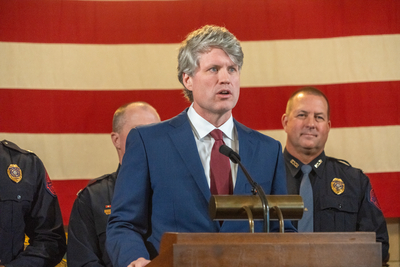
Nebraska Attorney General Mike Hilgers sued to block both ordinances, arguing they are a “matter of statewide concern” and that despite city charters, city leaders overstepped. Raybould and state Sen. Beau Ballard of Lincoln had requested Hilgers opine on the constitutionality of such ordinances.
Lancaster County District Judge Lori Maret blocked the Lincoln ordinance before it took effect in mid-July. Douglas County District Judge Timothy Burns has not yet ruled on the Omaha ordinance, which is set to take effect Oct. 1.
‘False sense of security’
State Sen. Kathleen Kauth of Omaha, who chairs the Legislature’s Business and Labor Committee, said the purpose was in part to allow slower minimum wage bumps and give businesses more time to absorb it. Kauth said that when the minimum wage increases, it leads other wages to increase, too, leading to wage compression or increased consumer costs.
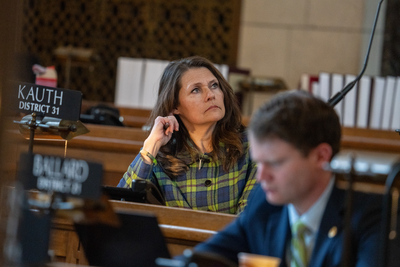
“A state or government-mandated increase in the minimum wage does nothing more than give you a false sense of security for about six months, and then all of a sudden all of those costs are going to catch up,” Kauth said.
She said the solution is for workers to ask their employers what they can do to earn a wage, get more skills or find a different job, rather than the government changing the baseline pay.
Of the minimum wage ordinance fights in Lincoln and Omaha, Kauth said it echoes what she called a “socialism push” nationwide. She said if the ordinances stand, it could lead employers to fire workers and expect more of employees, risking burnout, or to look toward automation.
Of the 16 senators who opposed Raybould’s law, McKinney led 15 in a letter supporting the Omaha ordinance. The lone exception was state Sen. Dave Wordekemper of Fremont, a Republican.
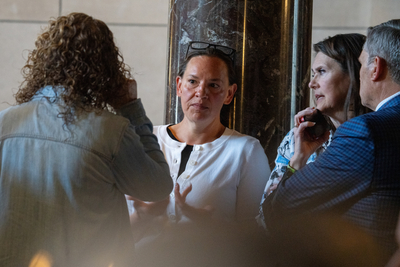
Conrad said she appreciated city leaders for “standing in their power” and said it’s “undeniable” that residents in Omaha and Lincoln face higher costs of living than other parts of the state. She said voters should hold “cynical, out-of-touch politicians” accountable for their actions.
“I hope he (Hilgers) steps forward to voluntarily dismiss his frivolous political litigation,” Conrad said.
Raybould reiterated her concerns that the minimum wage increases have had detrimental effects on youth employment rates. She said policymakers will be watching whether the “youth” wage helps.
“Teenage youth being employed does help with family expenditures, particularly on things like clothing and entertainment, et cetera, and some save for their future education,” Raybould said. “But it’s sort of a moot point when young people are not getting employed.”
Lincoln, NE