Need help? Idaho state health agency, nonprofits, churches collaborate to create resource network
Jul 10, 2026 | 6:10 am ET
Description
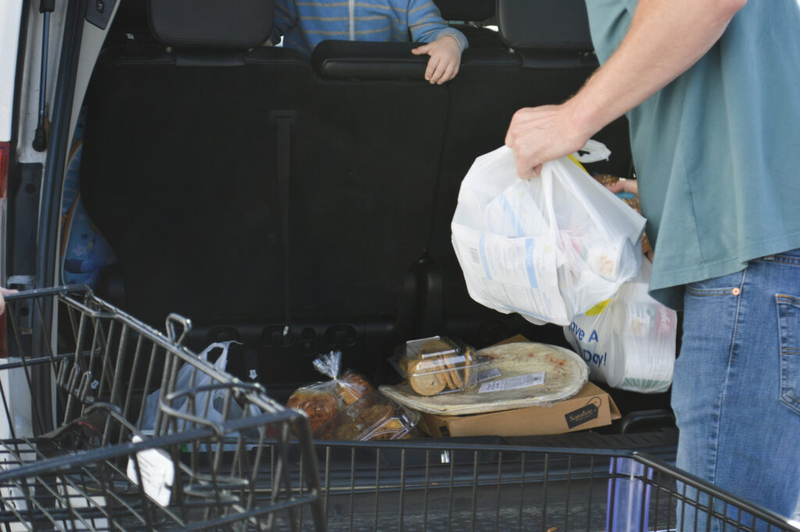
A worker at El Ada Community Action Partnership Food Pantry in Garden City helps load food items into a client's car in this Nov. 6, 2025, file photo. A joint effort among the state, nonprofits and churches is aiming to connect Idaho families in need to services such as food banks near them. (Laura Guido / Idaho Capital Sun)
An Idaho family searching for help with rental assistance, affordable child care or help finding new clothes for work may not know where to begin.

Laura Denner, administrator of the Idaho Department of Health and Welfare Division of Family and Community Partnerships, and her team want to ensure that there’s “no wrong door” for families to access help. This desire led to the Idaho Community Resource Network.
“It’s an ecosystem of support for Idaho families,” Denner said. “We’re all working together, and I think this is a really unique approach at bringing together nonprofit, corporate partners, churches, government, to overall reduce reliance on government and create community.”
Denner brought in Health and Welfare Resource Development Specialist Casie Jones to help lead the effort to connect families with government, nonprofit, or church services. Work on the resource network started in late 2024, with the goal of keeping children out of foster care when possible. However, the resources are available to all Idahoans.
“Idaho is very resource rich … They are doing it in rural areas through churches in supporting youth and families, supporting individuals who need help. All the way to larger, urban areas, to government, who have organized programs, ” Jones said. “So it’s diverse in its ability to serve people, but it can be a little chaotic when one person is in crisis with their child.”
As a result, the state’s 211 “CareLine” is now connected with the database for the United Way of Treasure Valley’s FindHelpIdaho.org. The agency is also in the process of expanding access to support from churches through the Idaho Care Portal.
This new connection means that if a parent needs information about receiving food assistance through the federally funded Supplemental Nutrition Assistance Program, SNAP, or help accessing pro bono legal services from a nonprofit, they can either call Health and Welfare’s 211 hotline or search on Find Help Idaho to see the same list of options.
Idaho youth and families are target of resource network
The resource network sprung from recommendations from the Idaho Behavioral Health Council, which brings together the three branches of government and other partners to develop strategies to improve the state’s behavioral health system. The council targeted foster care prevention as a top priority, Denner said.
“Our data that we’re starting to pull reflects that over 97% of the families that are working with navigators never enter child welfare in the next six or 12 months,” Denner said, “so really exciting upstream prevention and case management happening there.”
Some of the resources go to families, but some of them may go directly to young people. Jones said she worked with Jennie Sue Weltner, who helps lead Idaho Public Television’s youth drug and alcohol prevention campaigns.
Jones said she used Weltner’s 2025 research into what families and teenagers in Idaho see as their biggest challenges.
“Really good prevention starts with really good listening, and so we listened to kids,” Weltner told the Sun.
The survey of more than 1,600 parents and 852 teens in Idaho found that while parents identified social media as teens’ biggest problem, the teenagers said they were most worried about money, followed by mental health and loneliness.
Weltner is working with the health agency to launch an awareness campaign directed at young people to advertise that they can use resources like 211 or Find Help Idaho to get connected to things like scholarship programs, job training, mental health care and other services.
“If we can help them deal with the problems that they’re actually concerned about, maybe we can prevent them from turning to substances,” Weltner said. “If we can help them find a job, find an internship, find money for schools, maybe even food security, some of the things that are going to help them feel more secure or clear about their future, we might prevent them from turning to self-medication.”
Idaho Health and Welfare 211 and Find Help Idaho website are now connected
Often when people are trying to find help, they find it difficult to access up-to-date information, especially in rural areas of the state, according to Anne Wolverton, director of Community Impact United Way of Treasure Valley.
“One of the barriers that we were hearing about when people were looking for help was that they were being given a list of paper resources, and oftentimes those resources were out of date,” Wolverton said. “The phone number was wrong, the address had changed, or maybe the need that they had wasn’t on that sheet of paper, and they didn’t really know where to turn.”
The United Way of Treasure Valley is the largest United Way organization in Idaho, which is why it was well-positioned to launch some statewide initiatives, she said.
In 2022, the Treasure Valley United Way launched FindHelpIdaho.org, a searchable database of local, regional and national resources. The website is backed by the national FindHelp.org, which is used in other states as well.
Anyone may suggest a resource to be posted on the site, and someone will verify that it is free or reduced cost, serving the community it’s in, and responsive to needs, Wolverton said. There are now more than 4,500 programs in Idaho listed on the site.
Denner, from the health agency, said she connected with Find Help Idaho because the state’s 211 call center was on a dated platform and she was looking for ways to update it. The two entities combined their databases, ensuring there weren’t missing or out-of-date resources between the two.
Gaps in services still exist.
Wolverton said as more people use the system, the group intends to collect more data about services people aren’t finding. The most common searches statewide are related to housing, she said. Between 40% and 45% of all searches are related to eviction prevention, rental assistance, utility bills, and other related topics, she said.
Health and food are the next most-common categories, she said.
“That’s another gap that we’re looking to address,” Wolverton said, “is sharing this information with cities and counties, decision-makers, programs that provide services to show them where those gaps exist in programming, so when they’re thinking about where should we stand up a new food pantry, they can see here’s an area where people are searching consistently for food, and there’s not a pantry within 15 miles of their zip code.”
Idaho churches may join resource network through Idaho Care Portal
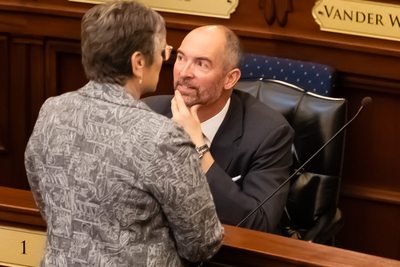
Sage Dixon, the regional director of faith-based initiatives at Health and Welfare, is hoping local church communities will be able to step in to meet immediate needs that might not be served by the other resources.
Dixon left the Idaho Legislature in 2024 to join the health agency in the newly created role, with a focus on supporting foster families and preventing children from entering child welfare. Shortly after he took on the position, he learned about Care Portal, a platform used in several states to connect families in need with faith groups in their communities.
“The idea is not just to drop off that crib or not just to fill the tank with gas, but it’s to build the relationship, so those people have a support network around them that’s close to them,” Dixon said.
Dixon partnered with the nonprofit Redemption Stories, run by the non-denominational church Redemption Hill in Boise, to pilot use of the portal in Idaho.
Robert Frazier, a leader at Redemption Hill, said he had separately been working to bring Care Portal to Idaho before he started working with Dixon and the state health agency.
“Our neighborhoods are built to isolate us into our socioeconomic strata,” Frazier said, “And so rich people know and live with rich people, middle class people know and live with middle class people, and poor people live and know poor people. And that’s one of the reasons why people struggle to find help when they need it, is they don’t know each other.”
Frazier said that the church’s nonprofit launched Care Portal in Canyon and Ada counties last fall, mostly serving families connected to the foster system. In the first five months, it was used to meet 35 needs through four faith communities, he said. Frazier said the plan is to move into North Idaho next, and eventually move statewide.
One family needed help buying Christmas gifts over the holidays, Frazier said, but after the connection was made, church members found out the family also needed its car fixed.
Members were able to raise money for parts and get a local repair shop to donate labor and get the vehicle fixed, he said. Meeting their transportation needs contributed to that family eventually moving into more stable, long-term housing, he said.
“That’s a five-month relationship that starts with Christmas gifts, but then you get to uncover the real needs,” Frazier said. “And over time that kind of snowballs into bringing them stability, and hopefully a relationship that lasts for the rest of our lives.”
Boise, ID