Nebraska AG sues City of Omaha over minimum wage ordinance
Aug 18, 2026 | 4:15 pm ET

Description
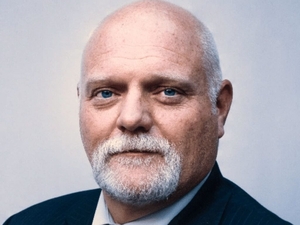
Nebraska Attorney General Mike Hilgers. Oct. 9, 2025. (Zach Wendling/Nebraska Examiner)
LINCOLN — Nebraska Attorney General Mike Hilgers on Tuesday announced he is suing the City of Omaha to enforce Nebraska’s minimum wage law against its new city ordinance.
The lawsuit follows one against Lincoln city leaders who passed a similar measure. Hilgers’ office argues the state’s two largest cities are seeking a “power grab” after a supermajority of state lawmakers set a 1.75% annual growth rate for the minimum wage and said employers “may” pay 14- and 15-year-old workers $13.50, down from the current $15 minimum wage.
“Our Constitution does not permit the City of Omaha to repeal any portion of a statewide law passed by the Legislature,” Hilgers said in a Tuesday statement.
The local ordinances seek to maintain the 2022 voter-approved annual adjustment to the minimum wage based on inflation and prohibit paying any workers less than $15, except for a $13.50 training wage eligible for 16- to 19-year-old workers for the first 90 days of employment.
Under current state law, the minimum wage will increase to $15.26 on Jan. 1. The youth minimum wage will remain at $13.50 through 2029 and remain below $15 for nearly 40 years.
Legislative opponents had argued 1.75% annual increases would likely lag inflation.
Lancaster district judge grants injunction in state lawsuit against Lincoln’s minimum wage ordinance
Lancaster County District Judge Lori Maret on July 17 blocked Lincoln from enacting its ordinance. The order came one day before the Lincoln ordinance was set to take effect in tandem with the amended law. Maret stopped short of extending her order statewide.
Hilgers is asking a Douglas County District Court judge to similarly block the Omaha order, which is set to take effect Oct. 1, absent court action.
The Attorney General’s Office argues the ordinances will “inevitably” cause the cost of goods and services statewide to increase and require other communities to adjust to keep up. Hilgers’ team says the issue is a “matter of statewide concern,” so the Legislature has the final say.
Omaha Mayor John Ewing Jr. and Lincoln Mayor Leirion Gaylor Baird, both Democrats, signed their respective ordinances after they passed on a party-line vote with only Democratic council members in support in each city. In Lincoln, the ordinance passed 6-1. In Omaha, it passed 4-3.
The Omaha lawsuit names Ewing, Director Cailin Daly Dejillas of the City of Omaha Human Rights and Relations Department and all seven Omaha City Council members: Danny Begley, Aimee Melton, Pete Festersen, LaVonya Goodwin, Ron Hug, Don Rowe and Brinker Harding.
Begley, council president, sponsored the measure and cited residents’ overwhelming support for the 2022 ballot measure. Ewing said it would help families and was the “right thing to do.”
“I am aware of the legal issues surrounding this legislation,” Ewing said July 21 as his justification for signing the ordinance. “I am confident the city can successfully argue for Omaha having its own minimum wage ordinance.”
Others, such as Melton, urged caution and doubted whether Omaha had such authority.
In a June 4 letter to the Omaha City Council, City Attorney Matt Kuhse told the Omaha City Council that it could enact such an ordinance as a “home rule charter city,” which also faces a higher cost of living than other parts of the state. Hilgers disagrees.
Kuhse wrote: “Given the higher costs in Omaha, compared to the balance of Nebraska, the Legislature-enacted minimum wage increases may not be sufficient to deal with costs unique to Omaha. By utilizing its local control and ability to address issues distinctive to Omaha, this ordinance addresses that issue.”
Lincoln, NE