NC Supreme Court weighs whether state can pursue TikTok lawsuit
Sep 09, 2026 | 4:30 pm ET
Description
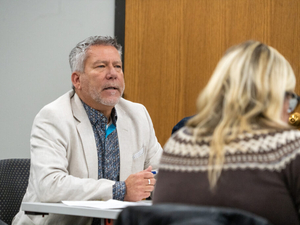
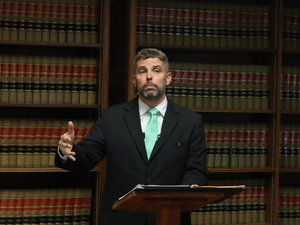
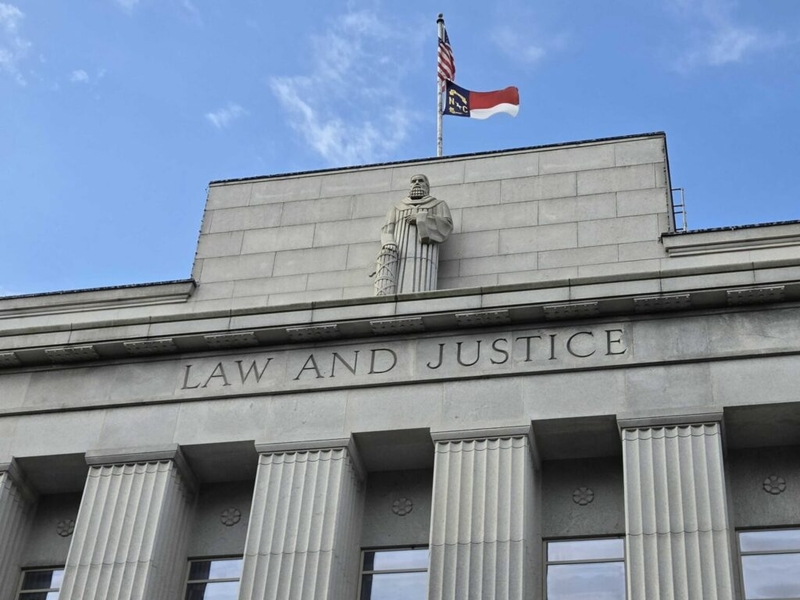
The North Carolina Supreme Court heard arguments Sept. 9, 2026 on whether a case against TikTok should be heard in state court. (Photo: Clayton Henkel/NC Newsline)
Millions of North Carolinians routinely download and use TikTok for entertainment, news and advertising. But its popularity in the state doesn’t mean that ByteDance, TikTok’s parent company, should be tried here, attorneys for the social media giant argued Wednesday before the North Carolina Supreme Court.
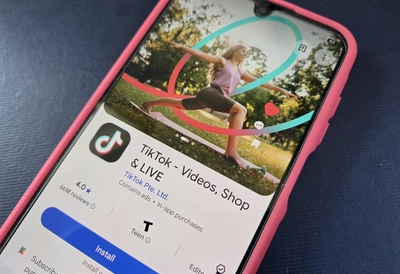
The case stems from an October 2024 lawsuit filed by then-Attorney General Josh Stein in which a bipartisan group of attorneys general sued ByteDance for designing the app to addict young kids with its features and deceiving parents that it had safety guidelines in place to protect kids. Attorney General Jeff Jackson is now pursuing the case against TikTok.
Wednesday’s hearing focused less on the allegations of harm and more on jurisdiction.
TikTok attorney Jon Hacker argued that North Carolina courts don’t have jurisdiction over TikTok and ByteDance in this matter because the product’s design features were not “purposefully directed” toward the state of North Carolina.
“TikTok did not design the challenged features in North Carolina or tailor them in any way for North Carolina users,” Hacker said. “TikTok likewise did not make the allegedly deceptive statements in the state of North Carolina, or target them specifically to anyone in North Carolina.”
Hacker told the high court that the claims made by North Carolina’s attorney general relate to its nationwide business model.
But a North Carolina business court has already disagreed with that argument. In an August 2025 ruling, Superior Court Judge Adam Conrad rejected a motion by TikTok to dismiss the case.
“Unlike a general web search, TikTok use is neither a one-and-done transaction nor a one-sided inquiry from a user,” wrote Conrad in that opinion. “ByteDance regularly sends communications into North Carolina (through push notifications to users’ phones, for example) and retrieves data from in-state users (including personal data that ByteDance monetizes via targeted third-party advertisements). What results is a two-way exchange of information across state borders on a massive scale.”
Hacker told the Supreme Cour the fact that an international platform is accessible to users in a given state isn’t enough to give that state jurisdiction over the platform. North Carolina should be suing in California where TikTok has headquarters and where the design or conduct allegedly occurred, Hacker told the justices.
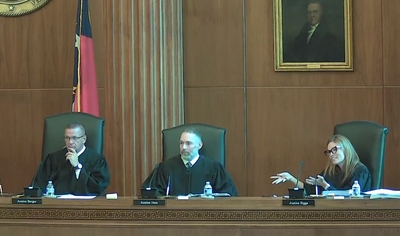
Associate Justice Richard Dietz noted that most websites collect cookies these days, but the court would need to weigh how TikTok handled the information it collected and look at “that spectrum of that interaction.”
Dietz then offered a hypothetical.
“For example, if you had someone in California and they targeted a million people here in North Carolina and called them on a phone with this fraud scheme, and defrauded them all, would you agree that our attorney general could sue for unfair and deceptive trade practices here in North Carolina?” asked Dietz.
Hacker said a phone call was a physical intrusion into the state. By contrast, TikTok was “sending a signal into the ether” and inviting people to reach out from their jurisdictions to join the platform.
Associate Justice Allison Riggs questioned how the defendants could be viewed as indifferent to their subscribers’ residency when they invited the state’s PTA president to an event that promoted TikTok as a safe platform for minors, and sent PR materials about its safety to North Carolina parents via the PTA.
Hacker told the court that it was part of a national program.
State Special Deputy Attorney General Josh Abram argued that ByteDance was trying to muddy the waters and misrepresent the case.
“ByteDance has millions of contracts with North Carolina that let it harvest users’ data, cultivate addictive relationships with our children, and then serve them geo-targeted ads,” Abram said.
Meta to pay North Carolina up to $645 million in landmark settlement
He argued TikTok relied on massive marketing campaigns using both local and national channels, and reminded the court that a business court had agreed with the state on this issue.
“This case is about ByteDance’s conduct that impacts North Carolina. North Carolinians download TikTok, they use it here, and they are harmed here,” Abram told the justices.
It’s unclear when the N.C. Supreme Court will decide whether the case against TikTok and ByteDance should be heard in state court, or when that trial could potentially take place.
Wednesday’s hearing comes just days after Meta, the owner of Instagram and Facebook, agreed to pay North Carolina up to $645 million to settle a lawsuit that Meta designed its apps to hook children and collect data while the company downplayed the risks to parents.
Raleigh, NC