NC immigrants challenge ICE policy allowing re-detention after release
Nov 23, 2026 | 6:00 am ET
Description
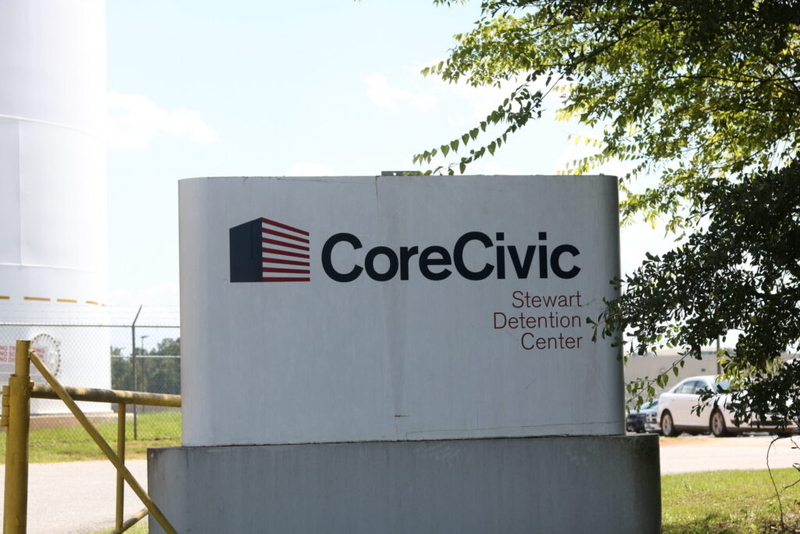
An ACLU lawsuit challenges the Department of Homeland Security for re-detaining immigrants who are awaiting the outcome of their immigration cases. The case is being heard in Georgia where immigrants are held at the Stewart Detention Center, a facility run by the private prison company CoreCivic. (Photo by Maya Homan/Georgia Recorder)
Livinton Sosa Martinez, a 41-year-old Nicaraguan man living in Greensboro, fled political persecution in his home country in 2022. Earlier this year, he was detained during a routine ICE check-in in Charlotte.
His case is among hundreds of re-detentions in North Carolina, South Carolina and Georgia since the Department of Homeland Security reversed a longstanding immigration practice in May 2025, according to a lawsuit filed by the ACLU last week.
Under the previous policy, ICE generally did not re-detain immigrants who had been released from custody while awaiting the outcome of their immigration cases, provided they complied with release conditions, including attending scheduled check-ins and court hearings.
Officers had to show that a person’s circumstances had changed in a major way, like a new criminal charge, before arresting them again.
The lawsuit, filed in the U.S. District Court for the Northern District of Georgia, challenges DHS’ decision to abandon the policy, which had been followed by the ICE Atlanta office for more than four decades.
The ACLU alleges that DHS abandoned the policy without explanation and adopted a new approach that allows immigration officers to re-arrest previously released immigrants without determining whether their circumstances have materially changed.
Sosa Martinez is one of four plaintiffs in the lawsuit, which also names Raquel Mariona Ebora, a 39-year-old Honduran woman in Dunn, along with two residents of Georgia.
According to the lawsuit, Sosa Martinez had attended his annual ICE check-ins and had no criminal history before he was detained March 19. He was transferred to Stewart Detention Center in Georgia, where he remained for several weeks before a federal judge ordered a bond hearing. He was subsequently released on a $10,000 bond.
He remains under ICE supervision and is required to report for in-person appointments every four weeks in Charlotte, according to the lawsuit.
“When I have to go to work, especially in Raleigh or Charlotte, my children cry because they are worried I will be re-detained again,” Sosa Martinez said in a statement provided by the ACLU. “I will continue to pursue my asylum case, but my life has a lot more uncertainty now. I know that I could be detained by ICE at any time even though I follow all the rules.”
Raquel Mariona Ebora was not detained, but her husband, Kelvin Lopez, was arrested during a routine ICE check-in in Charlotte on April 28. The couple, who fled Honduras in 2022, live in Dunn with their 3-year-old U.S. citizen son, who has autism. Lopez was released on bond a few weeks later after a federal judge ordered a hearing, but his arrest disrupted the family’s routine and made it harder to care for their son, according to the lawsuit.
Both families were taken into immigration custody after crossing the border illegally in 2022 and later released on humanitarian parole, according to the lawsuit.
Jacqueline Landry, a legal fellow at the ACLU of North Carolina, said the policy shift has created constant fear and uncertainty for people who did what they were told.
ICE agents arrested US citizen at gunpoint in Charlotte, NC immigration advocates say
“These are people that have been following all the rules that the government set for them,” Landry said. “They’re going about their lives based on an understanding that as long as they follow the rules, they’ll be able to continue living in the community.”
In their complaint, the plaintiffs argue DHS violated the Administrative Procedure Act by tossing out a decades-old practice without explaining why or considering how the shift would affect people who relied on it. They also contend the arrests violate the Fourth Amendment because ICE is re-detaining people on the same immigration charges without showing anything has changed.
They are asking the judge to put the policy on hold while the case plays out in court. They also filed a motion earlier this week asking the Georgia court to certify the lawsuit as a class action.
DHS did not respond to Newsline’s request for comment by publication time.
Raleigh, NC