National ranking grades 3 Oklahoma colleges’ support for free speech
Sep 10, 2026 | 2:45 pm ET
Description
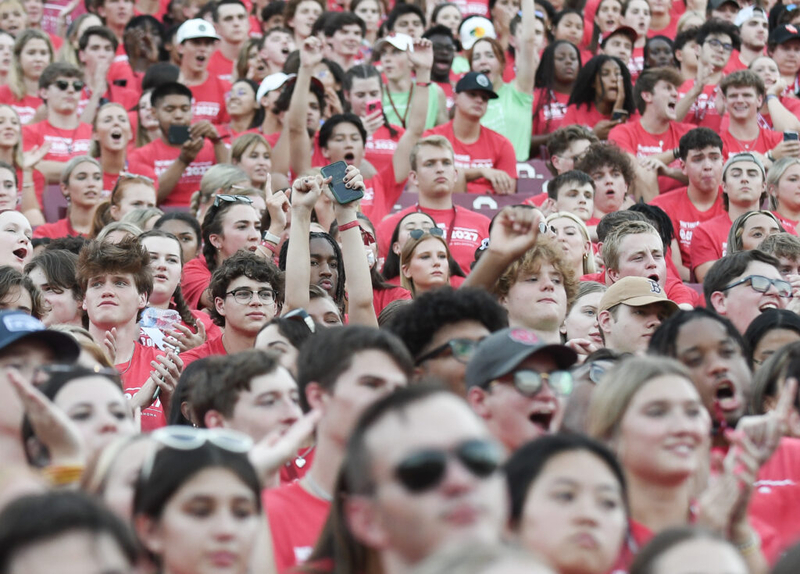
University of Oklahoma freshmen attend the OU Welcome Class of 2027 event on Aug. 12, 2023, at Oklahoma Memorial Stadium in Norman. (Photo by Kyle Phillips/For Oklahoma Voice)
OKLAHOMA CITY — Oklahoma’s two largest universities received D grades for campus free speech in a national ranking.
The Foundation for Individual Rights and Expression, known as FIRE, ranked 261 colleges across the country based on student surveys, institutional policies and responses to speech controversies. FIRE gave a national average score of a D-minus.
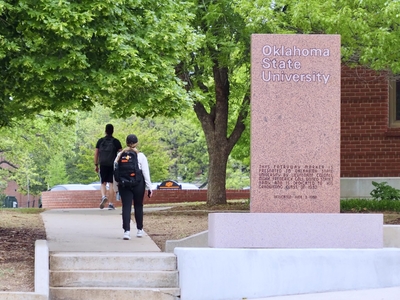
The University of Oklahoma, ranked at No. 99 and given a D-minus, and Oklahoma State University, No. 75 and a D grade, trailed the University of Tulsa, which was ranked No. 20 and graded at a C.
Although OSU and OU have faced free speech complaints over the past year, Tulsa was the only one of the three universities to have a speech controversy considered in FIRE’s ranking process. The incident, though, didn’t end up counting against the university’s free speech score.
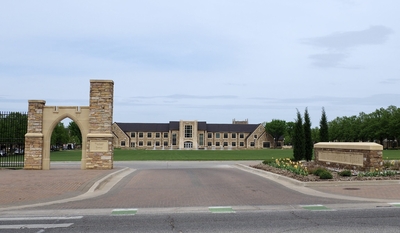
The controversy involved a counterprotester who started shouting and blaring loud music while the campus chapter of Students for Justice in Palestine was hosting a permitted vigil on the university commons.
Campus security moved the man to a nearby sidewalk because, unlike the student group, the counterprotester had not requested use of the space. Administrators said they offered an alternative space and affirmed support for student free speech rights, according to FIRE’s report.
Students at all three universities told FIRE they sometimes aren’t comfortable sharing their political or religious views with their peers or professors. Across the three schools, 45% of surveyed students said they self-censor on campus at least once or twice a month.
OSU ranked in the top 25 for administrative support, indicating students trust university officials to support their free speech, but it ranked in the bottom 25 for openness, which measured how many controversial topics students felt they could openly discuss on campus.
Surveyed OSU students told FIRE they held back from sharing their views for fear of “possible social retaliation” or when a majority in a class holds an opposing political opinion.
OU ranked in the top 50 for political tolerance, showing a greater student willingness to host speakers of different ideologies, but it also landed in the bottom 25 for openness.
Sixty-five percent of surveyed students in Oklahoma said shouting someone down to prevent them from speaking on campus is acceptable, and 24% said violence is acceptable to stop a campus speaker, at least in rare cases, according to FIRE’s survey.
All three universities received an F for students’ political tolerance of speakers having opposing views, but OU and Tulsa showed improvement in this area over the previous year.
Last year, FIRE recorded a record-high number nationally of students who said they found it acceptable to shout down a speaker, block entry to a speech event or to use violence to stop someone’s speech.
This year’s survey, with nearly 63,000 respondents, indicated students might be less willing to tolerate shoutdowns and violence on campus, FIRE President and CEO Greg Lukianoff said in a statement.
But, Lukianoff said “the overall state of free speech on campus is grim.”
On Sept. 10, 2025, conservative activist and frequent campus speaker Charlie Kirk was assassinated during an event at Utah Valley University, sparking debates across the nation over free speech.
“Charlie Kirk believed disagreement was not something to fear,” Gov. Kevin Stitt said in a statement acknowledging the one-year anniversary of his death. “It was something to embrace. He modeled it all over the country. America was built through debate, discussion, and the free exchange of ideas. One year later, that message matters more than ever.”
Nine colleges lost points in FIRE rankings for punishing faculty over Kirk-related comments.
In Oklahoma, the head of the state Department of Education at the time, Ryan Walters, threatened to revoke K-12 teachers’ certifications for any attempt to “glorify” Kirk’s death.
At 61 of the 261 ranked universities, more than half of students said Kirk was “difficult to discuss” on campus, FIRE reported.
OSU and OU each faced complaints to a state Free Speech Committee in the wake of Kirk’s death.
An OSU student complained to the committee that a university administrator insinuated a hat from Turning Point USA, an organization Kirk founded, was “racist” and asked the student not to wear it, according to the complaint.
OSU removed the employee from his or her position, the university president apologized to the student and the school’s legal department implemented additional free speech training, according to the Free Speech Committee’s findings. The committee recommended expanding the training to all staff and faculty who interact with students.
OU received a complaint of a student knocking down and stepping on Turning Point USA signs. The university said it followed standard disciplinary procedures, and it received no additional recommendations from the Free Speech Committee.
Oklahoma City, OK