Consumer Energy asks state regulators to delay decision on hydroelectric dam sale until November
Sep 10, 2026 | 3:59 pm ET
Description
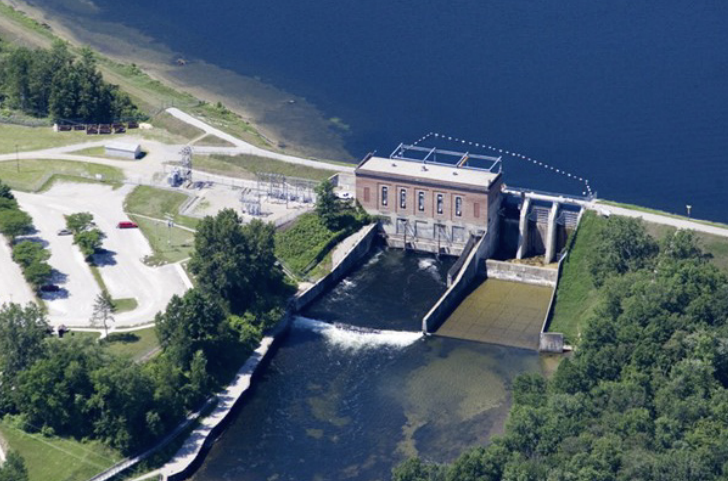
Foote Dam in Iosco County, one of 13 hydroelectric dams proposed for sale by Consumers Energy. (Photo from Consumers Energy)
Ahead of Thursday’s meeting of the Michigan Public Service Commission, one of the largest energy companies in the state submitted a notice asking the regulatory body to delay its ruling on whether to allow the sale of 13 hydroelectric dams across the state.
Consumers Energy sent a notice to the commission on Tuesday asking the commissioners to hold off on making a final determination at their Thursday meeting. The energy company said they were voluntarily extending the ruling deadline by 60 days, stating their belief that they could find a constructive solution to some of the concerns raised during case proceedings.
The item did not appear on the commission’s Thursday agenda.
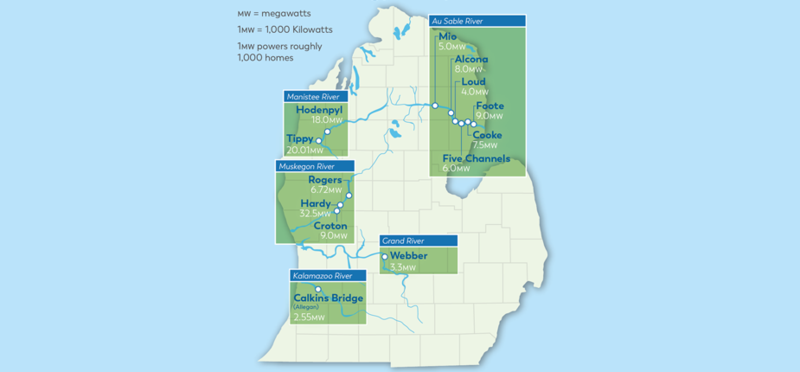
In September 2025, Consumers Energy, announced that it planned to sell 13 hydroelectric dams located on the Au Sable, Manistee, Muskegon, Kalamazoo and Grand rivers to Confluence Hydro, a subsidiary of Hull Street Energy, a Maryland-based private equity firm.
While Consumers would sell the dams for a total of $13, Confluence Hydro agreed to provide the energy company with power from the dams through a 30-year power purchase agreement.
Supporters argue that if the dams are not sold, Consumers will be forced to decommission them, which would result in changes to the natural landscape that could harm local property values and recreational opportunities that support local businesses.
However, opponents have raised safety concerns around the decision to sell the dams to an out-of-state private equity firm.
Among those in opposition to the sale is Gov. Gretchen Whitmer, who has pointed to the 2020 failure of the Edenville and Sanford Dams. A federal judge determined the dams’ owner, Lee Mueller, and his business, Boyce Hydro, were responsible for the failure and subsequent flooding.
Attorney General Dana Nessel has also said that Mueller had “completely disregarded imminent threats to the safety and integrity of the dam.”
In a letter to the commission, Whitmer said the agreement between Consumers Energy and Confluence Hydro “does not provide sufficient safeguards to prevent these failures from happening again.”
“The deal lacks firm, enforceable protections to ensure the dams will be properly maintained and safely retired when they are no longer economical to operate,” Whitmer wrote. “It does not require Hull Street Energy, the parent company, to cover all future repair, accident, environmental, and decommissioning costs, nor does it require adequately funded reserves to cover those expenses.”
While Consumers Energy promised to set aside $270 million to address unforeseen safety concerns, Whitmer said the recently proposed fund was “too little, too late, and too difficult to access.”
In an email to Michigan Advance, Consumers Energy Media Relations Specialist Brian Wheeler explained that the company believes it can address Whitmer’s concerns by engaging with the other groups participating in the case before the Public Service Commission.
“We plan to engage all the parties to the MPSC proceeding,” Wheeler said. “We look forward to constructive input. Any conditions attached to the final approval should be consistent with the transaction documents negotiated between Consumers Energy and Confluence. We believe there are opportunities for the parties to cooperatively address the governor’s concerns through conditions that are consistent with that goal.”
Confluence Hydro spokesperson Natalie Joubert said in a statement that the company is looking forward to “engaging in constructive dialogue with parties and working towards a resolution that supports the needs of communities, ratepayers and the state of Michigan.”
However, Consumers Energy’s request for collaboration was met with skepticism by some of the organizations opposing the sale.
The Environmental Law and Policy Center argued the commission should deny Consumers’ request and deny the sale at its Thursday meeting. The firm represents the Michigan Trout Unlimited, Michigan Steelhead and Salmon Fishermen’s Association, the Great Lakes Council of Fly Fishers International, Anglers of the Au Sable and the Michigan Hydro Relicensing Coalition.
“This is not a case in which the parties are fully and deeply engaged in ongoing negotiations that are close to resolution, and they jointly (not just Consumers Energy) want a little more time from the Commission in order to finalize a settlement,” Environmental Law and Policy Center Senior Associate Attorney Daniel Abrams wrote in response to the energy company’s notice. “That is just not the reality here, today, in this case.”
The Association of Businesses Advocating Tariff Equity, which also opposes the dam sale, told the commission it was “not aware of any potential ‘constructive solution’ or ‘opportunity to resolve the issues in this case cooperatively,’” and that Consumers had not given them any basis to believe there is one.
The Michigan Public Service commission did not include the dam sale on the agenda for its September meeting. Consumers Energy has asked the commission to issue its final decision on Nov. 9.
Commissioners greenlight natural gas rate increase, improved outage credits
While the commission did not discuss the hydroelectric dams, the commission voted to approve a $74.52 million natural gas rate increase for DTE Energy, which the commission said will support the company’s efforts to modernize its natural gas transmission and distribution system.
Commissioners also approved a virtual power plant program, allowing DTE to launch a two-year pilot program with residents of a net-zero community in Ann Arbor. DTE can draw power from the community’s battery storage systems to help meet energy demand during peak hours, while reimbursing residents $105 per kilowatt hour used.
Additionally, the commission increased the power outage credit energy consumers receive for lengthy or repeated power outages from $42 to $44. Customers can receive the credit if they experience more than six interruptions in 12 months. They are also eligible if they lose power for more than 16 hours under normal weather conditions, 48 hours under gray skies and 96 hours under catastrophic conditions.
Lansing, MI