Oklahoma reading law rollout to cross multiple state agencies, administrations
Sep 04, 2026 | 2:40 pm ET
Description
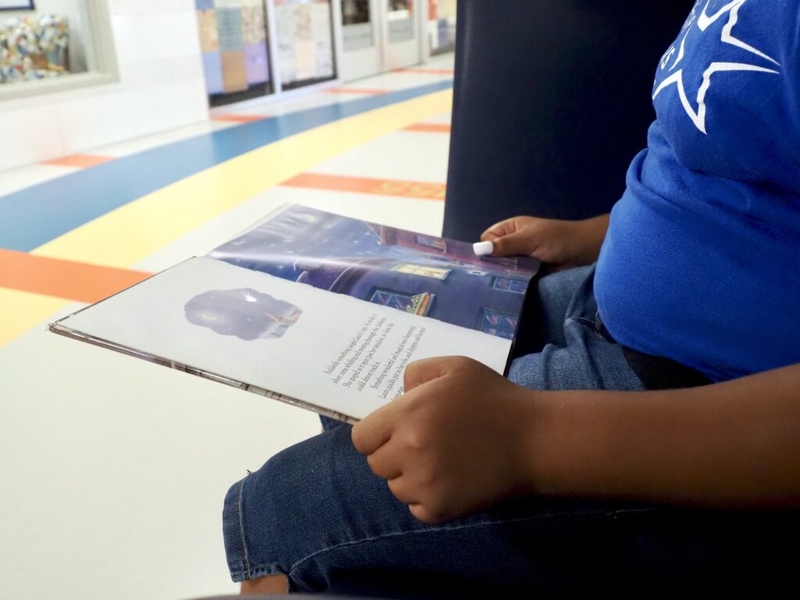
A fifth grader reads a book at Positive Tomorrows school in Oklahoma City on Aug. 17. (Photo by Nuria Martinez-Keel/Oklahoma Voice)
OKLAHOMA CITY — The selection of key pieces of Oklahoma’s high-stakes reading law is underway in a process that likely will straddle two governors and state superintendents.
While schools prepare teachers and students for the “third-grade gate” that will take effect in the 2027-28 academic year, state officials have taken steps toward choosing another important piece of the law, a universal reading screener.
All districts in the state will have to use the screener next school year to determine whether early elementary students have learning gaps in literacy and what extra instruction a child is entitled to receive.
State officials also must choose an alternative standardized literacy assessment that third graders would take if they score below a basic level on the annual state English language arts test.
Students who score below basic on the state test risk being held back in third grade, but the alternative assessment would give them another chance to advance to fourth grade if they make an acceptable score, according to the new law.
The reading legislation, signed into law in April, lays out a multi-step, double-agency process for choosing the screener and alternative assessment.
First, the Commission for Educational Quality and Accountability solicited bids from companies that could provide a reading screener.
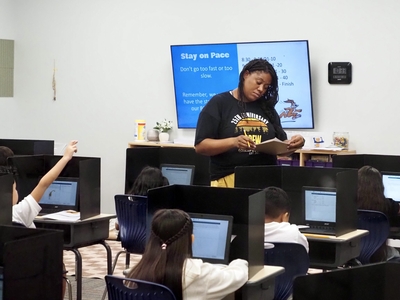
The request for bids required vendors to provide a math screener, as well, and the window for bidding closed Aug. 31, said Michelle Seybolt, the executive director of the commission’s staff.
Now, an evaluation team of subject-matter experts must review the submitted bids and suggest three to the commission.
Seybolt said the committee will consider whether the screening tools align with the science of reading, whether they could adjust for different grade levels and whether they measure key building blocks of literacy, like phonics, vocabulary and reading comprehension.
State law requires that the screener be able to identify students with reading deficiencies, accurately predict their likely state testing performance, and assess children with disabilities or those learning English as their non-native language.
The committee also will bear in mind what Oklahoma teachers and district leaders overwhelmingly shared in a survey — that the screener is quick and provides understandable, actionable data, she said.
The seven-member Commission for Educational Quality and Accountability then must approve three recommended screeners, and of the recommendations, the Oklahoma State Board of Education would choose one, according to the law.
Seybolt said she expects the screener will be selected by the end of 2026.
“We want this to be something that is very district friendly and is easy to implement on their level, which is why we really want to have a screener picked by December,” she said. “That way, we know who the screener is in January, and the vendor can start with their statewide rollout.”
If the expected timeline holds, state Superintendent Lindel Fields and the current members of the state Board of Education would choose the statewide reading and math screeners before his successor and the next governor take office in January. The superintendent leads the state Board of Education, and the governor chooses the remaining six members.
The governor also appoints all members of the Commission for Educational Quality and Accountability.
Fields’ office did not return multiple requests for an interview about the reading law rollout.
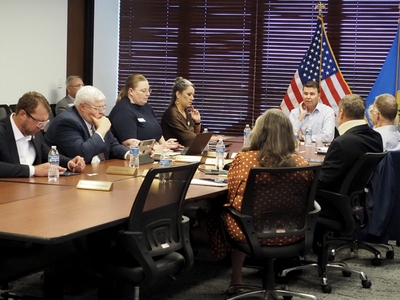
His elected successor, either Republican Robert Franklin or Democrat Jennettie Marshall, and whomever the next governor appoints to the state education board and commission likely will be the ones to choose the alternative standardized assessment given to readers who score below basic on state tests.
Seybolt said the steps to choose the alternative standardized test are similar to the screener selection process, with the commission soliciting bids and making a recommendation to the state Board of Education. The commission, though, is required to recommend only one of those assessments rather than three.
That recommendation is expected to come in February, Seybolt said. A request for company bids hasn’t been issued yet.
These decisions are “weighty,” she said, but the fact that an entirely new set of state officials and board members could be involved by January isn’t an object of concern.
“I don’t really worry about that transition for things like this because it’s statute-bound, and I truly believe that people want what’s best for kids,” Seybolt said.
Oklahoma City, OK