Most West Tennessee counties aren’t growing as quickly as expected, estimates indicate
Jul 14, 2026 | 6:00 am ET
Description
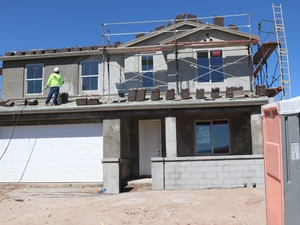
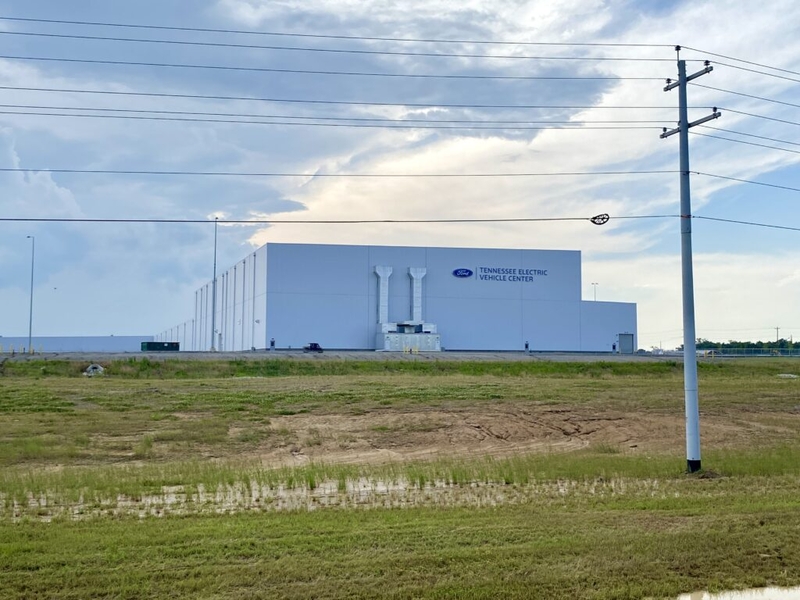
Population growth predictions assume job creation at BlueOval City's Tennessee Truck Center and battery plant will bring more people to rural West Tennessee. Production delays have pushed out hiring, and population increases have yet to fully materialize. (Photo: Cassandra Stephenson/Tennessee Lookout)
Most West Tennessee counties aren’t growing as quickly as projected following Ford Motor Co. and SK On’s BlueOval City automotive plant announcement in 2021, recent population estimates indicate.
Two-thirds of counties in the region recorded some growth since 2022, but only half met or exceeded population predictions for 2025.
The Tennessee Department of Economic and Community Development published its 2026 Certified Population Report on July 1. The population estimates in the report are based on U.S. Census Bureau estimates and are not precise population totals, TNECD Communications Director Lindsey Tipton wrote in an email.
The vehicle and battery manufacturing campus is located in Stanton, a small town in Haywood County near the borders of Tipton and Fayette counties. State and local officials expect the massive site to inject new jobs and residents into West Tennessee counties, many of which were projected to see population declines prior to BlueOval City’s announcement.
But production delays, changing plans and the dissolution of Ford and SK On’s joint venture have pushed back estimated production dates, and with them, significant hiring.
“Given that population estimates are modeled for the entire population, which includes children and elderly populations, they are not an accurate representation of whether jobs have been created for a certain region,” Tipton wrote.
Population projections published in a 2023 West TN Regional Assessment “represent a moderately aggressive growth scenario that will not occur without substantial investments in infrastructure and public services,” the document states. “It also assumes that large tracts of land are placed in development.”
The 2023 assessment also assumes that job creation at BlueOval City will reverse previously projected population declines in the region. Growth would come from direct and indirect job creation, in addition to “organic” growth as counties gain amenities and infrastructure improvements, the document states.
Early projections indicated that Ford would employ about 2,300 people at the truck plant, with significant hiring to begin closer to the start of production. Another 3,500 people would work at an adjoining battery plant now solely owned and operated by South Korean battery manufacturer SK On.
The private investment in the campus was bolstered by a $900 million state-sponsored incentives package contingent on meeting those job creation targets by 2032, something Ford says it still intends to do.
While Ford initially planned to begin producing electric pickup trucks at the $5.6 billion manufacturing hub in 2025, the automaker now plans to start assembling gas-powered trucks in 2029. As of December 2025, Ford employed about 80 people at its facility.
SK On Tennessee took full control of the former BlueOval SK joint venture in May and plans to produce automotive and energy storage battery systems at its plant starting in 2028. BlueOval SK announced in March that it would lay off 150 employees in preparation for the joint venture’s separation. SK On Tennessee employed a “core team” of 100 people as of late May, according to a spokesperson.
Before Ford and SK On announced plans for the 6-square-mile manufacturing campus, Tennessee State Data Center estimates based on the 2010 U.S. Census predicted shrinking populations in 13 of the 21 West Tennessee counties from 2022 through 2030.
Current populations outpace those pre-BlueOval City estimates for 2026 in 14 out of 21 counties.
A closer look at the counties closest to BlueOval City
While Fayette and Tipton counties — which both border Shelby County, the state’s largest county by population — saw growth from 2022 to 2026, Haywood County has yet to realize population benefits from the plant or other regional investments. The county has shrunk by about 500 people since 2022.
Projections from the Tennessee Department of Economic and Community Development estimated Haywood County would add 7,446 people — a 42.4% population increase for the rural area — by 2035. In 2026, the county is home to about 17,042 people, according to population estimates compiled by the University of Tennessee, Knoxville’s Tennessee State Data Center and published by TNECD on July 1. The initial prediction for Haywood County’s 2025 population was 19,755.
Fayette County saw the highest growth rate at 3.44%, but the county still hasn’t grown as much as anticipated. It missed its 2025 projection by around 1,900 people, and would need to add nearly 6,000 residents to its current population to meet the resident target for 2030. That would require 13.2% growth in the next four years.
- 7:26 amThis story was updated with a statement from the Tennessee Department of Economic and Community Development.
Nashville, TN