Monthly job losses worst in NJ since first months of pandemic
Aug 28, 2026 | 7:08 am ET
Description
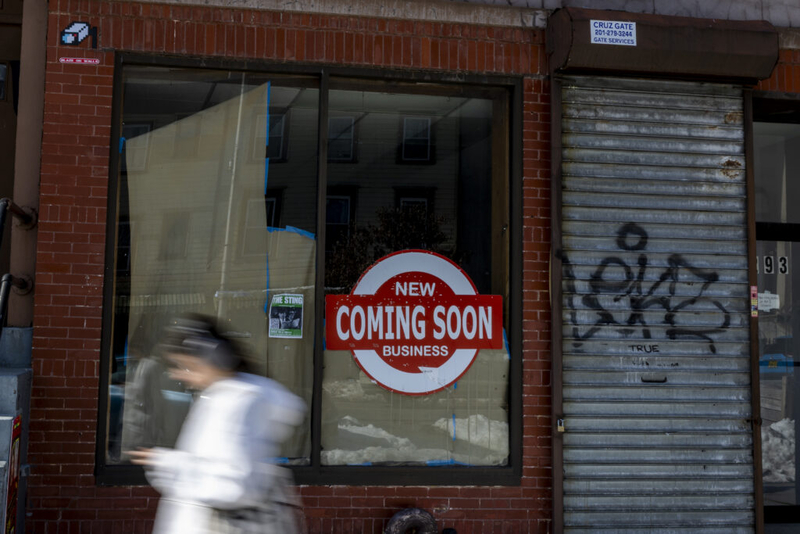
The Garden State reported 25,600 in preliminary job losses for July, the largest single-month decline since pandemic shutdowns caused New Jersey to shed 684,800 jobs in April 2020. (Photo by Anne-Marie Caruso/New Jersey Monitor)
New Jersey saw jobs fall faster last month than it has at any time since the worst months of the pandemic, and July’s monthly declines erased all job growth New Jersey had seen since February 2024.
The striking jobs report came amid a faltering national economy roiled by steep taxes the Trump administration has levied on imports and strict immigration enforcement that has roiled labor markets, but there’s reason to believe New Jersey’s circumstances compare poorly to the rest of the nation. State GOP leaders have said the state’s high costs have driven out too many employers.
Charles Steindel, New Jersey’s former chief economist, called the report “a real hair-pulling one.”
“You go, ‘eugh,’ and gnash your teeth and go, ‘Oh God, that doesn’t look good,’” Steindel said.
The Garden State reported 25,600 in preliminary job losses for July, the largest single-month decline since pandemic shutdowns caused New Jersey to shed 684,800 jobs in April 2020.
The New Jersey Department of Labor and Workforce Development cautioned low response rates and too-small seasonal adjustments likely inflated July’s job losses, suggesting the figure could be revised down when better data becomes available.
“These are estimates. Even national ones, they’re subject to revisions a lot of the time. Sometimes they’re very big. Sometimes it’s methodological,” said Scott Bentley, a Rutgers professor whose research focuses on human resources management. “Other times, it’s because the first release is a preliminary number and they have more information the next month.”
Somewhat contradictorily, New Jersey’s unemployment rate declined by one-tenth of a point last month to 4.4% despite the job losses and a marginal increase to the size of New Jersey’s workforce, which measures how many residents are working or seeking work.
Initial unemployment and jobs figures don’t always align because they are drawn from separate surveys, and not all the data is perfect. New Jerseyans who work jobs in neighboring states, for example, are counted in those states’ jobs numbers but are factored into New Jersey’s unemployment rate.
In many ways, New Jersey’s slowed labor market reflects an economic languor seen across the United States.
The country has added only about 542,000 jobs in the 19 months since January 2025, according to the Bureau of Labor Statistics. Even with seven months of additional data, jobs growth under the entirety of the second Trump administration was only 37.1% of the job growth seen in 2024 or 21.5% of the increases seen in 2023.
“We’re not seeing a lot of robust growth nationally in jobs. We’re still seeing some job creation, but it’s muted,” Bentley said.
Though New Jersey’s economic malaise in ways resembles the slowdown seen nationwide, New Jersey’s recent job losses stand out among neighboring states.
Jobs were roughly flat in Delaware and Connecticut last month, but Maryland reported 11,700 added nonfarm jobs in July, while Pennsylvania said it lost about 7,600.
New York saw 24,800 jobs lost last month, but its labor force is roughly twice as large as New Jersey’s, and only the Garden State reported a statistically significant jobs loss in July, according to the U.S. Bureau of Labor Statistics.
“We stood out,” said Steindel. “According to the national BLS, this is not a blip in New Jersey. This is significant decline.”
In part, New Jersey’s recent losses and overall lack of job growth could be partly fueled by immigration enforcement, Steindel and Bentley said.
The Trump administration has ramped up deportation efforts targeting an expanding pool of immigrants of mixed legal status.
Those removals or the behavioral changes they cause in immigrants or business owners could be driving declines in certain sectors, like hospitality or service industries like landscaping, Steindel said. As a sector, leisure and hospitality saw the largest year-over-year drop in jobs, falling 26,000 from the prior July.
The size of the effect is unclear partly because the U.S. Department of Homeland Security has significantly narrowed its public data on immigration enforcement, including a deportation data portal that was last updated in early 2025, and what data it has released has grown increasingly unreliable and, sometimes, contradictory.
“For a seasonal-employment-dependent economy where we show robust growth in those warmer months, having limited immigration flows into our labor force can make it very challenging for businesses who are already facing high business costs, high taxes,” Bentley said.
Though an economy may be able to replace immigrants with native workers or absorb their losses in the long-run, that would prove impossible in the short-run, Steindel said.

Some Republican officials have suggested New Jersey’s status as a high-cost state is responsible for recent job declines.
Sen. Tony Bucco (R-Morris), the chamber’s minority leader, cited a series of businesses like Anheuser-Busch and HelloFresh that recently departed or announced they would leave the state or slim their operations here to suggest high taxes are pushing jobs creators away.
“If we want to keep businesses here, attract new investment, and create good careers, we need to make New Jersey more competitive with other states and adopt Republican legislation like lowering the sales tax and eliminating our highest-in-the-nation business surcharge,” the senator said in a statement last week, adding that “Governor Sherrill has abandoned her promise to make New Jersey more affordable.”
Sean Higgins, a spokesperson for the Democratic governor, blamed Trump’s tariffs for job losses and noted that business departures were offset by other companies entering or investing in New Jersey, like Celularity, a biotechnology company that on Thursday announced it would bring 200 additional jobs to an existing site in Florham Park.
“If Republicans actually wanted to create jobs and not just try to score political points, they’d join Governor Sherrill in fighting back against these federal policies that are destroying jobs and increasing costs,” Higgins said.
While they acknowledged New Jersey’s high taxes may have slowed growth here, experts were wary of the Republican explanation for July’s job losses.
Historically, job growth in New Jersey over recent decades has lagged about 0.5 percentage points behind the national average, but that difference shows up over decades, not in monthly jobs data where swings are relatively common, Steindel said.
“Those local government forces, I don’t deny they’re real,” Steindel said, referring to state tax policy. “They could have some impact, but not in July 2026 versus June 2026.”
It was unclear how the World Cup affected employment in New Jersey. Though it could have caused firms to boost hiring or employee retention between mid-June and mid-July, that effect was not reflected in the data, at least not yet, Bentley said. The timing of the matches may mean any job reductions following the World Cup may not have been captured by July’s report, Steindel said.
The effect of tariffs on jobs in the Garden State was likewise unclear, but the heavy presence of import-export and logistics businesses in New Jersey meant there were likely at least some impacts.
A Rutgers report published last year in collaboration with the Shipping Association of New York and New Jersey, which represents port-related employers, said the port industry supported about 480,000 jobs in 2024, or about 10% of all jobs in the state.
“If we have fewer things coming into these ports being delivered through New Jersey ports through Merck or any of these other companies, there are fewer jobs needed for that,” Bentley said.
Trenton, NJ