Montanans overwhelmingly approve 3 ballot measures
Nov 04, 2026 | 1:59 pm ET
Description
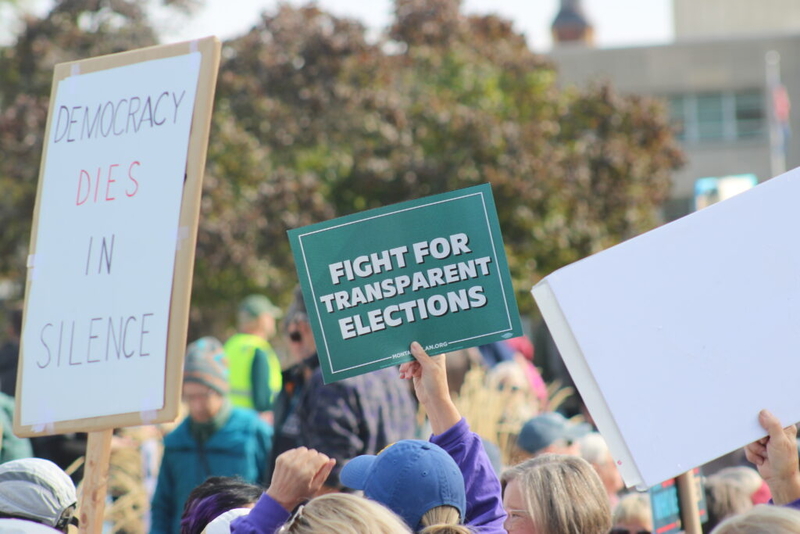
A No Kings rally attendee holds a Transparent Election Initiative sign during a No Kings event on Saturday, Oct. 17, 2026 at the Montana State Capitol in Helena, MT. (Jordan Hansen / Daily Montanan)
What had been customary in Montana for nearly a century is now constitutional.
On Election Day, Montanans made nonpartisan judicial races part of the state’s DNA by adding an amendment, Constitutional Initiative 132, to the state constitution which ensures those races stay that way, despite a recent push by the GOP to make them party-affiliated.
CI-132’s support hovered around a 35-point margin. The Associated Press called the race at 11:36 p.m., on Election Night, though final ballot tabulations were still ongoing late into Wednesday morning.
“Montana citizens just took the historic step of enshrining their right to nonpartisan judicial elections into our Constitution,” said Caitie Butler, spokesperson for Montanans for Nonpartisan Courts, which ran the initiative. “For 90 years, Montanans have elected nonpartisan judges from local courts to the Supreme Court. Thanks to the overwhelming majority of Montanans voting yes on CI-132 we protected that tradition, ensuring judges can make decisions based on the law and the Constitution, not political parties and their money.
“Together, we set an example for the country by affirming our Montana-made model of nonpartisan judicial elections.”
The initiative will add five words to Montana’s constitution, requiring that “judicial elections shall remain nonpartisan.”
Montana’s district and state supreme courts have stymied many of the GOP-controlled legislature’s actions in recent years, overturning laws related to LGBTQ-rights, the environment and election access. In 2025, it was a stated goal of a conservative state senate majority and Republican Gov. Greg Gianforte to change how judicial races operated, including by trying to add partisan labels to candidates in the name of transparency for voters.
Also on Tuesday, Montanans voted for a new member of the state Supreme Court, electing Flathead County District Court Judge Amy Eddy, who campaigned on the need for judges to stay impartial in their work. Her opponent, Dan Wilson, had an endorsement and campaign funding from the state Republican Party.
Numerous former district and supreme court judges backed CI-132 including Pat Cotter, who served on the state supreme court bench for two eight-year terms.
“Nonpartisan judicial elections keep all of our courts accountable to the people and the Constitution, and now Montanans have spoken loud and clear: keep politics out of our courts,” Cotter said in a statement. “We know Montanans want to keep their courts impartial.”
Initiative to protect initiatives approved
Montanans chose with 65% of the vote to protect the initiative process in the constitution.
With most precincts fully reporting Wednesday, 284,543 Montanans had said yes to the initiative, and 152,970 had said no.
The Associated Press called the race late Tuesday, according to results on the Montana Free Press.
CI-133 protects people’s right to propose laws through ballot measures and aims to prevent government interference in the process.
“These results show that Montanans support permanent protections for our ballot measure process,” said Montanans Decide campaign manager SK Rossi in a statement Wednesday. “Ballot measures are a part of what makes Montana, Montana – and despite attempts to weaken the process, everyday Montanans will continue to have a way to make their voices heard, hold government accountable, and vote directly on the issues that impact their lives.”
CI-133 amends Article II of the state constitution to add the following language, in part:
“The people have a fundamental right to exercise their powers of initiative and referendum under Article III and Article XIV. The government may not deny or burden this right unless justified by a compelling government interest achieved by the least restrictive means.”
Opponents described the initiative as vague and unnecessary, and said it wasn’t clear how the courts would interpret the language.
But Montanans Decide, the coalition to protect the initiative process, said CI-133 was straightforward.
The measure “outlines clear requirements for impartial, predictable, open and timely processes for approving petitions and ballot statements, resolving legal challenges, gathering signatures, and verifying signatures,” Montanans Decide said in a news release. “The initiative prevents the government from taking sides on ballot measures and using taxpayer dollars to influence voters.”
Montanans across the political spectrum said they believe decisions about Montana’s future should belong to Montana voters, “not special interests or politicians in Helena,” Rossi said. “We are grateful to everyone who gathered signatures, knocked on doors, talked with their neighbors, and helped educate voters. Thank you for securing this right, now and for the future.”
Montanans Decide pulled in at least $2.44 million for the initiative since December 2025.
Funders include American Opportunity Action, with a mission that includes holding government accountable to the people; The Fairness Project, which works to protect voter access to ballot measures; and the GI Social Welfare Fund, which includes a focus on voter rights.
The campaign earlier said the money was necessary “because of ongoing government interference in the initiative process,” including ones that result in legal battles.
‘The Montana Plan’ wins, too
Montana voters also approved Initiative 194, which seeks to remove corporate spending from Montana politics.
Unlike the other two initiatives, it does not add anything to the state’s constitution. It instead utilizes the citizen’s right to propose state laws.
The vote received approval from 65% of voters in early returns, while 35% said no. Nearly 57% of the state’s ballots had been counted by 11 a.m. Wednesday. The Associated Press called the race early Wednesday morning.
Called “The Montana Plan,” the initiative is based upon the concept that corporations are regulated by states, and that Montana could limit corporate powers when it comes to contributing to elections, candidates and political parties.
The initiative was brought by the Transparent Election Initiative, a group seeking to remove “dark money” from politics. The initiative was fought by several groups, including the Montana Chamber of Commerce, the Montana Mining Association and the Montana Petroleum Association. The state Republican party also added opposition to I-194 to its party platform.
“We were up against some of the biggest special interests in Montana, and today, the people of Montana have won,” said Jeff Mangan, founder and president of the Transparent Election Initiative, in a press release. “They had high-powered corporate lawyers and powerful industry associations. We had hundreds of volunteers, small business owners, and Montanans who believed their elections should belong to them.”
Mangan also said in the release that TEI was prepared to “defend what Montanans voted for in the courts, in the Legislature and even by bringing this back to voters as a constitutional amendment in 2028.”
Government corruption was a major issue in Tuesday night’s midterm election and removing corporate from politics has gained significant traction since the 2024 U.S. Senate race in Montana. That year, Tim Sheehy flipped the seat for Republicans, and saw hundreds of millions of dollars in spending in the lead-up to the election.
“Montana just became the first state where the voters themselves said corporations don’t get to buy our elections,” said Russ Cleveland, Executive Director of Partnerships for TEI, in a statement. “Nobody in Washington did this for us. Folks stood outside grocery stores and at farmers markets with clipboards, sat at kitchen tables with their neighbors and talked about what kind of state they wanted to live in. People who don’t agree on much found out they agree on this, and that’s what won tonight.”
In a call on Wednesday, Cleveland added that TEI expects an injunction to be filed over the new law. The Legislature will also have an opportunity to change the law during the 2027 Session and Cleveland said the group was already gathering legislators friendly to their efforts.
This started back in July, he said.
“We’ve got bipartisan support across the board of people that are committed to keeping intact,” Cleveland said.
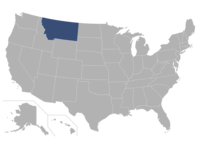
Helena, MT