Mixed reception for bill allowing candidates’ names to be rotated on ballot
Jun 23, 2026 | 3:24 pm ET
Description
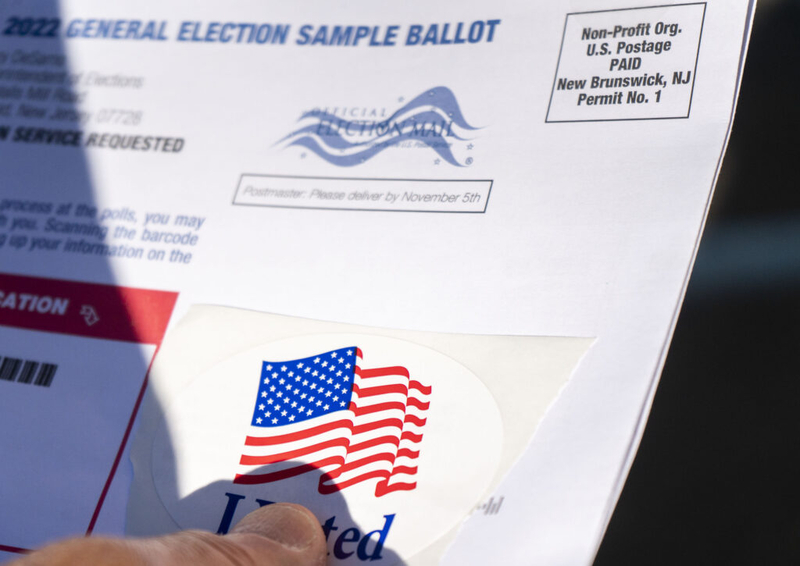
A new bill would allow political parties to request candidates be rotated on ballots so each gets the top spot. Voting rights advocates are wary. (Photo by Daniella Heminghaus/New Jersey Monitor)
New legislation that would allow county clerks to rotate political candidates’ names on primary ballots faced a chilly reception from voting advocates and wariness from election officials during an Assembly hearing Tuesday.
The bill, which did not get a vote before the Assembly State and Local Government Committee Tuesday, is intended to allow candidates to have equal time in the top spot on a ballot. But some critics noted that the measure would allow name rotations only after a ballot draw, and then only at the request of political party leaders.
“If the goal is to have a fair election outcome, then why would we once again take a good governance reform meant to be uniformly applied statewide and instead hand it over to the control and discretion of political parties?” said Antoinette Miles, state director for the New Jersey Working Families Party.
The effects of ballot primacy are well studied. All else being equal, candidates who win the top spot on the ballot get more votes than those who don’t by virtue of being listed first. The size of the primacy effect varies, but estimates generally place them in the low single-digit range.
The bill seeks to denude the effect ballot draws have on results by allowing clerks to rotate candidates’ names in a given office block so that, across a voting jurisdiction, each candidate’s name appears an equal number of times in the No. 1 spot.
The change is among those voting advocates pushed for after U.S. District Court Judge Zahid Quraishi ruled New Jersey’s prior system of party lines, which grouped candidates by party endorsement rather than office sought, was unconstitutional.
But those advocates worried the bill discussed Tuesday would give political party leaders a ballot draw mulligan that would allow them to even the playing field only when challengers they oppose are given a favorable ballot position.
“We do not think this should be optional,” said Heather Richner, associate counsel with the New Jersey Institute for Social Justice. “Randomization and rotation are best practices which should be implemented across the state. All counties should be required to conduct a mechanic or electronic randomized draw and then utilize the rotation procedures.”
Under the bill, a request for rotation would also have to be approved by members of a county’s elections board who belong to the party that made the request, but only if there was no rotation the year prior.
Other critics said the bill should be amended to make clear that a request for rotation would apply to all races on a party’s primary ballot. Present language does not say how broad or narrow a request for rotation must be.
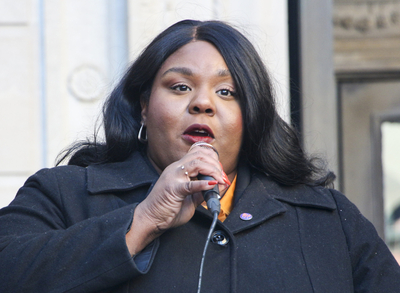
“We are concerned that the bill’s language, as written, does appear to allow those political parties to cherry-pick specific offices for each primary election for rotation,” Miles said. “I have a question of would this mean parties could choose to rotate for county commissioner but not for a council race?”
Election officials greeted the bill warily. Though they said existing technology would allow for ballot rotations, they warned the reforms could come with significant logistical and financial hurdles that must be considered before any changes are enshrined in law.
Linda Hughes, the Republican administrator for the Burlington County Board of Elections, told lawmakers they must consider the impact candidate rotation would have on tests that ensure tabulation machines function properly and accurately count votes.
Burlington County spent $55,000 to print 17,000 test ballots this year, Hughes said, but with rotations across multiple types of offices or additional variations within an election district, those figures would both balloon.
“That 17,000 ballot test stack could easily go into the hundreds of thousands, even surpassing actual voter turnout in a given election,” Hughes said. “The cost to print those, the time to do the testing, would all exponentially increase.”
New Jersey should review its testing processes, including by examining how other states that rotate candidates’ ballot positions do this testing, before enacting the changes, she said. At least nine states rotate at least some primary candidates’ ballot positions.
Somerset County Clerk Steve Peter, whose office conducts ballot draws and is tasked with ballot design there, took no position on the bill but warned it could conflict with other portions of state law.
“Right now, the sample ballot that gets sent out to all voters is supposed to be a facsimile, as close as possible, to the machine ballot. Now, if we have rotation, that’s not going to be possible, so we’re going to have to have some sort of district-level sample ballot,” Peter said.
It’s also not clear what sample ballots would need to be posted at early voting polling centers, he said, nor is it clear how candidate rotation would interact with provisions that require ballot positions be labeled with a letter and number, like 1A.
Tight timelines were also a worry.
“We have a ballot position drawing, and literally the next day, we’re supposed to send that to the printer,” Peter said.
Trenton, NJ