West Virginia could pay up to $948M to fix busted PATH system; $332M already invested
Nov 26, 2026 | 6:00 am ET
Description
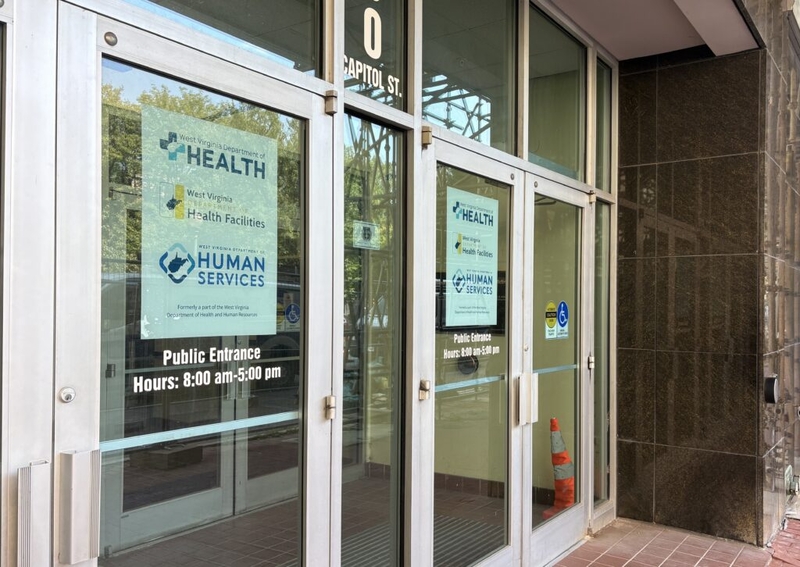
The offices of the West Virginia departments of Health, Health Facilities and Human Services are located on Capitol Street in Charleston, West Virginia. (Photo by Leann Ray/West Virginia Watch)
Fixing West Virginia’s busted online database for social services programs could cost up to $948 million. The costly fix comes after the state already spent $332.9 million in federal and state dollars on the PATH system, a massive online apparatus.
The state is entering its 10th year of a contract with Optum, a Minnesota-based company, and the system still doesn’t work properly.
As Morrisey officials seek a new vendor to take over PATH, new documents show companies competing for that new contract estimate it could cost anywhere from $534 million to $948 million to build a new system that is crucial to programs that West Virginians use every day.
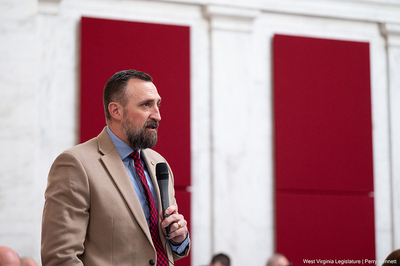
“I’m very, very concerned about the numbers that have come forward,” said House Health Chair Evan Worrell, R-Cabell. “That’s over a 10-year contract, it’s still big numbers.”
PATH stands for People’s Access to Help, an online system that operates Medicaid, the foster care system, low-income assistance programs and more. It’s also where residents apply online for safety net programs.
Over the last decade, there has been an exhaustive list of issues with the PATH system, including a disrupted workflow during the COVID-19 pandemic.
Initiated in 2017 under Gov. Jim Justice, PATH launched four years later than expected in 2024. Now, with three years left on the contract, it still has issues processing data and delivering payments on time to vendors, including companies working with foster children.
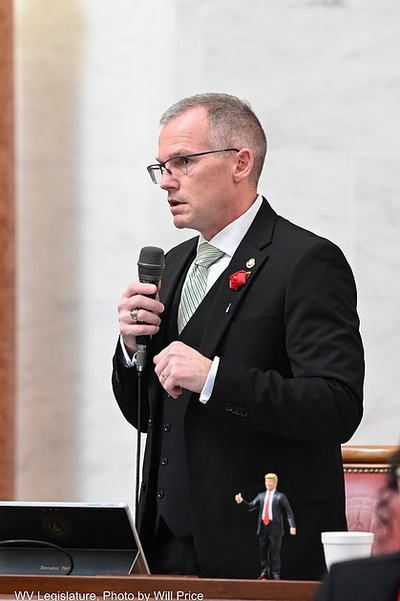
“We paid an awful lot of money for a car we’ve never really got to drive,” said Sen. Eric Tarr, R-Putnam.”I’m not aware of any other states that I’ve seen in the media anywhere that are having these kinds of issues.”
Hundreds of millions of dollars in lives are at stake, Tarr said.
Worrell stressed that fixing the system is critical.
“We owe it to the children of West Virginia to get this right because it is not working for anybody. Whether you’re an agency, legislator, government, anybody in government or any citizen, it is not working,” he said. “It is affecting everybody across the state, and it is affecting them in a negative way.”
The state is on the hook to give Optum another $36 million under the current contract with the company to continue PATH’s operation through 2027.
“DoHS is in the final year of the original contract the state signed with Optum in 2017,” said Angelica Hightower, communications specialist for the state Department of Human Services. “Most of the cost is paid with federal dollars. Of the $36.7 million operating cost, about $26.6 million is federal and about $10.1 million is state.”
“The contract also allows up to $4.25 million for changes and improvements. However, that money can only be spent if the department identifies and approves a specific change or improvement,” she said.
According to public records, three companies have bid on taking over the PATH system: Deloitte, Infosys Public Services Inc and Optum.
“PATH is how West Virginia families apply for SNAP, Medicaid and other benefits, and it has to keep running while the state chooses who will operate it next. The bids submitted for the next contract are under review, and state purchasing rules prevent us from discussing them until an award is made,” Highertower said.
Worrell raised concerns that just two vendors alongside the current operator, Optum, bid on the project.
“I’m scared that it’s become so bad that that is why vendors have not bid on this (Request for Proposal), because they are worried that it can’t be fixed,” Worrell said.
“I don’t know how to go forward as a legislator, other than saying we are not going to commit monies for the next 10 years of that contract,” he continued. “I would like to kind of hold the line and say I’m willing to support funding for the next three years for a vendor to get it right and prove to us to get it right, then they will receive subsequent funding after that.”
He also noted always-changing technology may be a reason to limit the timeframe of the contract.
Tarr worried about the vendor transition impact since the program is used every day, and how that could play into the state’s decision with what vendor they’ll choose. It’s out of the hands of lawmakers.
“I’m wondering what’s involved in the transition. Is PATH required to assist in that transition to a new contract, or is PATH done and they got to start building new? Because and if so, how are they preparing to flip that switch?” Tarr said. “There needs to be some sort of warm handoff, and I wonder how they’re planning to do that.”
An agency audit initiated by Gov. Patrick Morrisey earlier this year showed that the department could see $18.5 million in potential savings by addressing technology constraints and mainframe dependency related to PATH.
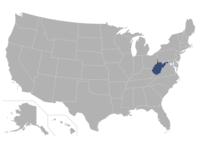
Charleston, WV