Missouri budget earmarks face scrutiny as Gov. Mike Kehoe’s deadline nears
Jun 29, 2026 | 6:55 am ET
Description
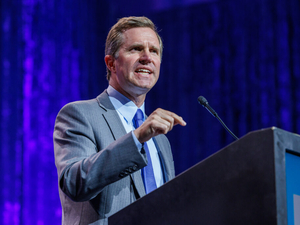
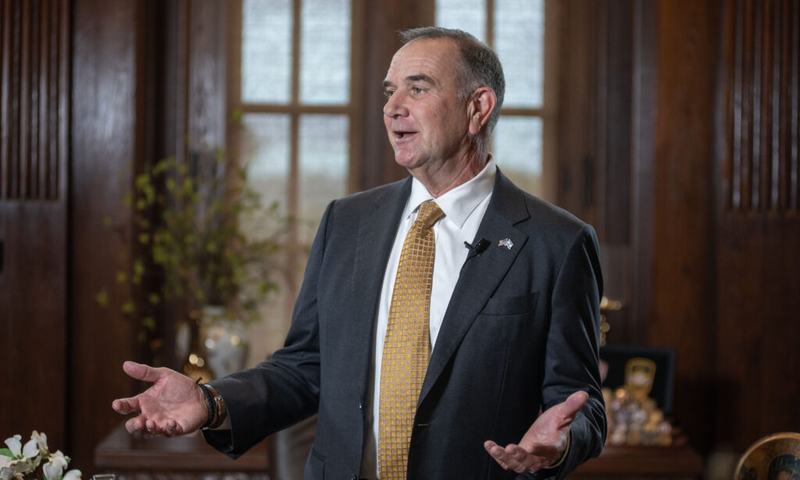
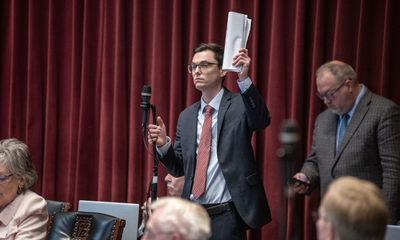
Gov. Mike Kehoe by Tuesday must sign or veto the 16 bills appropriating $50.7 billion for the coming fiscal year. (Annelise Hanshaw/Missouri Independent).
Gov. Mike Kehoe’s decisions on the $50.7 billion Missouri budget for the coming year are due by Tuesday.
The budget for the fiscal year that begins Wednesday arrived on Kehoe’s desk in May with a deficit of more than $2 billion between general revenue and appropriations, covered by the last big draw on the general revenue surplus that once stood at $5.8 billion.
Since then, State Auditor Scott Fitzpatrick has issued a renewed warning that state spending trends cannot be maintained in future years.
The budget sent to Kehoe spends $374 million less general revenue than he requested in January. But legislative budget leaders told The Independent that they expect him use vetoes and spending restrictions broadly to find additional savings.
If the past is any guide, vetoes and restrictions will fall heavily on the 132 earmarks, totaling $304 million, including $134.3 million of general revenue, added by lawmakers.
Earmarked spending slows but does not stop as Missouri budget faces fiscal crunch
“Whether those are strictly vetoes or withholds, I would expect him, as the state executive, to have to look at those first before he looks at other things,” said Senate Appropriations Committee Chairman Rusty Black, a Chillicothe Republican.
The earmarks sprinkled through the budget range in size from $5,000 for the Mid-America Port Commission, which works on issues related to river shipping for Missouri, Iowa and Illinois, to $104.1 million from the Missouri State Capitol Commission fund to begin renovations that include making offices for all House members accessible to people with disabilities.
Two other notable earmarks are $15 million to help Jefferson City build a parking garage as part of a new downtown conference center and $3.5 million to finance apartment construction for a religious non-profit in Springfield headed by a Republican candidate for the Missouri House.
House Budget Committee Chairman Dirk Deaton, a Seneca Republican, is leaving office due to term limits. He said he agrees with Fitzpatrick that current spending levels are unsustainable.
“We’re spending more than we’re taking in,” Deaton said. “You can only do that for so long, and you know there’s somewhat of a philosophical question of how quickly you try to get in front of this, or do you wait until the music just truly stops.”
For the past three fiscal years, state revenue growth has not matched inflation. This year, however, will be the first non-recession year in living memory when revenues decline year over year.
Through Thursday, fiscal 2026 revenue was down 2.46%, which would result in total revenue of $13.1 billion if nothing changes by Tuesday — $50 million less than what was estimated in December.
The estimate for the coming fiscal year projects that revenue growth will return, generating $13.65 billion.
The budget on Kehoe’s desk uses $15.9 billion of general revenue, with the gap made up from what remains of a surplus that was as high as $5.8 billion.
“I am expecting him to take some pretty significant actions,” Deaton said of Kehoe’s veto and restriction power.
Black said he expects Kehoe to go beyond the earmarks in his cuts.
Fitzpatrick’s warning is “weighing on all of our minds, that we’ve still got some ways to go before we have a budget that matches current (general revenue) intake,” Black said.
Missouri faces budget crunch as capital gains tax cut hits harder than expected
Collections in the current year will be almost $450 million less than a projection made in December 2024, before lawmakers passed a capital gains tax cut. The cut was officially projected to reduce tax collections by $160 million the first year, but the actual cost was determined to be about $500 million when the revenue estimate was presented in December.
The general revenue fund held $5.8 billion on June 30, 2023. Kehoe’s budget estimated the balance would be $2.2 billion as of Tuesday and $265 million on June 30, 2027. Fitzpatrick’s report estimated that at the end of the following fiscal year, June 30, 2028, the general revenue fund would be $626 million short of paying all state expenses if the budget remains unchanged.
“I hope that the governor does a hard thing and takes a really hard look at the budget this year and sets us up for success in subsequent years,” said state Rep. Betsy Fogle of Springfield, the ranking Democrat on the House Budget Committee. “But it is unpopular to veto stuff that’s in the budget, and I’m not sure if the governor will choose to do that this year.”
Springfield Family Apartments
It is unclear why the budget includes $3.5 million general revenue appropriation for a nonprofit operated by Russ Gosselin, Republican candidate in the 132nd Missouri House District.
Gosselin, in an interview with The Independent, said he did not ask for the money.
“I have not been part of any part of this process,” Gosselin said. “Last year, I just provided some information about what we’re doing. I haven’t been involved in any of it.”
Gosselin filed on Feb. 24 to run against incumbent state Rep. Jeremy Dean, a Springfield Democrat. The appropriation first appeared when Deaton presented his version of the capital construction budget to the committee on March 26.
Fogle said she had not been involved in obtaining the money, which she said is unusual because the Springfield delegation usually works across party lines to help bring funding to the community.
State Rep. Bill Owen, a Springfield Republican who will chair the budget committee next year, said he “was aware of it, but I did not put it in the budget.”
Gosselin drew up the plans for a former school property last year, Owen said.
“The plans for that were done before he decided to run for office,” he said.
Deaton included the project in his version of the budget after “the Springfield delegation brought that to my attention,” he said, and because of what he heard about Gosselin’s organization, Elevate Lives
Gosselin founded Elevate Lives in 2007 in Colorado and moved to Springfield in 2012. In 2025, the organization purchased a surplus school building as a services center for low-income residents of Springfield.
He’s planning two 21-unit apartment buildings on the property that would be leased at below-market rent to struggling families, he said. The state funding would help pay for one of the buildings.
The focus, he said, is on families where children have been separated from the parents and are being returned.
“These apartments will end up affording the opportunity for more of these families to be reunited, and then also take the next steps forward,” Gosselin said.
Dean said an appropriation that helps his opponent, in a district that he won by just 3% of the vote in 2024, is odd.
“It’s kind of the exact reason that people lose faith in government, unfortunately,” Dean said. “It is just that idea that well-connected people are consistently getting benefits while the working people are just left to pick up the scraps and just continue working harder.”
The appropriation also raises constitutional questions.
A lawsuit was filed earlier this month by two taxpayers challenging Columbia’s revenue guarantee for an airline. The lawsuit contends the use of sales tax funds violates the Missouri Constitution, which says no local government shall “lend its credit or grant public money or thing of value to or in aid of any corporation, association or individual.”
Dave Roland of Mexico, Missouri, one of the attorneys working on the lawsuit, said the appropriation to Elevate Lives could violate a similar ban on the use of state funds. That provision contains exceptions for disaster aid, direct cash support for the people who are poor or have disabilities, and for instances where state money matches federal money for a federally designated purpose.
“I’d have to look and make sure, but I would say, as a general proposition, a nonprofit would still be considered a corporation,” Roland said. “Unless there was a specific permission given in the state level version of the gift clause, then it probably would be considered invalid to get a direct grant of public money to a corporation.”
If the grant to Elevate Lives violates the Constitution, Deaton said, then a significant number of other appropriations do as well.
“You can find plenty of examples in this budget,” he said.
Fogle agreed.
“If there’s constitutional concerns with this, there’s probably constitutional concerns across the totality of the $50.7 billion state budget,” she said.
The constitutional question isn’t Dean’s biggest concern.
“I don’t have any issue with the project itself. I don’t disagree with the idea that the project is happening,” Dean said. “What I have concerns about is the fact that this is $3.5 million that’s going to him. He’s making these promises, or he’s telling us that they’re going to be below market rate, all of these things, but there’s really no guardrails in place that’s going to ensure that that happens.”
Jefferson City garage
When the Senate Appropriations Committee revised the capital construction budget, it was late in the budget process, with only days to go before the constitutional deadline. Every earmark from the House was retained and Black added $85.5 million to it.
One of the last additions he agreed to was the $15 million for the Jefferson City Conference Center, Black said. The $128.6 million project includes a 203-room hotel and the garage would have about 700 parking spaces.
There have been discussions about whether the state investment would purchase permanent access to a fixed number of spaces, Black said, but he received no guarantee.
The Jefferson City Regional Economic Partnership studied the need for parking in downtown Jefferson City when it designed the conference center, but the study area excludes the area immediately adjacent to the Capitol Building.

If it is vetoed, or restricted, the funding will receive more scrutiny next year if it is requested again, Black said.
The parking garage seems like a good investment of state funds even if the benefit is only a modern garage for visitors to the Capitol, Deaton said.
“You’ll never convince me we don’t have parking issues in Jefferson City,” he said.
Luke Holtschneider, president and CEO of the partnership, declined to discuss what state government would be offered for the taxpayer support.
“Like many others, we are anxiously awaiting the governor’s final budget decisions and don’t want to speculate on what those actions may or may not be,” Holtschneider wrote. “Until those decisions are announced, we don’t know what, if any, impact there will be on our project.”
Other budget questions
The state budget presented to Kehoe is $4.1 billion below the current year, in large part because COVID relief funds are almost completely spent.
There is no increase for public schools in the foundation formula, with cuts avoided by using money from one-time funding sources such as $72 million that would be withdrawn from the Blind Pension Fund and $74 million drawn from money set aside for renovations to the Capitol.
There is also no increase for higher education institutions.
The budget includes a year-over-year increase of $480 million from the general revenue fund, but that is less than two large appropriations needed to replace money drawn in the past from other funds.
The Medicaid program’s benefits for working-age adults, for the first time since it became a separate line item, required $395.3 million of general revenue to help pay the state’s share of the projected total cost of $5.2 billion.
And the managed care program for Medicaid recipients needed $400 million in new general revenue to cover costs also previously paid from other sources.
If the surplus is depleted, Fogle said, the future outlook is cuts to essential services.
“Everybody wants to see a lower budget. Nobody wants to be the person that cuts it,” Fogle said. “It is easy to have a high-tax, high-spend budget. And it’s easy to have a low tax, low spend budget. It is impossible to have a high spend, low tax budget. And that is what Republicans are wanting, and they will not find it.”
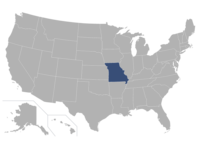
Jefferson City, MO