Mississippi’s top health officer: Measles cases are ‘inevitable’ as county vaccination rates fall
Jul 02, 2026 | 10:35 am ET

Description
Photo courtesy of Mississippi Today
Audio recording is automated for accessibility. Humans wrote and edited the story.
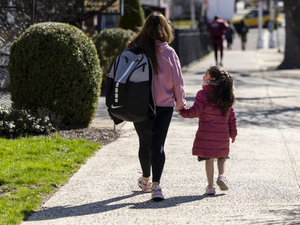
Mississippi’s kindergarten vaccination rates declined during the most recent academic year, continuing a downward trend that began after the state started granting religious exemptions for school vaccine requirements.
During the 2025-2026 school year, vaccination rates for required kindergarten immunizations fell nearly half a percentage point to 97.2% coverage, according to data from the Mississippi State Health Department. This rate, which depicts students who received all of the vaccines required for school entry, is down from 97.6% during the previous year. Children entering a Mississippi school for the first time are required to receive vaccines that prevent chickenpox, diphtheria, hepatitis, measles, mumps, rubella, tetanus, whooping cough and polio.
This coverage rate is high, along with the overall vaccination rate for school-aged children up to 12th grade, at 99%, data shows. But health officials say the statewide averages mask growing pockets of lower immunization levels.
Eight counties have fallen below a 95% kindergarten vaccine coverage rate, the threshold needed to prevent outbreaks of measles, a highly contagious and life-threatening virus. These counties include Franklin, George, Jackson, Lincoln, Pontotoc, Tate, Tishomingo and Webster. State Health Officer Dr. Dan Edney said this is an issue of growing concern for the agency.
“I do think a recurrence of measles cases is inevitable as we are seeing the vaccination rates declining in certain areas of the states,” Edney told Mississippi Today.
Mississippi has not yet reported a case of measles, though over 2,100 cases of the respiratory illness have been confirmed across the U.S. this year, according to the Centers for Disease Control and Prevention. Measles was deemed eradicated nationwide in 2000.
Dr. Nathan Lo, a physician-scientist and assistant professor of infectious diseases at Stanford University, has studied county-level vaccination rates across the U.S. He said analyzing data at the county level is useful because outbreaks typically start when an infection is introduced into a community of people susceptible to a disease. In many cases, the initial introduction occurs within a smaller area, like a school or a grocery store, than an entire county.
“When you look at the state-level data, and to some extent, even the county data, perhaps you don’t fully appreciate the degree of risk, because there are these pockets of under-vaccination,” he said.
Edney said the health department, which processes requests for vaccine exemptions, is paying close attention to the counties that have dropped below a 95% vaccination rate and is working with the state Department of Education and school nurses to warn them of the risks and encourage them to prepare isolation protocols.
For years, Mississippi permitted only medical vaccine exemptions authorized by a doctor for school entry and boasted the highest childhood vaccination rates in the nation. That began to change in 2023 when a federal judge ruled that parents can opt out of vaccinating their children due to religious beliefs.
In Mississippi, the number of religious vaccine exemptions during the most recent school year increased by more than 60%, according to health department data. During the 2025-2026 school year, over 3,000 Mississippi students were approved for religious exemptions, compared to roughly 1,880 during the previous school year. The number of medical exemptions has remained relatively steady over the past three years, though it has grown over the last decade.
This trend mirrors patterns seen nationwide. The share of kindergarten children up to date on their vaccinations has declined across the U.S. since the COVID-19 pandemic, as vaccine exemptions have increased.
When more people are exempt from vaccines, rates of vaccination tend to decline, Lo said. And when vaccination rates drop, communities are more likely to experience disease outbreaks.
In 2025, Mississippi experienced a steep rise in whooping cough cases — reaching 141 total cases — and officials reported the first death related to the illness in 13 years. Confirmed infections have declined this year, with 32 cases reported in Mississippi as of June 20, according to CDC data.
Edney said he worries about the resurgence of other vaccine preventable illnesses that have largely been eradicated in the U.S., like tetanus, polio and diphtheria, as more parents choose not to vaccinate their children against these potentially fatal illnesses.
“We’ve got to protect our children from these diseases that will definitely kill them,” he said.
Lo said Mississippi’s historically high vaccination rates are likely to help protect the state from large, prolonged disease outbreaks. However, he warned that this security could weaken over time if more parents choose not to vaccinate their children.
“Over time, if vaccine coverage is low and stays low for many years, you have a build up of susceptible children such that you’ll start to have outbreaks,” Lo said.
In Mississippi, kindergarten vaccination rates are lowest among private schools. According to health department data, 95.2% of kindergarten students at private schools are vaccinated, compared with 97.2% of public school children and 98.1% of children attending church schools.
The highest coverage rates are in the Delta region, where 98.9% of kindergarten students and 99.7% of all K-12 students are vaccinated.
Dr. Patricia Tibbs is a pediatrician in Ellisville and has worked with families for over three decades. She also serves as the president of the Mississippi chapter of the American Academy of Pediatrics.
Increasingly over the past three years, Tibbs said parents have expressed skepticism about vaccinating their children during appointments. During those conversations, Tibbs said she emphasizes that choosing not to vaccinate can put not only their own children at risk but also others in the community, including infants too young to be vaccinated and people who can not be vaccinated for medical reasons. These people generally have a diagnosed condition that heightens the risks of vaccines, like people who have a weakened immune system because they are receiving chemotherapy or who have a serious allergy to a vaccine component.
“I cannot stress enough that the community of people who are immunizing their children is protecting all of us, all of our children right now,” she said.
Edney said about a third of children with approved religious exemptions ultimately choose to become partially or fully vaccinated, oftentimes after parents discuss their options with pediatricians. He said the health department encourages providers to have nonjudgemental discussions with parents about the benefits of vaccines.
“We’re believers that parents know their children best, and asking questions is what good parents do,” Edney said. “And then, our job is to thoughtfully answer these questions based on the evidence, and then ask them to consult their individual physicians and providers to help make the right decision.”
Jackson, MS