Mississippians can see how often health insurers deny requests for prior authorization
Nov 23, 2026 | 7:00 am ET

Description
Photo courtesy of Mississippi Today
Mississippians shopping for health insurance plans can compare monthly premiums, deductibles, provider networks and covered benefits. But another number can shape whether they can actually get the care their doctor prescribes: the rate at which insurers deny requests for prior authorization.
Prior authorization is a process used by insurance companies to review certain medical procedures, prescriptions or other services before agreeing to cover them. As a result of the 2024 state law that made changes to prior authorization, the Mississippi Insurance Department published a dataset this year showing insurer-level rates of prior authorization requests, denials and appeals.
House Public Health Committee Chairman Sam Creekmore, a Republican from New Albany, said that the data is worth considering when shopping for plans.
“You really don’t think about it ‘til you need it,” he said. Then, when a health event occurs, Creekmore said people may find themselves thinking, “Well, I got the wrong insurance, or I’ve got insurance that denies everybody.”
The data, which contains prior authorization requests from 2025, shows a wide range in denial rates across 26 insurers. The highest volume of requests went to ProtectRx, a pharmacy-benefit and utilization-review company that denied 30% of the nearly 290,000 requests it received from Mississippi health providers last year.
Health insurance company Centene, which operates Affordable Care Act marketplace plans and Medicaid plans, had the second-highest volume of requests. The company’s Ambetter marketplace insurance denied a quarter of the over 166,000 requests it received. Among the state’s largest insurers, Molina Healthcare of Mississippi had the lowest denial rate of 6% and OptumRx had the highest rate, denying nearly half of all requests.
While the total number of prior authorizations remained about the same between 2024 and 2025, the number of denials doubled to over 200,000, Bob Williams, a health insurance regulator at the Mississippi Insurance Department said at a Senate hearing in October. He added that appeals for denied requests jumped from 9,000 in a year to over 50,000, possibly because providers realized after the law was enacted that they needed to submit more appeals.
Dr. Lucius Lampton, president of the Mississippi State Medical Association and a family physician in Magnolia, said navigating prior authorization poses a significant burden on both medical providers and patients.
“Prior authorization, if it exists at all, should be rare and have extraordinary justification for necessity,” he said, adding that no insurance company in Mississippi should require 166,000 prior authorizations in a year. He sees the process as a hurdle insurance companies have set to prevent patients from accessing services, where if there are enough hurdles, medical providers won’t have time to fill out all the paperwork.
“I don’t understand ethically how that’s acceptable to our system,” Lampton said.
Mississippi figures cannot be directly compared to national averages due to differences in reporting guidelines, but high denial rates are not unique to the state. KFF, a health policy research organization, found that the largest marketplace insurers denied between 3% and 25% of prior authorization requests nationally in 2025.
The prior authorization process
The data also shows that while appeals for denied prior authorization requests can be uncommon, nearly half of appeals were successful. The high rate of reversed denials also calls into question why the prior authorizations were necessary in the first place, Lampton said. At the same time, doctors and nurses may not have enough time to handle those appeals, especially if they have limited staff.
At Lampton’s practice, Timothe Monceret handles prior authorization requests. She said gathering all the necessary patient documentation can take her 30 minutes on the fast end. Other times, she’s on the phone for an hour with the insurance company before she can move forward with a request.
Monceret said she often submits requests for diabetes medicines, and that insurers can be “nitpicky” about how the forms are filled out. One request for Wegovy was denied because the provider didn’t specify a plan to gradually increase dosage, even though Wegovy’s FDA-approved dosing schedule already requires gradual dose increases. When Monceret added in the word “titration,” which means a gradual change in the dose of a drug, the request was approved.
Among the hundreds of thousands of prior authorizations Mississippi healthcare providers submitted to ProtectRx, one the largest categories of denied prescriptions were GLP-1 based drugs used to treat diabetes and obesity, including Wegovy and Ozempic. The company also frequently denied drugs used to treat autoimmune diseases and a glucose monitor used to manage diabetes.
The high number of required prior authorizations signals that insurance companies are controlling what drugs patients have access to, said Chad Netterville, executive director of the Mississippi Rural Hospital Alliance.
“I think what’s clear is that they are trying to control the cost for these employers around prescriptions,” he said.
Getting to the data
Sen. Walter Michel, a Republican from Ridgeland, sponsored the 2024 legislation that tightened timelines for insurers to respond to prior authorization submissions and established reporting requirements. The law also states that after receiving all the necessary information, insurers must respond to non-urgent prior authorization requests within seven calendar days, and to urgent requests within 48 hours.
Michel said he’s proud of the law. The National Council of Insurance Legislators adopted a version of it of as a model for how other states could regulate prior authorization. The state changes come as insurance companies are taking voluntary steps to reduce the burden of prior authorization.
UnitedHealthcare eliminated about 30% of its prior authorization requirements from Oct. 1, and operates a national “Gold Card” program that exempts some providers from certain prior authorizations. Providers gain gold card status based on a track record of approved prior authorization requests. Centene, which provides coverage to over 25 million Americans, announced a similar national program in November for “invited” providers, including through its Mississippi Magnolia Health plan.
“These latest actions … are designed to reduce unnecessary paperwork, make information easier to understand and help patients and care providers spend more time focused on care,” a spokesperson from UnitedHealthcare said in a written statement.
Michel said that after a few years of reporting, it will be easier for the insurance department and legislators to identify outliers with high denial rates. Currently, the law does not set target denial rates or caps on allowable denial rates. Instead, said Mississippi Insurance Commissioner Mike Chaney, “We’ve set our focus on transparency, timelines and reporting.”
The Mississippi law came amid increased reporting of prior authorization statistics nationally. The state is among several that require more specific numbers than CMS’s 2024 Interoperability and Prior Authorization Final Rule. However, the numbers in the Mississippi report are not comparable to national averages, said Michelle Long, a senior policy manager at KFF. That’s because Mississippi’s data combines individual and some group, or employer-sponsored, health plans. In contrast, federal data for private insurance covers ACA Marketplace plans but not employer-sponsored coverage.
Creekmore said he is open to the idea of breaking out individual and group plans in future reports. Breaking out the market types could show if denial rates were higher in one or the other and driving changes in statewide numbers. He also said he wants more detail on types of denied drugs, particularly GLP-1 medications. Having more specific reporting, he said, could help lawmakers decide whether certain policies deserve more scrutiny.
“I think it’d be helpful to have it more detailed,” he said.
This story was produced with support from the Sarah Yelena Haselhorst Fund for Health Journalism.
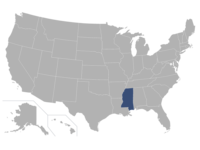
Jackson, MS