Minnesota’s exports are down 8%, driven by decline in exports of fossil fuel products to Canada
Jun 25, 2026 | 11:15 am ET
Description
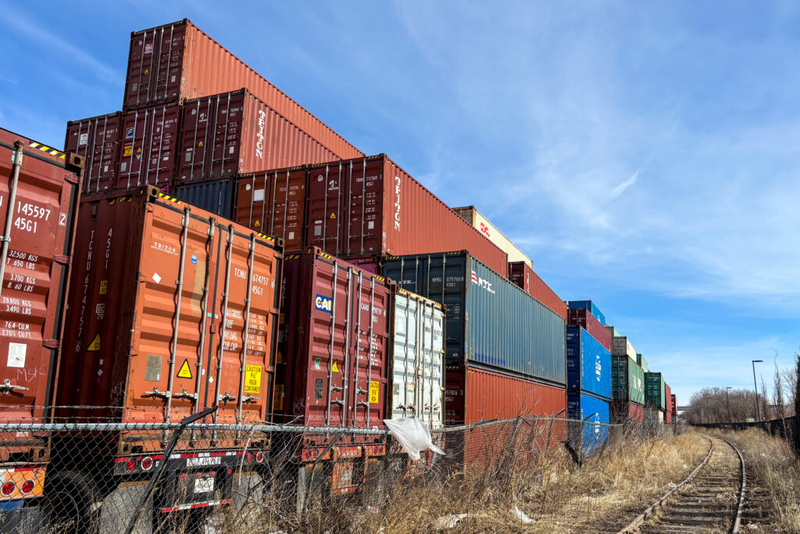
Shipping containers sit at Malcolm Transfer Station in Minneapolis on March 21, 2026. A developing trade war with Canada poses economic danger, especially for states on the northern border. (Photo by Nicole Neri/Minnesota Reformer)
Sales of Minnesota goods to foreign countries were 8% lower in the first quarter of 2026 compared to the same time last year, according to new trade data from the Minnesota Department of Employment and Economic Development.
The state agency attributed the drop in exports in part to uncertainty from “erratic” tariffs, in reference to widespread, shifting tariff policies enacted by President Donald Trump.
The data shows that Minnesota exported $5.8 billion in goods from January to March 2026, compared to $6.3 billion from January to March 2025. The decline is driven largely by a $628 million decrease in exports of fossil fuel products — including motor fuel and industrial oils — to Canada.
Minnesota continues to be hit harder than the U.S. as a whole, which saw an increase in exports of 15% in the same period. Just five states saw their exports drop more than Minnesota.
Increased exports to Mexico, Singapore, India and several European countries contributed to a 2% increase in exports from Minnesota to countries that weren’t Canada. Exports to Mexico were up 18%, the first time exports increased since 2024.
Exports of electrical equipment, one of the state’s top exported goods, were up 26%, with Canada as the largest buyer.
The Trump administration’s effort to impose broad tariffs on imports from foreign countries was weakened by a Supreme Court decision in February, though the administration immediately imposed a temporary global 10% tariff under a different statutory authority. The 10% tariff is still in place, as it was upheld by an appeals court after being struck down by a specialized federal court in May.
Several countries responded to the administration’s sweeping tariffs in 2025 with counter tariffs, taxing American goods in retaliation. Canada removed many of its counter tariffs in September.
Uncertainties from “erratic tariffs” and “strained relationships with US trading partners” have continued to impact the state’s exports, DEED Commissioner Matt Varilek said in a press release.
The Iran War began on Feb. 28 and led to soaring crude oil prices. It’s unclear what impact the war had on the exchange of fossil fuels between the U.S. and Canada, though. When asked about the impact of the war, a spokesperson said that the state agency doesn’t “really have a clear understanding” of what makes the fossil fuel product category — also called mineral fuel and oil — fluctuate “quite a bit” in Minnesota.
It does fluctuate quite a bit — mineral fuel and oil exports from Minnesota dropped over 70% from 2024 to 2025, for example, after surging 122% the year before.
Canada exports more crude oil and natural gas to the U.S. than the other way around, providing over 60% of crude oil imports into the U.S and close to all of the U.S.’s natural gas imports. The two countries import and export similar amounts of refined petroleum products, such as gasoline and diesel, from each other.

Saint Paul, MN