Michigan Supreme Court sides with Nessel, overrules cases curtailing consumer protection law
Jul 31, 2026 | 6:44 pm ET
Description
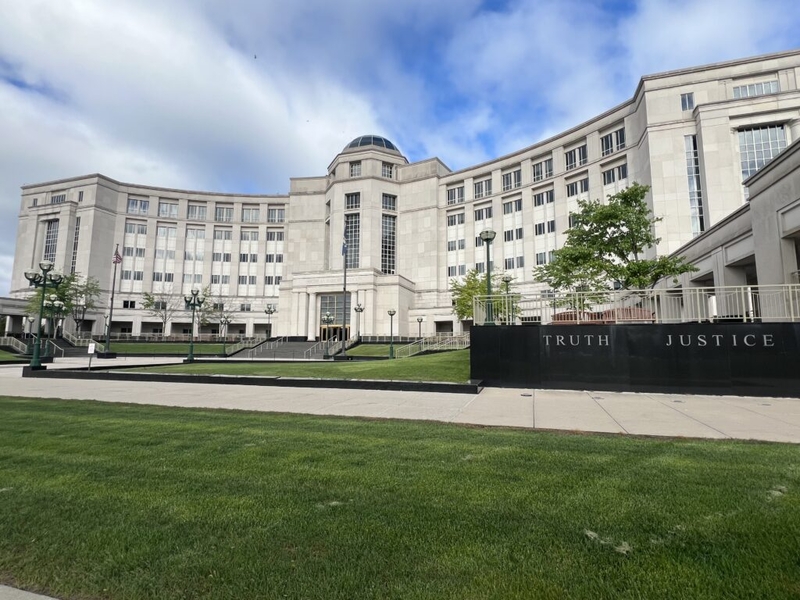
Michigan Supreme Court / Hall of Justice | Photo by Jon King
In a 4-3 decision Friday, the Michigan Supreme Court rejected a lower court’s decision preventing Michigan Attorney General Dana Nessel from moving forward with a price-gouging investigation against a major insulin manufacturer.
Nessel, in 2022, filed an investigation into Eli Lilly and Company looking to investigate price disparities between its branded version of insulin injections and the generic version. Nessel also filed a complaint with Ingham County’s 30th Judicial Circuit Court, asking the Court to determine that the investigation was not subject to an exemption in the Michigan Consumer Protection Act.
Following a request from Eli Lilly, Nessel’s complaint was dismissed, prompting an appeal to the state Court of Appeals, and the Michigan Supreme Court when the lower court’s decision was upheld.
However, Chief Justice Megan Cavanagh, and Justices Noah Hood, Elizabeth Welch and Kimberly Thomas, all nominated by Democrats, agreed with Nessel’s arguments that two previous court cases – Smith v. Globe Life Insurance Company and Liss v. Lewiston-Richards Inc. – had improperly interpreted the exemption, preventing the Michigan attorney general from taking action against companies for deceptive business practices and price gouging if that business holds a license or other authorization from a state or federal agency.
In an opinion authored by Hood, the court overturned its decision in the two previous cases, and remanded the matter of Nessel’s investigation back to the 30th Circuit Court for further proceedings.
“The Michigan Consumer Protection Act was once the envy of consumer protection efforts across the nation, and today we can once again claim that mantle with these two abhorrent decisions off the books,” Nessel said in a statement. “Now, our extraordinary Consumer Protection Team can go back to helping residents who have been deceived by licensed businesses.”
Justice Kyra Harris Bolden, writing in a dissent joined by Justices Richard Bernstein and Brian Zahra, the lone Republican-nominated judge, argued that the attorney general lacked standing to bring the claim.
State Sen. Sam Singh (D-East Lansing), who has introduced legislation to bolster the Michigan Consumer Protection Act, also cheered the decision, calling on the Republican-led House of Representatives to pass his Senate Bill 134.
In a statement, a Lilly spokesperson said they were “disappointed that a divided Michigan Supreme Court set aside longstanding precedent requiring termination of the Attorney General’s investigation.”
“We are proud of our strong record of insulin affordability solutions that have made a real impact for Michiganders and all Americans.” the statement said. “Lilly was the first company to cap what patients pay at $35 per month for all our insulins, we cut insulin prices by 70%, and in 2024 the average monthly out-of-pocket cost for Lilly insulin was less than $15.”
Lansing, MI