Michigan Legislature again fails to meet July 1 budget deadline with a final deal still out of reach
Jul 01, 2026 | 8:33 pm ET
Description
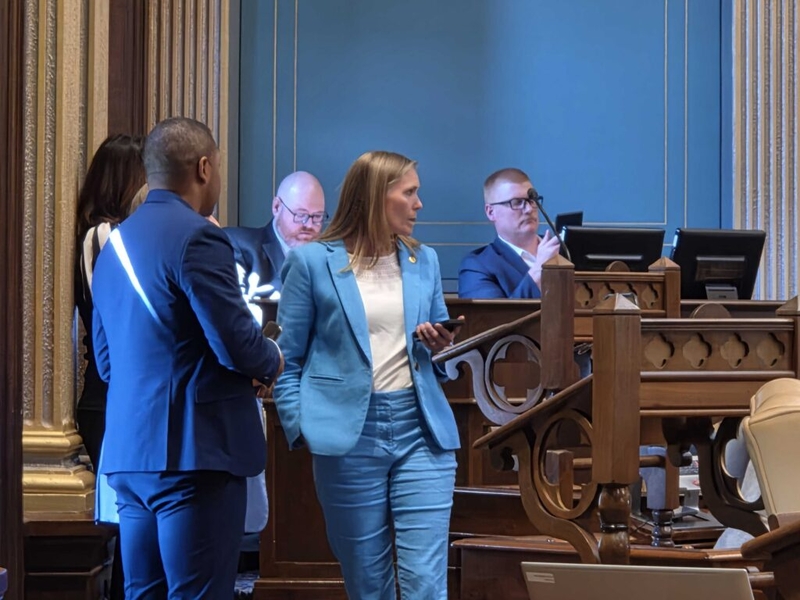
State Senate Majority Leader Winnie Brinks (D-Grand Rapids) emerges on the Michigan Senate floor after hours of negotiations took place toward a final 2026-27 budget deal. The House and Senate were still working on a deal as of late Wednesday evening. July 1, 2026 | Photo by Ben Solis/Michigan Advance
Members of the state House and Senate worked on Wednesday to move the 2026-27 fiscal year budget process toward completion but did not meet the statutory deadline of July 1 to have a budget completed and signed by the governor.
The goal now is to work all Thursday to land on a final deal, send it to the chamber floors and pass a budget funding the whole of government, its agencies, K-12 schools and institutions of higher education including community colleges and universities.
State Sen. Darrin Camilleri (D-Trenton) told reporters that the respective leaders of the House and Senate were making progress, along with Gov. Gretchen Whitmer’s budget office.
“As you saw today, we zeroed out some of the bills, and we are on our way to, hopefully, landing a deal in due time,” Camilleri said following Wednesday’s Senate session, which dragged on for eight hours. “We obviously have not made the July 1 deadline, and that is frustrating for our residents. It’s frustrating for us as lawmakers, too, because we’ve tried our best to meet the obligation that we have, which is to fund our schools and fund our government by July 1.”
Camilleri said he was hopeful that lawmakers could wrap up the budget in the next few days.
Robert McCann, executive director of the K-12 Alliance of Michigan, was not impressed.
“Educators are beyond tired of lawmakers pointing fingers and asking why our students’ test scores aren’t better, all while standing in the way of the tools that schools need to improve them,” McCann said in a statement. “By all accounts, the budget itself is essentially done. If so, then the only thing standing between our schools and the certainty they need is politics, the worst reason imaginable to leave every district in this state guessing about how many teachers they can hire, how many programs they can run, and how many students they can serve.”
Camilleri acknowledged negotiators had not yet reached a final agreement.
“If we had a budget deal 100% of the way, we would have done something today with that,” Camilleri said when pressed on that issue. “We are making good progress. … There’s always a chance for anything to happen, but our goal is to meet this week.”
Camilleri said he was still optimistic about their prospects of having the budget done by Friday.
“Last Friday, many of the subcommittees were hashing out details at the subcommittee level, and then obviously this goes up to a higher level,” Camilleri said of the work that’s been done thus far. “We’ve got our appropriations chairs, who are engaged, our leader, who is engaged, and we’re just trying to fine-tooth comb every boilerplate change, every dollar that is being spent.”
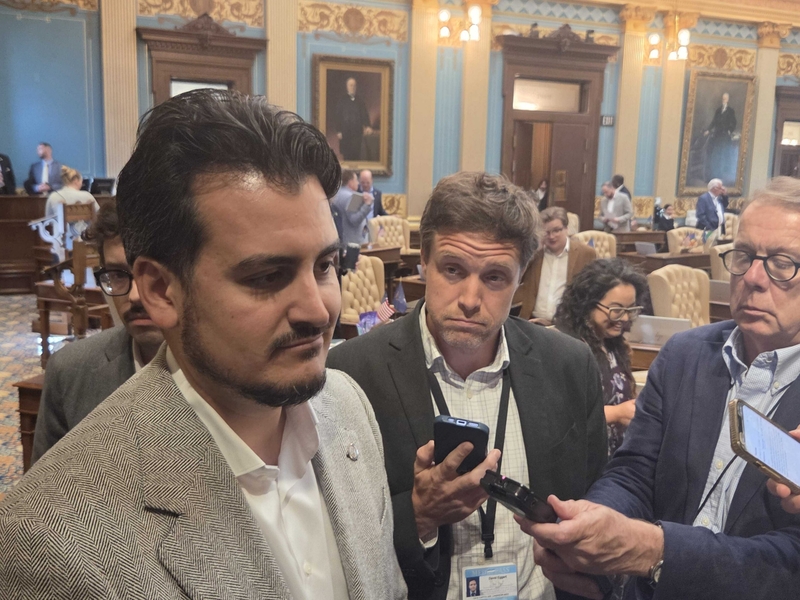
Reaching that benchmark might require a very long night for lawmakers, stakeholders and members of the Capitol press corps on Thursday. Various lawmakers who spoke with Michigan Advance throughout Wednesday’s House and Senate sessions indicated that the work might trail into early Friday morning — which is the start of the observed state and federal Independence Day weekend.
There were some policy bills that remain part and parcel to the discussions toward a final budget deal, however, and the House and Senate were juggling those along with the hard figures for the next fiscal year.
Camilleri said that included a handful of items, but wouldn’t divulge specifics on what policy bills or budget sticking points were holding up the process.
“Just like anything this term, we’ve had a lot of items that I think are trying to get addressed at any point during this legislative session, so I think there are multiple conversations happening about different policy bills, different items in the budget,” Camilleri said. “As we saw last year, the state House likes to bring in a lot of different discussions into the mix, and so we’re trying to solve all of the problems at the same time. When you’re doing big policy bills or big items in the budget, it just takes a lot of time to get through each of those individual items.”
The Legislature not only blew the July 1 deadline in 2025, but also failed to reach a final budget deal by Oct. 1, which is the beginning of the state’s new fiscal year and the constitutional deadline for a final budget to have been signed by Whitmer.
In some respects, the chambers appeared to be making better progress than they had this time last year, although they were still unable to meet their statutory deadline.
“I don’t think it’s any secret that we have not passed almost any legislation this term. It’s actually the least productive legislative session in Michigan history, and so we are trying to solve problems, and I do think that it’s been a big priority of the state Senate, it’s been a big priority of the governor’s team, to still do our jobs as legislators and pass legislation,” Camilleri said. “We have not really done that, so we’re trying to get that done, and if that happens to be part of the budget process, then so be it.
The House, which started Wednesday’s session at 1:30 p.m., also worked until the evening to make progress toward a final deal.
No member of House Republican leadership was made available to reporters for a post-session press conference. Former House Speaker Joe Tate (D-Detroit), who was also appointed as a negotiating leader in the final push for a budget deal, told reporters that conversations were ongoing for most of the day.
Tate did identify that an influx of federal money over the last few years following the COVID pandemic and recovery efforts led to larger budgets, and that the process now was correcting those numbers with the loss of the federal funding.
“We want to make sure that we’re using every penny as wisely as possible, and I know my colleagues in the caucus, as well, they’re focusing on the basics,” Tate said, adding that the tight budget outlook was affecting “everything that you’re seeing, from healthcare to education, public safety.”
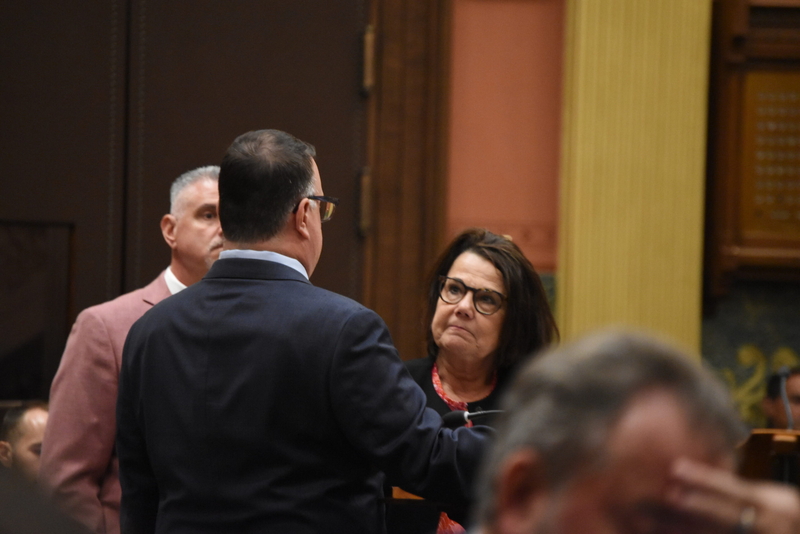
Some of the sticking points on the House side included downstream impacts of President Donald Trump’s signature One Big Beautiful Bill Act and the state’s own money crunch.
“At the last revenue estimating conference, we were $1 billion too short,” Tate said. “I think when you add all of that together, I think that’s where some points of difference are occurring and coming up. … I don’t think we’re going to be at a place to raise revenue, so I think really being smart with how we’re deploying those resources, that’s what has been going on in terms of the conversation and finding efficiencies.”
While everything has been on the table, Tate said Democrats in both chambers want to see that people still have access to healthcare, making sure schools are funded, and those were still conversations being had even into late Wednesday.
“I think we’ve made it clear what our priorities are, and I know that there are similarities that are very closely aligned, if not totally aligned,” Tate said.
The work done Wednesday set up the House, Senate and Whitmer’s office to enter what is known as a conference committee, where a final budget deal will be hashed out. From there, the committees will move the bills to each chambers’ floors, queuing up the hard work of whipping votes from members to support the respective budget bills.
While spending targets have likely been agreed to, neither the House and Senate have released tangible, conference committee spending plans — which will likely land before or around the time each conference committee meets on Thursday afternoon.
Michigan Advance reporter Katherine Dailey contributed to this report.
Lansing, MI