With Medicaid cuts ahead, Louisiana’s rural health providers battle over payments
Aug 10, 2026 | 5:00 am ET

Description
Louisiana's Act 859 increases Medicaid payments for independent rural health clinics by $41.50 this fiscal year and again next year, assuming the federal government approves the new payment structure. (Stock photo by Wichayada Suwanachun/Getty Images)
When Herndon “Buzz” Jeansonne bought two rural health clinics in Avoyelles Parish from a retiring physician in 2006, he didn’t have many concerns about making the finances work.
His reimbursement rate for treating patients on Medicaid, which provides government-backed insurance for low-income people, was $70 to $80 per visit. At the time, it was adequate for Jeansonne, a nurse practitioner in family medicine.
Two decades later, however, Jeansonne found himself exhausted trying to keep up the five family health clinics he had opened. Located in Cottonport, Simmesport, Mansura, Marksville and Palmetto, they are part of communities with, at most, a few thousand residents each and poverty rates of 20% to 50%.
The clinics’ patients are largely dependent on Medicaid to pay for their care, and reimbursement rates haven’t grown alongside Jeansonne’s expenses. In 2025, his clinics were reimbursed between $109 and $125 per Medicaid visit, depending on the location, according to the Louisiana Department of Health.
The financial stress prompted Jeansonne to sell his clinics to MyTown Health Partners, a Pittsburgh company financially backed by the Massachusetts private equity firm Webster Equity Partners.
MyTown now handles the clinics’ billing, including tracking down payments from the private insurance companies that provide Medicaid plans, though Jeansonne still owns the clinic licenses. He also still treats patients when clinic staff are out sick or on vacation.
Jeansonne said he likely wouldn’t have sold his businesses had he known the Louisiana Legislature was going to dramatically raise Medicaid reimbursement rates for independent rural clinics like his this year.
Act 859, sponsored by Rep. Joe Stagni, R-Kenner, increases the rate by $41.50 this fiscal year and again next year, assuming the federal government approves the new payment structure. The rates will also be adjusted for healthcare-specific inflation moving forward.
“I definitely would not have sold if I had known that was coming,” Jeansonne said. “At that point, I could give raises to all my staff and nurse practitioners, and I would have had the staffing that I needed.”
Rural hospitals vs. rural clinics
Not everyone is happy about the change. Rural hospital owners, who also own clinics that did not receive the same rate increase, said the pay bump gives independently owned clinics a financial edge.
“We felt like it put the rural hospital clinics at a competitive disadvantage if you pay these other clinics way above their eligible costs,” Jeff Reynolds, executive director of the Rural Hospital Coalition of Louisiana, said in an interview.
Some of the rural hospitals’ anxiety likely has to do with Medicaid program cuts coming over the next two years as a result of Congress approving President Donald Trump’s One Big Beautiful Bill Act. The reductions are expected to be particularly brutal for rural hospitals, where patient populations include larger shares of low-income people and Medicaid enrollees, according to the American Hospital Association.
Louisiana has also seen a dramatic drop of around 200,000 people from its Medicaid rolls over the past year as Gov. Jeff Landry has ramped up efforts to cull the rolls. Healthcare advocates worry that this means more Louisiana residents are going without health insurance at all, which will result in hospitals losing out on payments for care they provide, particularly in their emergency rooms.
As the pool of Medicaid patients shrinks and Medicaid funding runs up against new limits, independently owned health clinics will receive a much larger share of what’s available once their new reimbursement rates go into place.
Jeansonne’s son Alec, who owns a consulting company that helps rural health clinics with business operations, said higher payments for the independent clinics are warranted. The clinics are at a financial disadvantage, he said, because hospital-affiliated clinics are usually reimbursed at a much higher rate for Medicaid visits already.
Data from the Louisiana Department of Health show “provider-based” rural health clinics, including those owned by rural hospitals, are being paid between $107 and $587 per Medicaid visit for the fiscal year that started July 1. Independent clinics were to be paid between $98 and $129 per visit before the rate increase was passed.
“They don’t want us to have the same rate as them or have a level playing field,” Alec Jeansonne said of the rural hospital owners.
The younger Jeansonne started the Louisiana Rural Health Collective, an association of independent rural health clinics that pushed for the rate change in the legislature.
Most independently owned rural health clinics cannot afford to offer their employees health insurance, Alec Jeansonne said. His consulting firm also works with large clinics, including one that serves 18,000 patients annually, that are struggling to make payroll, he said.
“We are on the verge of closing but then the [rural hospital] CEOs are flying around on private jets,” Alec Jeansonne said.
Reynolds said it’s not appropriate to assume hospital-owned and independent clinics are providing similar services. Some with higher Medicaid reimbursement rates offer speciality care, he said.
The hospitals’ clinics also help support a wider rural care network that includes emergency rooms, more comprehensive medical testing and medical specialists, Reynolds said.
Staff pay at hospital clinics can also be higher because it’s likely to include more doctors than the teams at independent health clinics, he added.
Independent clinic owners said they needed a rate increase partly because they struggle to attract staff themselves.
“I can’t compete as far as benefits go,” Nicole Doucet, a nurse practitioner who owns four clinics in Southwest Louisiana, said during a legislative hearing on the higher payments earlier this year.
Doucet said she is the only health care provider operating in Iota, a town of approximately 1,300 people. Her staff sees about 80 patients per day at that site, she told lawmakers.
“[The higher rates] lessen the chances of us having to sell to bigger corporations,” she said.
Buzz Jeansonne said regulations and expenses associated with running his clinics surged over the 20 years he owned them. The Affordable Care Act of 2010, President Barack Obama’s landmark healthcare law, required all of Buzz Jeansonne’s clinics to switch over to an electronic medical records system that he said cost several thousand dollars.
Former Gov. Bobby Jindal also privatized Louisiana’s Medicaid program in 2012, which led to Buzz Jeansonne and other healthcare providers having to wrestle with multiple private insurance companies for reimbursement, rather than a single provider, he said.
More recently, compensation costs for clinic staff have soared. Buzz Jeansonne used to be able to hire a nurse practitioner for $65,000 but more recently had to offer at least $120,000 with bonuses to get applicants for the job. Pay for lower-level staff also went up dramatically during the COVID-19 pandemic and never came back down, he said.
All of those factors made it attractive to sell his clinics, Buzz Jeansonne said. Yet Alec said his father has lost out on more than just a higher Medicaid reimbursement rate.
“We lose that hometown feel. My dad has treated generations of people,” Alec said. “People used to pay him with a bag of squirrels or a bag of sweet potatoes.”
Nurse practitioner in charge
The chairman of one of the legislative committees that approved the higher reimbursement rates is Rep. Dustin Miller, D-Opelousas, a nurse practitioner who co-owns clinics that will benefit from the boost.
His locations in Opelousas, Port Barre and Sunset should see their rate increase from $128 per Medicaid visit to at least $170 through July 1, 2027, and at least $211 the following year, assuming the federal government approves the new clinic rate structure.
As House Health and Welfare Committee chairman, Miller has a lot of control over all health care legislation that comes through the statehouse. But he said he was not involved in passing the independent clinic rate increase because it would have been a conflict of interest .
“Ethically, I’ve always refused to carry a bill,” Miller said, who joined the legislature in 2016. “I’ve been asked to carry a bill every year since I came into office.”
Alec Jeansonne, who led lobbying efforts for the rate increase, also said Miller was not involved in efforts to pass the rate hike. Miller refused to answer his phone calls about the bill, he said.
“I’m actually quite upset at him that he didn’t play a role in this,” Alec Jeansonne said.
While he didn’t sponsor the legislation, Miller did offer public encouragement to nurse practitioners and clinic owners who came to testify in favor of the measure. He also never disclosed he could personally benefit from the proposal when the bill was under consideration this spring.
Miller voted with the rest of the House health committee to move the proposal forward. He also backed the bill in a 91-6 vote on the House floor May 6, sending it to the Senate.
But Miller was absent for the final House vote on the bill, when the proposal came back from the Senate with the specific payment increases included. The House passed it with 95-0 vote May 29.
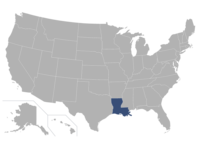
Baton Rouge, LA