by SCOTT MOONEYHAM
Raleigh
Legislative leaders have apparently decided to make the Global Transpark controversy go away.
No, they aren’t shutting down the boondoggle. They’re just making it disappear from the pages of the General Assembly’s annual budget document.
The Transpark began in 1992 as a grand vision to bring Research Triangle Park-like economic development to eastern North Carolina. The state developed the Kinston site hoping that a commercial-only airport would lure manufactures with notions of holding down transportation and inventory costs.
More than $200 million in state and federal tax money has been poured into the project. But in 13 years, not a lot has happened.
State lawmakers, though, continue to pump in the money. In the next fiscal year — barring an asteroid hitting the earth or some other upheaval that changes government as we know it — the project will receive $1.6 million.
Both the Senate and the House have included the amount in their budget proposals, meaning it won’t change when a final budget deal is reached.
Budget writers also decided to make the appropriation recurring, so in future budget debates the money won’t even be noticed unless someone makes it an issue.
It’s quite a contrast from just a few years ago, when legislators talked of ending the Transpark’s state money fix. State leaders also considered shutting down the ruling Transpark Authority and handing over the keys to the Department of Transportation’s Division of Aviation. Doing so would have kept the project alive, but with less expense and less promotion.
So what’s changed? Well, that’s hard to figure.
During this year’s budget debate, supporters’ biggest argument for continuing the state appropriation seemed to be that the state would have to repay tens of millions in federal tax dollars if the project was shut down. (Federal officials have publicly stated that as long as the runway continues to operate in some capacity, it’s unlikely the state would have to repay any money.)
A firm that makes parts for existing and out-of-production aircraft, with the military as a potential client, also announced plans to invest $2 million.
But Workhorse Aviation will receive more than $600,000 in incentives from the state and the Transpark Authority’s foundation. Another $2 million will go to build a machinist training shop, run by Lenoir Community College, to help train company workers. The bulk of the money will come from the state’s tobacco settlement proceeds.
The promised payoff? The creation of an earthshaking 50 jobs over three years.
To be fair, state officials hope the investment lures other aerospace firms to the park. But there have been a lot of hopes and dreams over the years at the Global Transpark, from FedEx to Boeing to the U.S. military. You have built it. They haven’t come.
What’s needed is a timetable with specific benchmarks for success, and specific alternatives if they are not met.
Of course, that kind of accountability has been needed for a long time. So why be surprised when lawmakers move in the opposite direction?
Scott Mooneyham writes for Capitol Press Association.
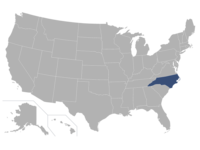
Raleigh, NC