Low Test Scores: For Hawaiʻi High Schoolers, The Math Isn’t Mathing
Oct 06, 2026 | 6:01 am ET
Description
Photo courtesy of Honolulu Civil Beat
When Hawaiʻi elementary students are tested on division, multiplication and fractions — the fundamentals of math — about half of them score proficient on the state's standardized tests. But later in high school, when they're contending with more complex subjects such as algebra and geometry, their scores drastically fall. Fewer than a third pass.
Educators say a number of factors contribute to this trend. Math becomes more complicated in later grades, meaning students have a harder time keeping up if they don't master basic skills in elementary school. Students may lose confidence in their skills early on and assume they can't succeed in math. And teens may simply take the test less seriously by high school.
"Regardless of what their abilities are, that motivation part is hard to build up with them," said Michael Ida, a math and computer science teacher at Kalani High School. "If they're already struggling with the material, then it's like a one-two punch a lot of times for them."
In Hawaiʻi, the student body itself also changes between elementary and high school, with some families moving their kids to private school in later grades. That shift could affect standardized test data, which only tracks public school students.
Nationally, Hawaiʻi students score slightly above average on fourth grade math exams. Eighth graders scored just below the national average in 2024, the most recent year of data available.
State leaders say it's critical that all students have a fundamental understanding of math. While students might assume they only need to master high school math if they're pursuing a career in STEM, a strong understanding of the subject opens up multiple career and college options, said Stephen Schatz, director of Hawaiʻi P-20 Partnerships for Education, which studies kids' progression from early childhood to the workforce.
"We hear from employers, we hear from academic programs at the university that math readiness is an issue," Schatz said. "We have to assume that academic readiness is the best workforce readiness program we can have in our schools."
The state has an ambitious goal for all eighth grade students to be proficient in math by 2029, but it's a long way off. Last year, only 35% of eighth graders met or exceeded the state standards in math.
The state education department is pursuing a number of solutions: ramping up professional development for teachers, rolling out new math standards to make classes more engaging and intervening as soon as possible when kids start struggling in the subject.
Some of these initiatives are still in their early stages, and their impact has yet to be seen.
"We're definitely not satisfied with the math outcomes," said Department of Education Deputy Superintendent Heidi Armstrong. "The results do tell us that we have significant work to do in mathematics, and we are continuing our work of putting together a much stronger system of support."
What's Happening?
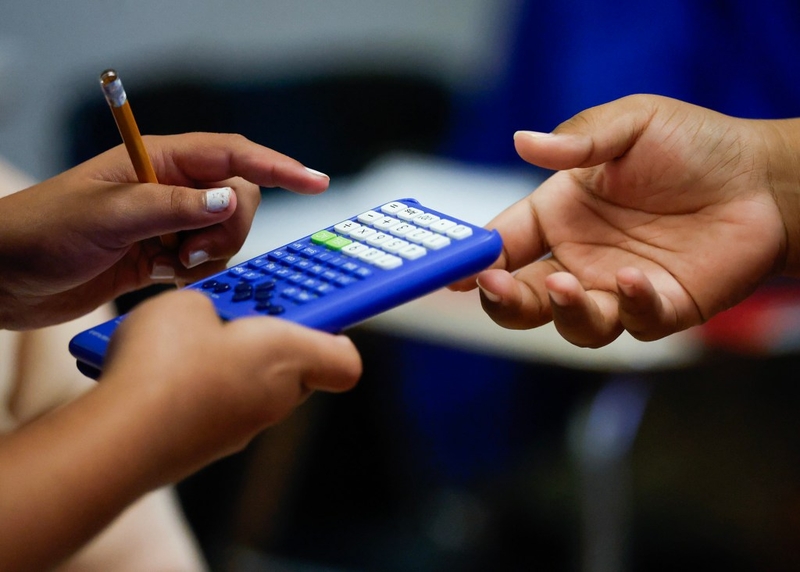
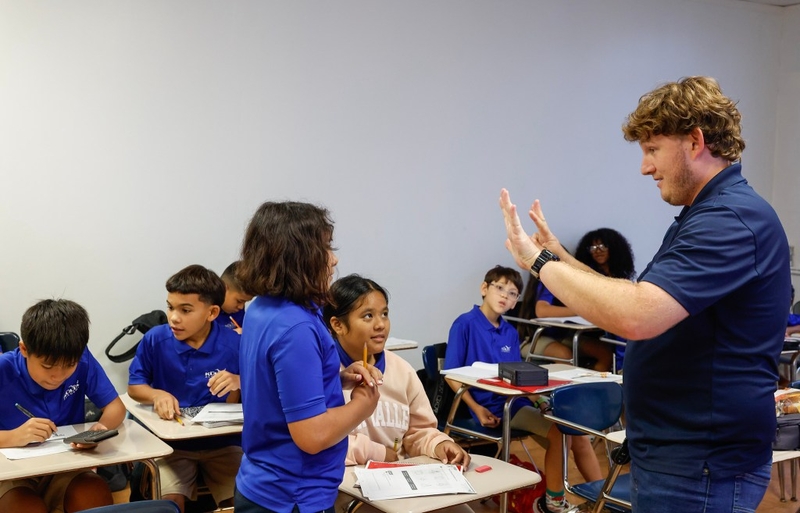
On a recent Wednesday morning, Kūlia Academy teacher Byron Bass enthusiastically walked his sixth grade class through calculating the surface area of different shapes. When a student reached for her calculator to multiply eight by eight, he instructed her to put it away and guided her through solving the multiplication problem.
"Write it down if it helps," he told the student, putting out his eight fingers to help her visualize the calculation.
The public charter school in Kalihi, which serves grades six through eight, emphasizes the importance of mastering basic math before moving on to more advanced material, said Director Andy Gokce. The school offers two hours of math a day plus small group tutoring for students who need extra help outside of class. The intensive support seems to work: Last year, 87% of Kūlia’s students scored as proficient on the state math test for middle schoolers — well above the state average for this age group.
It's especially important for students to have strong foundations in math by the time they finish middle school, Armstrong said. Once they move to high school, she said, students will need to apply basic skills to more advanced concepts and graduation requirements such as geometry and Algebra 1.
But it's hard to develop these skills when kids don't attend school regularly, said Christopher Sanita, principal at Hana High and Elementary School on Maui. Last year, 13% of Hana’s students were chronically absent, meaning they missed at least 10% of the school year. Only about 16% of kids tested proficient in math.
While the school works with kids in small groups to reinforce material and tracks their progress throughout the year, there’s only so much the school can do if the kids aren’t present.
OIder kids may also develop the belief that they simply aren't good at math – a narrative that's much less common in other subjects such as reading or social studies, said Laurie James, a professor of mathematics education at the University of Hawaiʻi West Oʻahu. If kids grow up hearing that math is too difficult for them, they're less likely to believe that they can improve with time.
The opposite seems to be true in reading, where students' proficiency rates improve as they get older. While less than half of third graders were proficient on the state reading test last year, 57% of juniors earned a proficient score.
"It's just one of those things where it just seems like society in general uses that," James said. "'I'm not a math person' is an acceptable phrase when they wouldn't use it anywhere else."
The biggest drop in student proficiency took place between eighth and 11th grade last year, where the statewide rate fell by nearly 9 percentage points. The drop may be more severe because students don't take state standardized tests in ninth or tenth grade or because the 11th grade test includes a range of concepts covered in geometry and algebra.
By the time students take the test in the spring of their junior year, they may face material they haven't seen in more than a year.
Catching Kids Early
At Kalani High School, Ida says his colleagues use a variety of strategies to support kids who have fallen behind in math. Kids may struggle with basic concepts such as fractions or positive versus negative numbers, he said, so their teachers might offer extra tutoring or give them blocks or other physical items to visualize harder problems.
But it would be ideal if schools could help kids catch up earlier, since some of their challenges have already accumulated by high school, he said. Last year, 58% of juniors at Kalani were proficient in math, more than double the state average for this group of students.
"If they start falling behind early on in elementary school or middle school, by the time they reach us in high school, and by the time they get to 11th grade, things have kind of snowballed," he said.
Armstrong of the state education department said all schools screen students outside of the state standardized tests at least three times a year, although campuses can use different types of math assessments. Starting last year, she said, schools began receiving training on using assessment data to inform teaching and monitor whether strategies are helping.
Outside of testing, the education department is also hopeful its new math standards will make a difference. The standards, updated this summer for the first time in more than a decade, require students to learn more data literacy skills, making lessons more relevant and engaging for kids, said Loren Ayresman, a teacher at King Kekaulike High School on Maui.
"The thing is trying to shine the light on the students generating their own data in the classroom and using that to uncover significant mathematics," Ayresman said. His students have been researching loan default rates at Hawaiʻi colleges to practice identifying trends.
The state is also doubling down on professional development and training for teachers, although the Legislature has yet to finance these efforts. Last year, the education department requested funding for 16 math coaches who would work with teachers to improve their instruction. Lawmakers denied the request. A separate bill would have also financed similar efforts, but the proposal died when it failed to receive a hearing in the Senate Education Committee, chaired by Sen. Donna Kim.
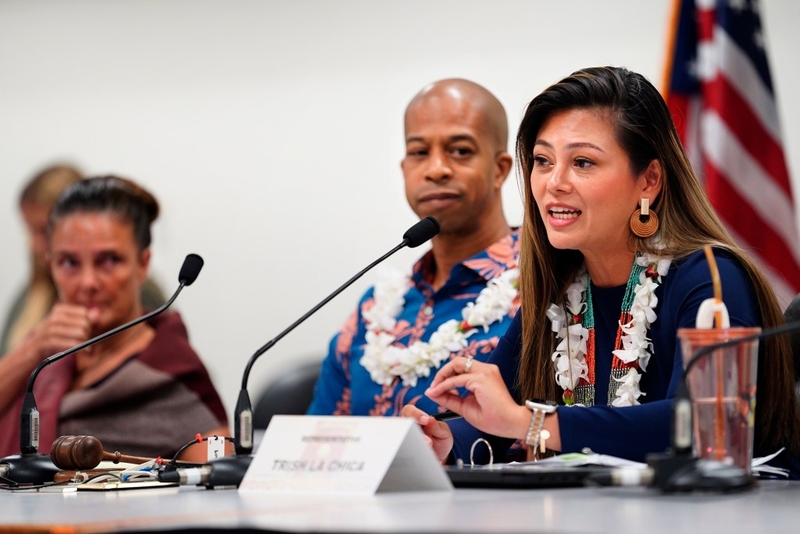
The education department will request state funding again in the next legislative session, Armstrong said. In the meantime, the department was able to use federal funds to hire some coaches this year, although not enough to support every complex area in the state.
At Hana High and Elementary School on Maui, Sanita said professional development has played a key role in helping his teachers strengthen students' math skills from the early grades. Rather than asking students to rely on rote memorization in math, he said, teachers are learning how to ask their kids better questions to check their understanding of key concepts.
"If they master the K-3," Sanita said, referring to kindergarten through third grade, "they're on such a better trajectory to really understand those more abstract concepts in mathematics."
See the percentage of students in each complex area who scored proficient in math last year:
Honolulu, HI