Clemson University veterinary students will provide on-farm care
Jun 30, 2026 | 12:47 pm ET
Description
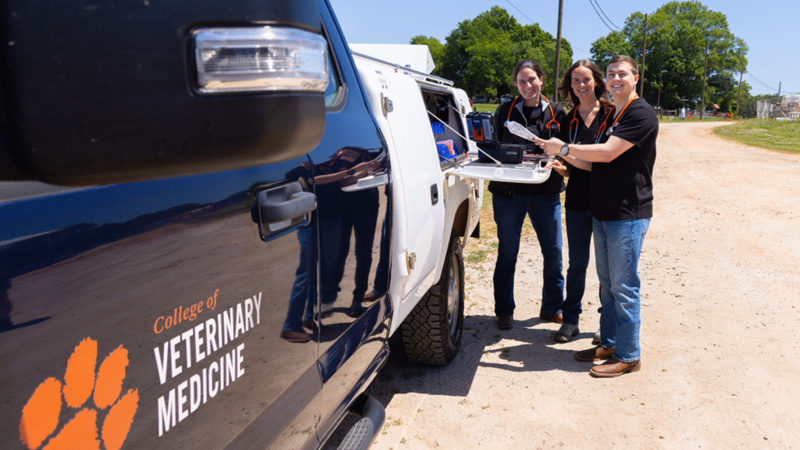
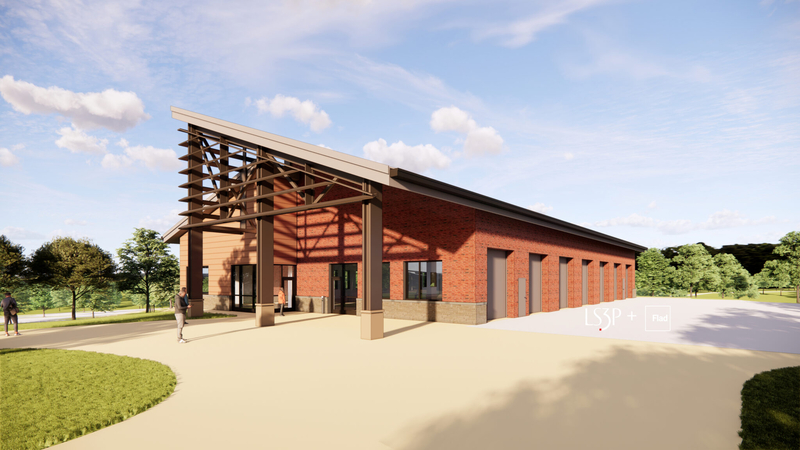
As part of the curriculum at its new vet school Clemson University students will provide on-farm and after hours care for livestock via four fully-equipped ambulatory service trucks. (Photo courtesy of Clemson University)
CLEMSON — Veterinarians in training at Clemson University will make farm calls, helping fill shortages in rural South Carolina.
As part of the curriculum at its new vet school — which admits its first class this fall — Clemson veterinary students will provide on-farm and after-hours care for cattle, horses, small-scale swine operations and other livestock.
When fully operational, the ambulatory service will be equipped with four state-of-the-art trucks, including ultrasound, digital radiography and other specialized equipment, according to Dr. Callie Fogle, head of Veterinary Services at the Harvey S. Peeler Jr. College of Veterinary Medicine.
Most calls will be made within a radius of approximately 30 miles around Clemson in the Upstate. One truck will travel farther afield, working with local veterinarians to treat large-scale livestock operations.
That will broaden students’ training experiences with more animals, Fogle said.
Ultimately, the school aims to educate veterinarians who stay and practice in South Carolina, filling needs for rural and large animal veterinarians.
Of South Carolina’s 46 counties, eight from the Midlands to the Georgia border have “high priority” veterinary shortages, while Orangeburg County’s shortage is considered critical, according to the latest designations by the U.S. Department of Agriculture.
Clemson students will have the opportunity to work the ambulatory service on a six-week rotation in their fourth year of vet school, allowing them to apply their classroom knowledge in real-world settings under the guidance of an experienced veterinarian.
“Years one through three typically are spent in lectures and labs, so that students are learning the hands-on skills that they need to be veterinarians,” Fogle said. “You’re practicing skills that you know you’re going to need, but you’re not necessarily practicing them in the exact situation that you’re going to need them.”
How Clemson University is starting South Carolina’s first veterinary school
That changes in a student’s fourth year, where they will rotate through various settings, such as clinical and surgical. The ambulatory service adds in-field practice to that list.
“In fourth year is really where they get an opportunity to be in the driver’s seat as a veterinarian,” Fogle said.
“This is where they hone their communication skills with clients and producers,” she said. “This is where they hone their critical thinking skills on what might be wrong with an animal or how to help a producer improve their herd.”
Fogle said Clemson’s vet school also will stand out because the rotations will be student-led, “where the student is operating as a veterinarian with an experienced veterinarian supporting them as a safety net.”
Because Clemson’s vet school is just getting started, the first three years of ambulatory services won’t be Clemson trained vets.
Fogle said Clemson will partner with other veterinary colleges, opening up slots to students from those other institutions, though she did not say which schools they’ve been in talks with.
“We have had and will continue to have a lot of student interest,” she said. “Most veterinary schools don’t have enough field experiences or ambulatory experiences for their veterinary students in that fourth year. Veterinary students often love to travel the U.S. experiencing vet med in different parts of the country, so I don’t think we’ll have any trouble getting students to fill our rotations before our constant fourth-year students actually arrive.”
Those first years also will be spent building up a clientele and building relationships with other practicing veterinarians in the area.
Fogle stressed the school is designed to complement, not compete with, existing veterinary practices.
“One thing I know about this service is it’s going to be a student-led service, which means it’s going to be slow,” she said. “And the goal of the service is not to make money. The goal of this service is to educate veterinary students. While it sounds like a pretty big practice — four trucks — when you think about the pace and the likely caseload that we’ll need to educate veterinary students, it’s not going to be a huge burden in terms of competition with area practices.”
The school recently held its first listening session with veterinarians, who offered suggestions on how the Clemson Ambulatory Service can partner with and support them, Fogle said.
Having a veterinary school in state also comes with the benefit of faculty members who have specialty skill sets, such as internal medicine or surgery, Fogle added.
These faculty can be a resource when it comes to performing advanced procedures, she said.
Columbia