Looking for a Christmas tree? Here’s what’s grown in Georgia, including some sustainable options.
Nov 27, 2026 | 4:00 am ET
Description
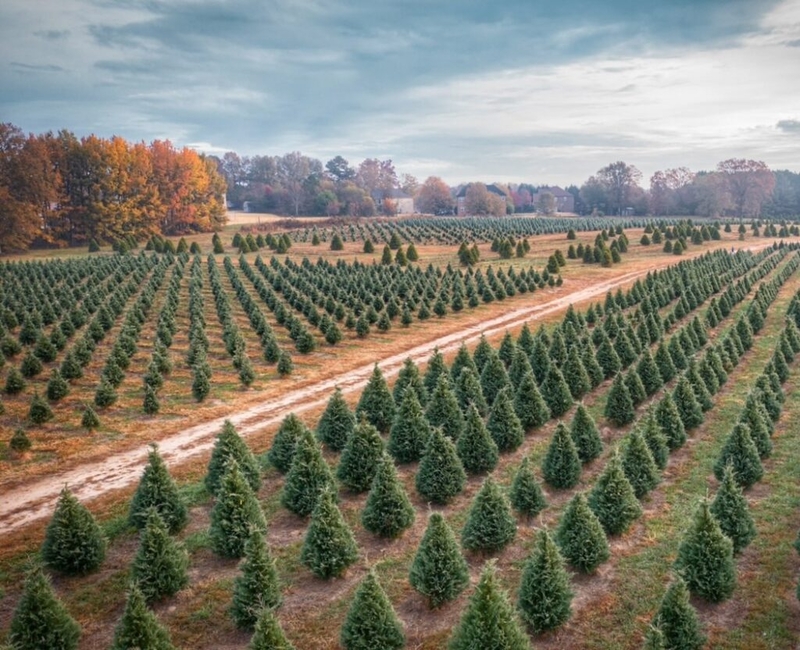
Cypress, pine and fir trees are for sale at Berry’s Tree Farm, a Christmas tree farm based in Covington, Georgia. Photo courtesy of Chuck Berry.
The holiday season is upon us, which means that — for all who celebrate — it’s time to start looking for a Christmas tree.
Chuck Berry, the owner of Covington-based Berry’s Tree Farm and the president of the Georgia Christmas Tree Association, said most farmers sell the majority of their supply in the five days after Thanksgiving.
“It’s a pretty unique operation because it comes real quick and it also goes real quick,” he said.
Georgia has nearly 100 farmers who grow Christmas trees in-state, according to the Georgia Department of Agriculture, which publishes an annual map of Christmas tree farms across the state.
“Majority of what’s grown now in Georgia is in the cypress family,” Berry said. “But there are some farms that also offer cedar and pine. And then a lot of farms also bring in Fraser fir from North Carolina.”
Mark Czarnota, an associate professor of horticulture at the University of Georgia, said a wide variety of Christmas trees are grown in Georgia, such as Leyland cypress, Arizona cypress and red cedar trees. Those species, he said, can be grown just about anywhere around the state, and are fairly hardy and drought tolerant.
El Niño could mean snow for Georgia this winter, but it’s not a sure thing
But other types of trees, including Fraser firs and white pine trees, need a significant level of elevation to be able to grow. The ones that are grown in Georgia are mostly found in the state’s northern counties.
“You need to get above 1,000 feet above sea level to really have those trees perform okay,” he said.
In recent years, Czarnota also said he has noticed an increase in people looking for more environmentally friendly ways to deck their halls for the holidays.
“I see a lot of movement towards people purchasing live plant material that they can plant in their yard when they’re done with it,” he said.
Some Georgia farmers have also found creative ways to bring a tree into their home without having to cut one down or buy an artificial one: Christmas tree rentals.
Elizabeth Beak, the owner of Joy To The Earth Tree Farm, has allowed Georgians in the Atlanta area to “foster” tree saplings for the holiday season since 2022, providing about 50 families the opportunity to have a live tree in their house without chopping one down.
Unlike other types of live Christmas trees, she said, families don’t need to put their tree in the trash after the holidays or have a yard to plant a potted tree in.
“The tree instead comes back to the farm,” she said. “It continues to grow. It provides habitat throughout the year out at the farm.”
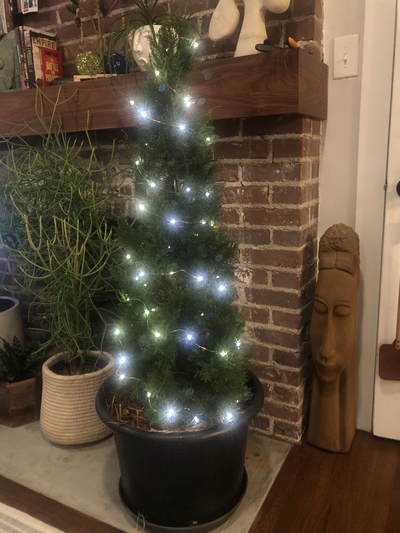
Several families, she added, have fostered the same tree for several years in a row. This year, the farm is not offering rentals, but will instead be planting the first cohort of trees in the ground for the first time, with some trees going in the yards of their foster families and others to be planted in parks around Atlanta.
The rental program will return next year with a new set of saplings, Beak said.
The process of renting a tree and returning it to the outdoors, she added, provides benefits that go beyond just the holiday season.
“They can provide habitat for our wildlife,” she said. “They can help our soils. They can help with flooding. They can help with fresh air. They can beautify just all sorts of different things.”
Still, she said, her family has held on to their artificial tree that they purchased before starting the farm. They display it alongside a live tree each year, she said, mostly because it seems more wasteful to throw it away. If she had the choice now, she said she would prefer a tree rental.
“A lot of [artificial trees] are made far, far away in a different country, they’re using a lot of plastic and things like that,” she said. “And plus, you have to store them.”
But Czarnota, the UGA horticulture professor, said tree shoppers shouldn’t worry too much about the environmental impact of cutting down Christmas trees from a farm.
“You’ve got to remember the tree is replanted,” he said, adding that many communities have programs to turn Christmas trees into mulch to use around people’s gardens.
Because Christmas trees are an industry, buying a real tree also helps support Georgia farmers, Czarnota said.
“It’s not like you’re going through a clear cut in the forest and putting in a parking lot or a development,” he said. “Usually the land’s reused multiple times for tree plants.”
Atlanta, GA