Local efforts to ban Flock cameras gain steam
Jul 31, 2026 | 12:25 pm ET
Description
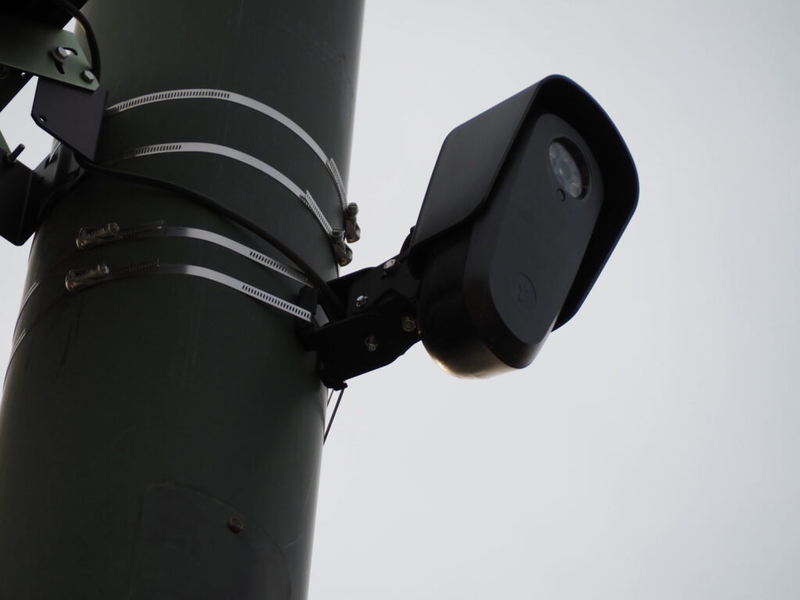
A Flock Safety license plate-reading camera is seen at Colfax Avenue and Franklin Street in Denver on Aug. 5, 2025. (Photo by Quentin Young/Colorado Newsline)
As municipalities in Maine and across the country are increasingly relying on Artificial Intelligence for policing, some localities have made progress in removing surveillance cameras, foreshadowing forthcoming legislative fights over state-level restrictions.
As of Thursday, bipartisan Maine legislators who launched a petition to ban AI-powered Flock cameras — automated license plate readers that store information in searchable law enforcement databases — in the city of Auburn have gathered more than enough signatures to do so.
The campaign submitted more than 1,800 signatures — hundreds more than the required 1,568 — to the city, which is now tasked with verifying the signatures. Once verified, the Auburn City Council can either vote to enact the ban or send it to the voters.
The city installed Flock cameras last summer, a decision that drew community uproar after it was done without public notification, as the Sun Journal reported at the time.
Auburn Police Chief Jason Moen pointed to the cameras helping solve several crimes when defending his department’s funding request to continue to use the cameras earlier this year. But, ultimately, the city opted not to not include funding for the cameras in its latest budget, declining to continue the contract with Flock.
Artificial Intelligence in policing is not new, but as police departments accumulate growing volumes of digital evidence, AI is progressively being used to help sort, search and analyze that information, which is being accessed by federal immigration authorities as well. There is no consistent national framework to govern how AI can be used in public safety settings, and state-level approaches remain limited and uneven.
Auburn is not the only Maine city to take issue with the technology. South Portland disabled and removed its Flock cameras in June, following similar public concern about data sharing and surveillance.
There remain dozens of Flock and other cameras in Maine, according to open-source tracking tools such as Don’t Get Flocked and DeFlock.
Police use of artificial intelligence grows as rules lag behind
Efforts to limit this type of surveillance have garnered bipartisan support.
The Auburn petition is endorsed by the entire legislative delegation in that region: Republican Reps. Laurel Libby and Quentin Chapman, Republican Sen. Bruce Bickford and Democratic Rep. Adam Lee.
Republican Rep. David Boyer, who lives in neighboring Poland, is also the lead sponsor of a proposed statewide ban on Flock cameras. While it won’t be considered until the Legislature reconvenes in January, Boyer submitted a bill to ban municipalities and police departments from using the cameras, except for those used for toll collection.
The American Civil Liberties Union of Maine is also planning to push for state-level restrictions on law enforcement access to surveillance cameras next legislative session, policy director Michael Kebede said earlier this week.
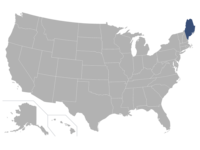
Augusta, ME