Living with bears in Anchorage: We can do better
Oct 01, 2026 | 5:00 pm ET
Description
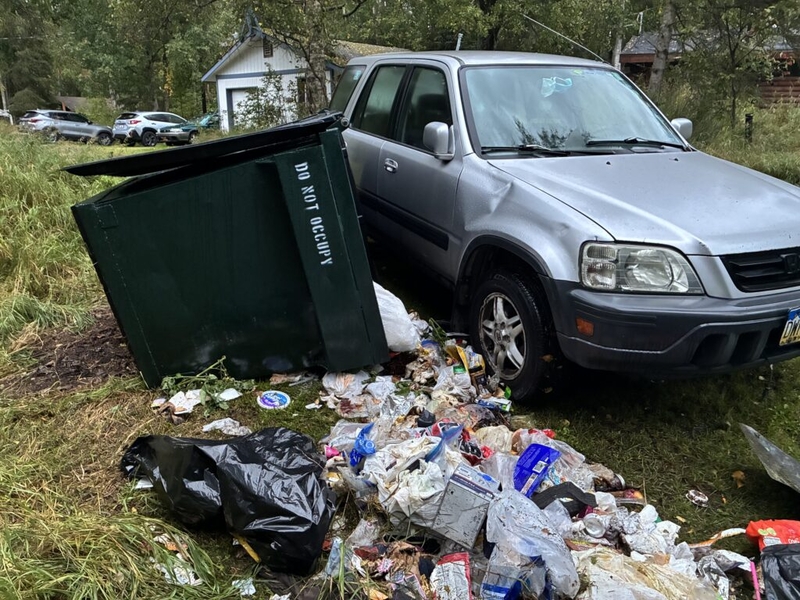
A dumpster outside an Anchorage residence was tipped over by a bear in the summer of 2026. (Photo courtesy Bill Sherwonit)
News that 20 or more bears have been killed in Anchorage this year, mostly because they’ve gotten into the habit of eating human trash, is both disheartening and infuriating.
People who live in the municipality, like elsewhere in Alaska, have long known what steps to take to minimize bear-human conflicts. At the top of the list: keeping garbage away from bears.
Making matters worse is the fact that local businesses that provide bear-resistant trash “carts” and dumpsters to their customers are part of the problem. A recent news story published by the Anchorage Daily News, indicates that two companies that provide the bear-resistant containers ran out of them.
This is both hard to comprehend and unacceptable. Keeping an adequate supply of the carts and dumpsters should be an essential part of the business plan, part of the cost of doing business. That should also be something the municipality demands, simply because it’s a key part of the solution to this problem.
I can personally speak to another part of the problem. Because we have renters, my girlfriend and I keep a dumpster on our property. For years, the dumpster had heavy, metal lids. This spring, for some inexplicable reason, Alaska Waste replaced those metal lids with much more flimsy plastic ones. In retrospect, we should have insisted then that the metal ones be re-installed. That was our mistake. We didn’t.
On Sept. 7, a large black bear tipped over our locked dumpster, an impressive feat. It then easily flicked aside the plastic lid without undoing the lock, and pulled several bags of trash from the dumpster, scattering it across our yard. We went outside and made enough noise to chase the bear away, then cleaned up and re-bagged the mess and stashed it inside a workshop building.
Because we had no immediate way to put the dumpster upright, we parked Jan’s 2000 Honda SUV in front of it, thinking that would keep the bear from getting to the trash that remained inside.
We were wrong. At 3 a.m. the next morning, the bear returned and shoved Jan’s car aside—an even more impressive feat—while putting a large dent in the front of the car, along with some claw marks. And the bear then had no problem once more flipping the plastic top aside to pull out more garbage before again being chased off.
Thanks to one of our renters and his daughter, the dumpster was righted the next day. That same morning we called Alaska Waste to request it fully empty the dumpster and replace the plastic lids with metal ones.
I can’t say for sure that heavy metal lids would have kept the bear out of the dumpster, but they would have offered some resistance, maybe enough that the bear would have given up.
For Alaska Waste to use ridiculously lightweight plastic lids in a part of town that bears frequent is inexcusable, an example of worst, not best, practices. This must change. And if the company won’t do so on its own, the municipality must take appropriate action.
The ADN story noted that the Alaska Department of Fish and Game, municipality, trash-hauling companies and others “discuss challenges involving bears and unsecured trash” and other related issues through the Anchorage Bear Committee. The ABC was established in 2001 and I attended several meetings in its early years.
I’ve fallen out of touch, but in my experience the committee does good and necessary work. Maybe its members need to revisit the responsibilities of local trash-pickup companies, the parts of Anchorage where bear-resistant carts and dumpsters are required and the need for greater enforcement.
People like to talk about “problem bears,” but as I’ve noted many times over the years, the problem starts with people.
As bear researchers have long emphasized, bears are smart critters and fast learners. And they are “opportunistic omnivores,” always on the lookout for an easy meal. It doesn’t take but a time or two of getting into our species’ garbage—and also our bird feeders, dog food, chicken coops and other sources of food—to adapt their own behavior to take advantage of the easy pickings.
When Fish and Game’s wildlife managers determine that a bear has become “food conditioned” to trash or other human foods, they’re considered a public-safety threat and targeted for “removal.”
Thus the saying, “A fed bear is a dead bear.”
It’s telling that of the 20 local bears killed through Sept. 27, “All but one were killed because they sought out ‘unsecured attractants,’” according to Fish and Game regional supervisor Cynthia Wardlow.
We humans like to boast about our species’ intelligence, but when it comes to bears—and many other matters—our smarts are too often outweighed by ignorance, laziness, stubbornness, intolerance and prejudice.
Here in Anchorage, all of us can do better, from individuals to businesses, government agencies and city leaders.
It’s been said many times before: living with bears can be challenging. But if we wish to coexist with the animals—and past surveys have indicated a large majority of residents do—then we’ll do what’s necessary to reduce conflicts and live more peacefully with bears.
Lately, it seems, we haven’t been doing nearly enough.

Juneau