LGBTQ+ advocates upset with Topeka’s ‘cavalier’ reversal of protections in face of DEI backlash
Jun 25, 2025 | 10:00 am ET
Description
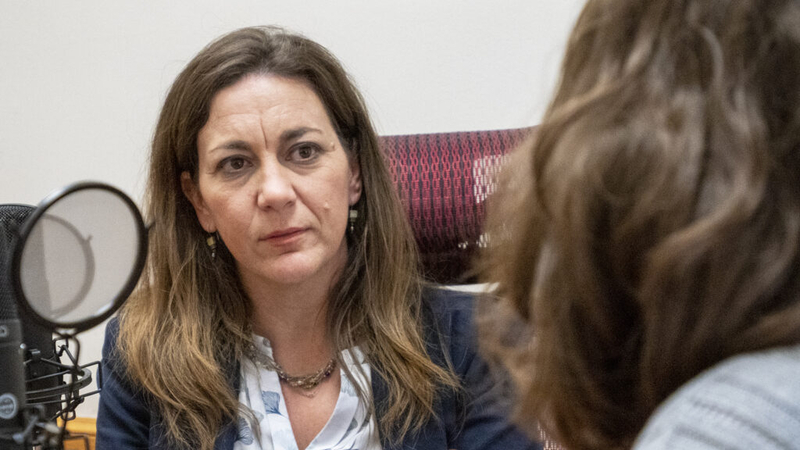
Tiffany Muller, president of End Citizens United, answers questions for an Oct. 14, 2022, recording of the Kansas Reflector podcast. Muller, a former Topeka City Council member, criticized the council's decision to repeal and amend DEI policies. (Sherman Smith/Kansas Reflector)
When Tiffany Muller saw the Topeka City Council roll back parts of the city’s antidiscrimination protections, she felt a familiar weight settle in.
In 2004, Muller became the city’s first openly gay council member and faced relentless harassment from the Westboro Baptist Church, the notorious anti-LGBTQ+ group based in Topeka. Muller cast the deciding vote when the council passed an antidiscrimination ordinance — a measure that had repeatedly fallen short by just one vote for years.
“It’s still one of the proudest moments of my life — to have led that effort in 2004 and gotten it passed,” Muller said. “So to see the council so cavalierly throw that away two decades later is really frustrating.”
Muller, now president of the national advocacy group End Citizens United, is among several LGBTQ+ leaders who criticized the council’s decision last week to repeal and amend portions of the city’s diversity, equity and inclusion policies.
They said the move not only undermines hard-fought civil rights protections but sends a discouraging message to the community at a time when state and federal safeguards remain uncertain.
The council’s 5-1 vote eliminated the Office of Diversity, Equity and Inclusion and repealed city code requiring affirmative action plans for contractors. It also stripped language that once required hiring goals, diversity training programs and compliance reporting related to protected classes.
While nondiscrimination language remains in parts of the code, critics said the removal of specific protections put LGBTQ+ residents at risk — especially since the U.S. Supreme Court has not explicitly affirmed protections for gender identity or sexual orientation under federal law.
Kansas Rep. Susan Ruiz — one of the two first openly LGBTQ+ legislators — called the decision a setback for a city that had once been a leader in local civil rights efforts.
“It hits you at your core because you might already be rejected by your community, maybe even by your family — and now you’re getting it from your city, you’re getting it from your state,” Ruiz said. “It’s a horrible feeling to know that your civil rights are always on the chopping block.”
Ruiz said the concern goes beyond symbolism.
“I worry about younger people,” she said. “Why would they want to live in our state? Why would they want to live in Topeka?”
The vote comes in response to executive orders issued by President Donald Trump regarding federal funding. As a result, grant recipients are now required to avoid programs related to affirmative action or DEI.
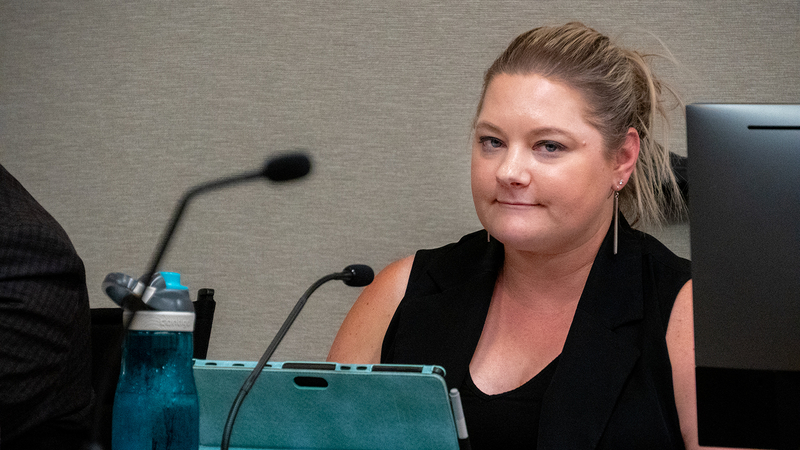
Topeka city attorney Amanda Stanley told council members if they didn’t recertify Housing and Urban Development funds for shelter programs by June 30, they could lose funding as early as July 1.
Stanley did not respond to an inquiry seeking clarification about the timeline for the funds.
Several council members expressed frustration about the decision but pointed to the potential loss of at-risk program funding as a driving factor.
“One thing that I know for sure is that the governing body — or the city of Topeka — is not out here looking to discriminate against anyone,” said council member Marcus Miller. “(We are) making sure that our language is clear, but something susceptible to do what we need to do as a city.”
Some residents, however, disagreed with the council’s interpretation and urged them to find alternative solutions.
“There are other cities that are not simply taking the bait. They are not focusing on the money. They are looking at the right thing to do,” said Topeka resident Glenda Overstreet Vaughn. “We can’t afford to be pawns, manipulated by the federal government’s funding chess game.”
Melissa Stiehler, advocacy director for Loud Light, called the decision unnecessary and “deeply harmful.” She said the organization reached out to council members last month with alternative solutions that would maintain federal compliance while protecting local civil rights, but never received a response.
“They needlessly put LGBTQIA protections at risk with no explanation,” Stiehler said. “This vote was deeply harmful to the people of our community. We hope to work with them to bring back the local protections that were stripped away.”
Not all council members viewed the vote as final. Council member Spencer Duncan reminded residents that the code is a “living document” and said the council plans to revisit the ordinance at its July 8 meeting after hearing feedback from the community.
Both Ruiz and Muller said pursuing legal action against the federal grant restrictions would have sent a stronger message.
“We’ve seen other cities, states and institutions push back against these threats — and win in court,” Muller said. “So I don’t think repealing these critically important protections was their only option. The worst thing we can do is to just comply, because that doesn’t protect anyone — and it’s certainly not going to protect the Topeka community.”

Topeka, KS