‘Less people and better results:’ IRS says filing season goals met after 27% staff cut
Apr 17, 2026 | 5:30 am ET
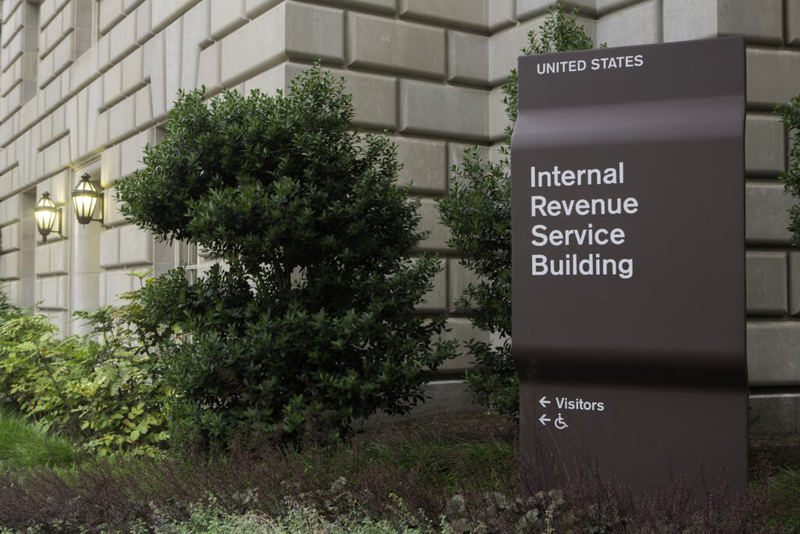
Description
IRS Chief Executive Officer Frank Bisignano said his goal is “creating a digital IRS” that can help more taxpayers online, shifting the burden off its phones.
By Jory Heckman
The IRS is touting its performance during this year’s filing season as evidence that it can still carry out its tax duties, despite losing more than a quarter of its workforce under the Trump administration.
The agency said it received more than 134 million individual tax returns and had issued more than 80 million refunds.
About 98% of returns were received, and refunds issued, electronically. More than 90% of taxpayers who filed their return electronically received their refund in 21 days or less. The average tax refund was $3,400, an 11% increase compared to last year.
IRS CEO Frank Bisignano told the Senate Finance Committee Wednesday that the agency can have both “less people and better results.”
“That’s the best stats we ever had in terms of performance,” Bisignano told the committee. He said that “this is the most successful filing season in IRS history,” despite losing 27% of its workforce last year and falling short of hiring goals for the filing season.
To address these workforce gaps, the IRS put about1,500 IT and human resources workers on “involuntary” 120-day details to support frontline filing season work. Those employees said the work was at a much lower grade than what they are normally paid to do at the agency, and that they had no background in handling these tasks.
Bisignano said the IRS is modernizing its technology to serve taxpayers with fewer employees.
“Sometimes, when you change staffing models, you also change how you do your work, and you’re going to have to do it through technology and innovation,” he said.
IRS lost 40% of its tech workers last year and 80% of tech leaders, official says
Bisignano said the agency “transformed taxpayer experience” by resolving more taxpayer inquiries online instead of over the phone. He said the IRS saw a 60% increase in website visits this filing season and that more taxpayers were able to get help online, which led to a year-over-year decrease in phone calls.
Treasury Secretary Scott Bessent told reporters at a White House press briefing that “we have done more with less at the IRS.”
“We have moved over millions of taxpayers to digital tax accounts, and that leaves us able to service more taxpayers in person and on the phone,” Bessent said.
Last December, the IRS permanently moved more. than 1,000 employees out of its IT division. Many, but not all, were put on temporary details to work in taxpayer services, but none have been told what work they’ll do for the agency in the long term.
The IRS’ chief information officer recently said at an industry conference that the agency’s tech shop lost about 40% of its workforce and 80% of its leadership last year.
“I’m going to always ensure that we have the right number of staff to get every job done,” Bisignano told the committee.
The IRS encountered some hiccups during the filing season. The agency told some of its employees two weeks before the filing season deadline that their overtime wages were miscalculated on their tax forms and that they would have to file an amended tax return.
Democrats on the House Ways and Means Committee warned that about 1.5 million taxpayers waited around 10 weeks to receive their tax refund from the IRS. These taxpayers typically receive their refund as a paper check, but the IRS phased those out as part of an executive order requiring agencies to move to electronic payments.
The IRS faced a bigger-than-usual workload preparing for this year’s season because of major changes to the tax code under the One Big Beautiful Bill Act that Congress passed last summer.

Sen. Mike Crapo (R-Idaho), the Finance Committee chair, said that “while no filing season is perfect, the 2026 filing season has proceeded smoothly for tens of millions of Americans.”
Democrats on the committee, however, were critical of deep IRS staffing cuts and their impact on tax enforcement and the ability for taxpayers to get help from the agency.
“There is little doubt the numbers will show IRS customer service has gotten worse as a result of DOGE and Trump layoffs,” Sen. Ron Wyden (D-Ore.) said.
Democrats on the committee also criticized Bisignano for splitting his time and attention across two major agencies. He is also the Senate-confirmed commissioner of the Social Security Administration.
Bisignano told senators that “I really look at it like I run two large organizations,” and that he’s sometimes putting in 14-hour workdays managing both agencies.
While most of the IRS staffing reductions occurred before Bisignano joined the IRS last fall, the agency is pursuing further cuts to enforcement personnel in its fiscal 2027 budget request.
Despite the staffing cuts, Bisignano told the committee that IRS enforcement revenue is up 12% compared to the previous year. The Yale Budget Lab estimates that IRS cuts to staffing and funding have likely resulted a $861 billion reduction in revenue.
“You’re not going to have the type of revenue we have coming in from enforcement, if you’re not collecting from highly compensated people and bad actors,” he said.
Last year’s mass exodus of IRS staff came from employees taking voluntary separation incentives or retiring.
“Nobody’s been fired. Everybody retired voluntarily,” Bisignano told the committee. “Nobody’s going to really like hearing this, but it was good, because they wanted to retire, that’s fine.”
The IRS threatened layoffs on several occasions. The IRS walked back reductions in force that targeted its civil rights office.
After telling IRS staff that layoffs were off the table, the Treasury Department sent RIF notices to about 1,400 employees during the 43-day government shutdown last fall. Most of the employees who received RIF notices worked in IT and human resources at the IRS.
A federal court in San Francisco blocked the Trump administration from carrying out those layoffs, and Congress passed a stopgap spending bill that put governmentwide layoffs on hold for three months.
Even though those layoff protections have expired, Treasury rescinded those RIF notices and has yet to revisit them.
Bisignano said his goal is “creating a digital IRS,” and that modernization efforts will allow the IRS to “meet taxpayers where they want to be met.
Ahead of this year’s filing season, Bisignano announced that the IRS would replace the level-of-service phone metric it’s been using for more than 20 years with a measurement that “will allow us to more accurately capture how the IRS serves taxpayers today.”
He told the committee that when taxpayers get through to an IRS employee, the average wait time is nine minutes. But former National Taxpayer Advocate Nina Olson wrote in Tax Notes on Tuesday that those metrics don’t capture calls in which taxpayers hang up before they reach an IRS employee.
Olson, now the executive director of the Center for Taxpayer Rights, found in an independent analysis that IRS wait times on its main toll-free line increased by more than 70% between February 2025 and February 2026, and that staff calling the 1040 phone line waited an average of 28 minutes before reaching an IRS employee.
“Our test shows that there is a disconnect between what taxpayers experience and what the IRS measures in terms of telephone access to IRS assistors,” Olson wrote.
The IRS also lowered its level of service target for phone calls from 85% to 70%. The National Taxpayer Advocate said that the IRS “substantially overstaffed” its call centers in prior years when it set a higher metric, and that employees spent up to a third of their work hours “simply waiting for the phone to ring.”
In his written testimony, Bisignano said the IRS cut “idle time” in its call centers by nearly 50%.
The IRS last fall scrapped Direct File, its free, online tax filing platform that it launched in 2024. Bisignano told the committee that Direct File was a “costly, unnecessary and less popular duplicate of programs that already are in place.”
Bisignano said IRS preparations for next year’s filing season are already underway.

Annapolis, MD